MCAS and the Vagal Brake: Why Mast Cells Need a Quiet Nervous System
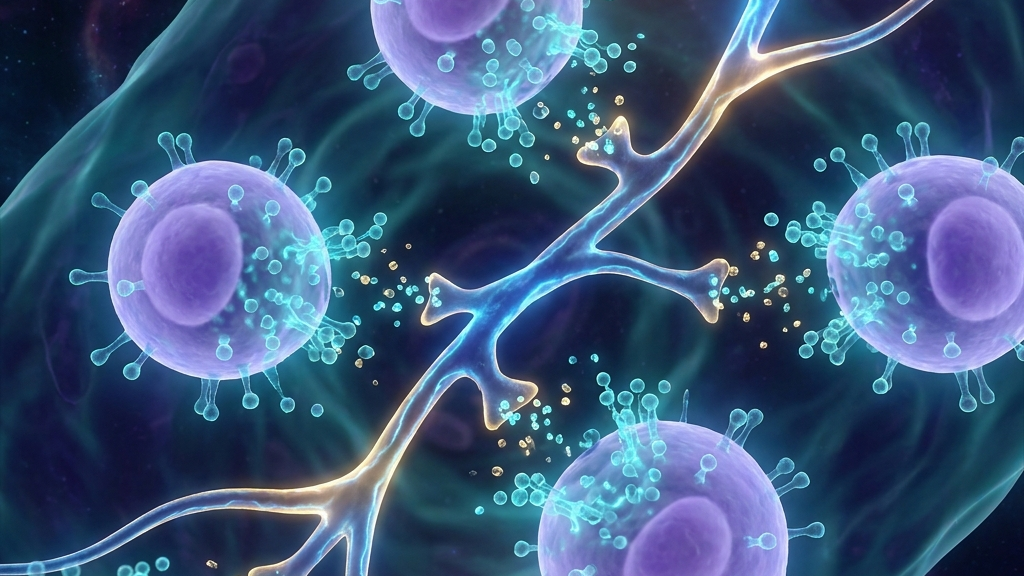
For years MCAS was framed as a pure immunology problem. The clinical reality has caught up to the data: mast cells are physically embedded in autonomic plexuses, they express cholinergic receptors, and their reactivity is gated by vagal tone. A patient whose vagal brake has failed is a patient whose mast cells have lost their off-switch.
Mast Cells Are Autonomic Cells
Mast cells cluster around blood vessels, near nerves, and along epithelial surfaces — exactly the locations the autonomic nervous system patrols. They release more than 200 mediators including histamine, tryptase, prostaglandins, leukotrienes, and cytokines. Their threshold for degranulation is set, in part, by parasympathetic input (Annals of Allergy, Asthma & Immunology, 2023).
The Cholinergic Anti-Inflammatory Pathway, Applied to Mast Cells
Vagal efferents release acetylcholine. Acetylcholine binds α7 nicotinic acetylcholine receptors expressed on mucosal mast cells. Receptor activation suppresses degranulation — including vagus-stimulated histamine release in food-allergy models (EDS Clinic review). Recent preclinical work shows that minimally invasive vagus nerve stimulation directly modulates mast cell behavior (PubMed 38603861, 2024).
The clinical implication: the vagus nerve is one of the most powerful endogenous mast cell stabilizers in the body. When it goes quiet, mast cells get loud.
The MCAS Patient Profile
The MCAS phenotype includes flushing, brain fog, palpitations, GI distress, urticaria, food sensitivities, fragrance reactivity, and post-exertional flares. Critically, almost all of these patients also show dysautonomic features — orthostatic intolerance, low HRV, temperature dysregulation, and sleep disturbance. This is not coincidence. It is the same nervous system speaking in two languages.
Why So Many MCAS Patients Are Stuck
Standard care emphasizes triggers, antihistamines, and mast cell stabilizers. These are necessary — and incomplete. They do not restore the autonomic context that allowed mast cells to misbehave in the first place. Without restoring the vagal brake, the patient remains one stressor away from a flare.
A Vagus-First MCAS Protocol
- Establish autonomic baseline. Resting HRV, orthostatic vitals, and a symptom map. Vagal tone is the variable to track.
- Slow nasal breathing as a daily intervention. Six breaths per minute with extended exhales. This is dose-dependent — 20 minutes daily for 6+ weeks.
- Auricular taVNS where appropriate. Cervical and auricular taVNS protocols are increasingly used in dysautonomia-MCAS overlap, with measurable shifts in HRV and subjective reactivity.
- Cold-water face immersion. The mammalian dive reflex produces rapid vagal activation. Two minutes, daily, can shift autonomic state.
- Standard MCAS pharmacology, layered correctly. H1/H2 antihistamines, cromolyn, and ketotifen still matter. They work better against a calmer autonomic backdrop.
- Address co-conditions. POTS, hEDS, SIBO, and chronic infection are common comorbidities. Each must be treated in parallel.
Clinical takeaway: Mast cells do not act alone. They live inside an autonomic conversation, and the vagus nerve is the dominant voice. Restore vagal tone, and the cellular noise quiets.
References & Further Reading
- Mast cells in the autonomic nervous system. Annals of Allergy, Asthma & Immunology, 2023. Read
- Minimally invasive VNS modulates mast cells. PubMed 38603861, 2024. Read
- MCAS, dysautonomia, and the vagus nerve. The EDS Clinic. Read
- Neuropsychiatric manifestations of MCAS. PMC 10672129, 2023. Read
- MCAS: current understanding and research needs. PMC 11881543, 2024. Read
Have a question?
Have a question about something specific? Send us a message.
Visit VagusSkool.com/contact — we'll try to get back to you within 24 hours.