Understanding Vagus Nerve Stimulation
Understanding Vagus Nerve Stimulation
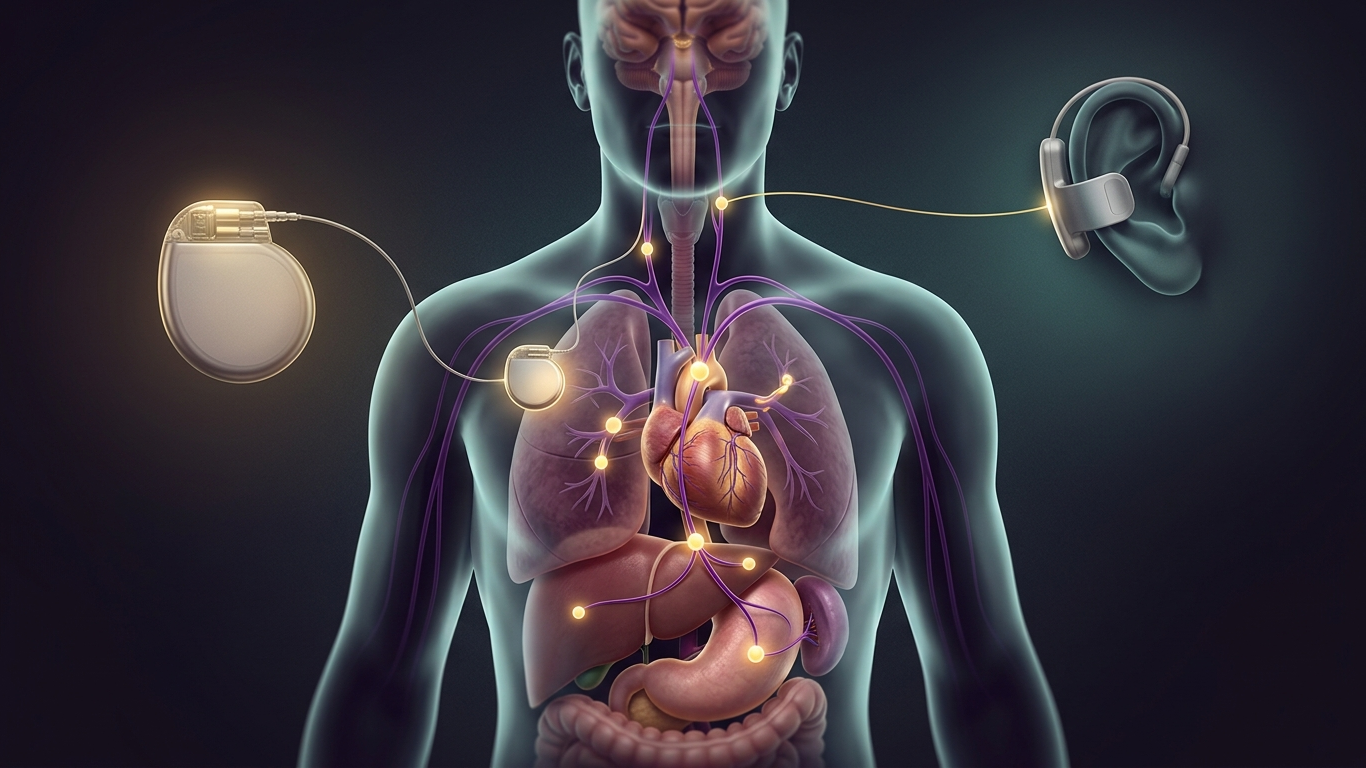
The vagus nerve is the longest cranial nerve in the human body, stretching from the brainstem down through the neck, chest, and abdomen. It serves as a critical communication highway between the brain and nearly every major organ system. Vagus nerve stimulation (VNS) harnesses this pathway to modulate physiological processes — and it's reshaping how we think about treating chronic disease.
What Is Vagus Nerve Stimulation?
At its core, VNS involves delivering electrical impulses to the vagus nerve to alter its signaling patterns. The vagus nerve carries both afferent (sensory) signals from the body to the brain and efferent (motor) signals from the brain to the body. By stimulating the vagus nerve, we can influence inflammation, heart rate, digestion, mood, and even cognitive function.
Traditional VNS requires a surgically implanted device — a small pulse generator placed under the skin in the chest, with a lead wire connected to the left vagus nerve in the neck. The device sends regular, mild electrical pulses to the nerve throughout the day.
FDA-Approved Applications
VNS has been FDA-approved since 1997 for treating drug-resistant epilepsy. The mechanism works by sending signals to the brainstem, which then distributes inhibitory signals throughout the brain, reducing the likelihood of seizure activity. In 2005, the FDA expanded approval to include treatment-resistant depression.
The evidence for VNS in depression is compelling: patients who haven't responded to multiple antidepressant trials show meaningful improvement over 12–24 months of VNS therapy, with response rates increasing over time — a pattern unlike any other treatment modality.
The Anti-Inflammatory Pathway
Perhaps the most exciting frontier in VNS research is its anti-inflammatory effects. Kevin Tracey's landmark work identified the "cholinergic anti-inflammatory pathway" — a neural circuit where vagus nerve signals suppress the production of pro-inflammatory cytokines like TNF-α, IL-1β, and IL-6.
This discovery has opened the door to using VNS for autoimmune conditions including rheumatoid arthritis, Crohn's disease, and inflammatory bowel disease. Early clinical trials have shown significant reductions in disease activity with minimal side effects.
Emerging Applications
Research is expanding VNS applications to include:
- Heart failure — improving cardiac autonomic balance
- Post-traumatic stress disorder (PTSD) — modulating fear extinction circuits
- Alzheimer's disease — enhancing memory consolidation through locus coeruleus activation
- Chronic pain — interrupting pain signaling pathways
- Metabolic syndrome — regulating glucose metabolism and appetite
Non-Invasive Alternatives
The future of VNS is moving beyond implanted devices. Transcutaneous vagus nerve stimulation (tVNS) delivers stimulation through the skin — typically at the ear (auricular branch) or neck (cervical branch). Focused ultrasound is another emerging approach, capable of reaching deeper nerve fibers without any skin contact at all.
These non-invasive methods democratize access to VNS therapy, making it available as a daily wellness practice rather than a last-resort surgical intervention.
The Vagus Nerve as a System
Understanding VNS means understanding that the vagus nerve isn't just a single pathway — it's a complex network of fibers with different functions. The myelinated A and B fibers regulate heart rate and breathing, while the unmyelinated C fibers influence inflammation and gut function. Different stimulation parameters target different fiber populations, which is why VNS protocols vary so widely depending on the condition being treated.
As we refine our understanding of vagal anatomy and develop more precise stimulation technologies, the potential for VNS to transform medicine continues to grow. The vagus nerve may ultimately prove to be the most important therapeutic target in the human body.
Have a question?
Have a question about something specific? Send us a message.
Visit VagusSkool.com/contact — we'll try to get back to you within 24 hours.