Heart Rate Variability (HRV) — The Vagus Nerve's Real-Time Health Dashboard
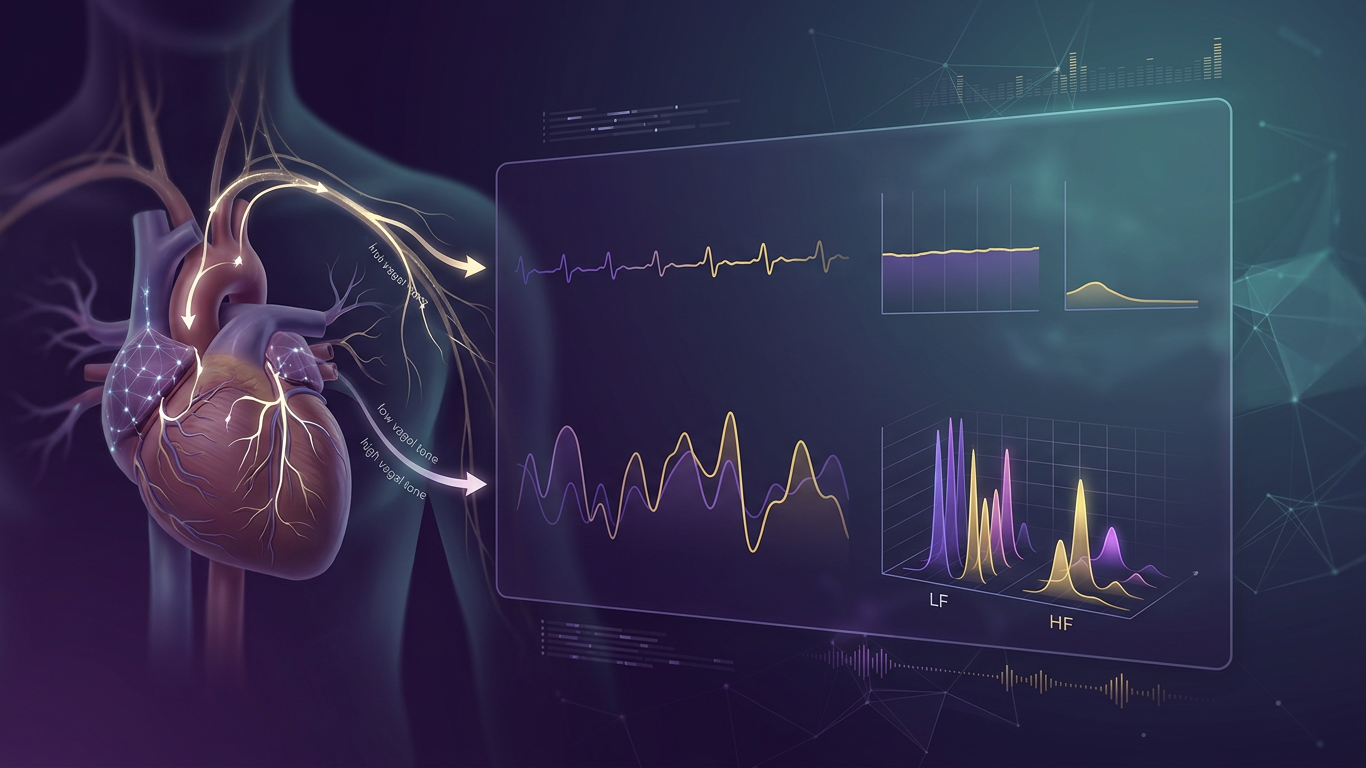
Heart Rate Variability (HRV) — The Vagus Nerve's Real-Time Health Dashboard
Thesis
A perfectly regular heartbeat is not a sign of health — it's a warning sign. Heart rate variability (HRV), the beat-to-beat variation in the time between heartbeats, is a window into the vagus nerve's influence over your cardiovascular system. Higher HRV means stronger vagal tone, better emotional regulation, reduced inflammation, and lower cardiovascular risk. It may be the single most accessible biomarker for overall health and resilience.
Key Questions
- What does HRV actually measure, and why does more variation equal better health?
- How does the vagus nerve create this variability?
- What brain regions are connected to vagal tone, and why does this matter?
- Can HRV be used as a practical biomarker for stress, disease risk, and longevity?
Supporting Research
Thayer, J.F. et al. (2012). A meta-analysis of heart rate variability and neuroimaging studies: Implications for heart rate variability as a marker of stress and health. Neuroscience & Biobehavioral Reviews, 36(2), 747–756.
DOI: 10.1016/j.neubiorev.2011.11.009
Shaffer, F. & Ginsberg, J.P. (2017). An Overview of Heart Rate Variability Metrics and Norms. Frontiers in Public Health, 5, 258.
Why Inconsistency Is Health
Your heart doesn't beat like a metronome. Between each beat, the interval varies — sometimes by 20, 50, even 100 milliseconds. This isn't noise. It's the signature of a healthy autonomic nervous system dynamically adjusting cardiac output to match your environment. When you're calm, the vagus nerve (parasympathetic) slows the heart. When you need to act, sympathetic tone speeds it up. The constant tug-of-war produces HRV.
A low-HRV heart is like a car with only one gear — it can't adapt. Studies consistently show that low resting HRV predicts:
- Increased cardiovascular mortality (heart attack, stroke)
- Higher inflammatory markers (CRP, IL-6)
- Poorer emotional regulation and higher anxiety
- Impaired cognitive flexibility
- Accelerated biological aging
The Neurovisceral Integration Model
Thayer's 2012 meta-analysis mapped HRV to specific brain regions using neuroimaging data across multiple studies. The findings were striking: HRV correlates with activity in the ventromedial prefrontal cortex (vmPFC) and the amygdala. The vmPFC provides top-down inhibitory control over the amygdala's threat detection system, which in turn modulates brainstem autonomic output.
This means HRV isn't just about the heart — it's a proxy for how effectively your prefrontal cortex regulates your emotional brain. Higher HRV = better top-down control = more flexible stress response = better health outcomes.
The "default response to uncertainty is the threat response" — our negativity bias. HRV may measure how effectively we override this bias with contextual, rational appraisals mediated by cortical-subcortical pathways.
Measuring Vagal Tone Through HRV
Key HRV metrics and what they reveal:
- RMSSD: The root mean square of successive R-R interval differences. Best single measure of vagal tone. Higher = more parasympathetic activity.
- High-frequency (HF) power (0.15–0.4 Hz): Vagally mediated respiratory sinus arrhythmia. Pure parasympathetic marker.
- LF/HF ratio: Sympathovagal balance. Higher = more sympathetic dominance (stress).
- Resting heart rate: Lower resting HR correlates with higher vagal tone.
Why This Matters
HRV is measurable with consumer-grade devices (chest straps, even some smartwatches). It provides a real-time window into autonomic health without blood draws or imaging. A declining HRV trend could serve as an early warning system — detecting autonomic imbalance before clinical symptoms appear.
The connection between HRV and the prefrontal cortex also explains why stress management, meditation, and breathing exercises improve both emotional regulation and physical health — they all work through the same vagal pathway.
Experimental Predictions
- Interventions that increase vmPFC activity (mindfulness, cognitive reappraisal) should increase HRV
- Chronic low HRV should predict future cardiovascular events independent of traditional risk factors
- HRV biofeedback training should improve both emotional regulation and immune function
- Aging should show progressive HRV decline, correlating with rising inflammatory markers
Have a question?
Have a question about something specific? Send us a message.
Visit VagusSkool.com/contact — we'll try to get back to you within 24 hours.