The Inflammatory Reflex: How the Vagus Nerve Controls Immune Balance
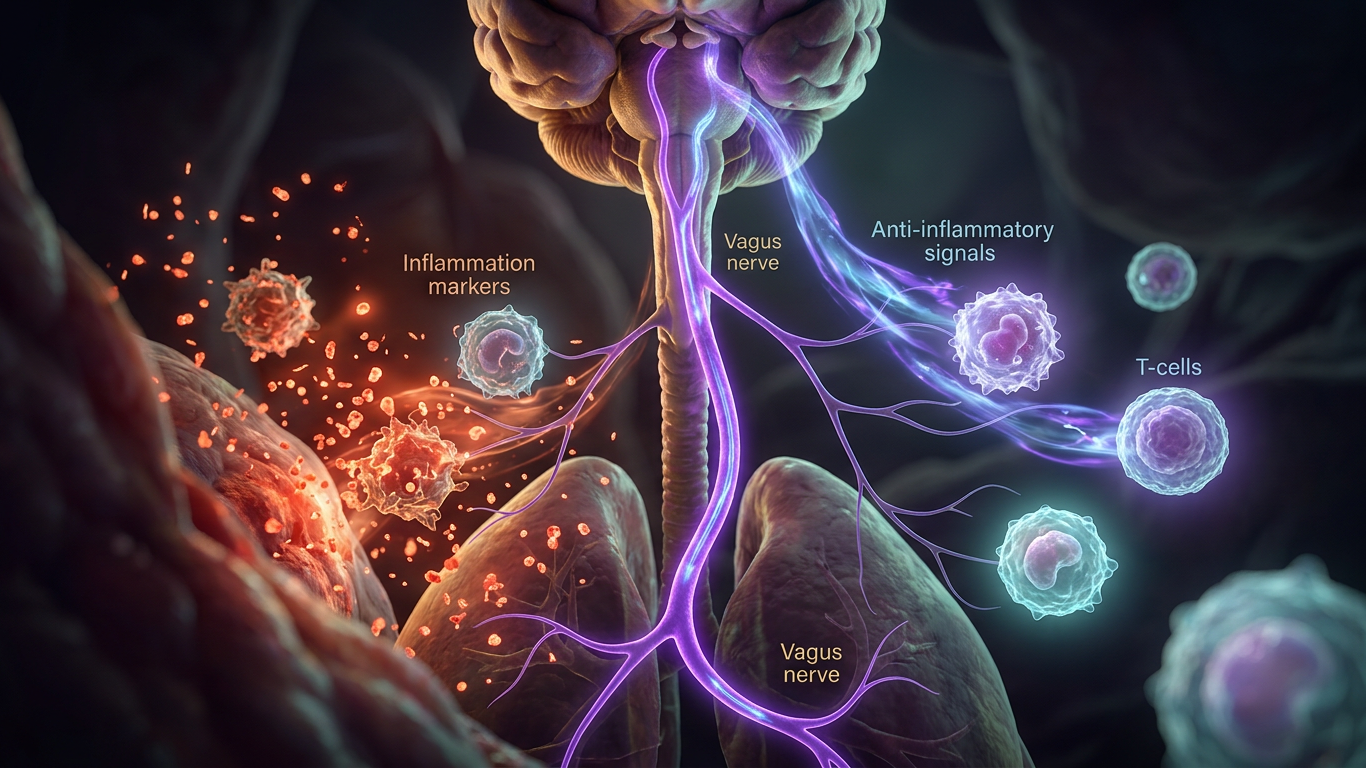
For most of medical history, inflammation was treated as a chemistry problem. Anti-inflammatory drugs work because they interrupt biochemical cascades. But in 2000, a quiet discovery in a New York lab revealed that the body has its own faster, more precise inflammation control system — and it runs on electricity, not chemistry.
Discovery of the Inflammatory Reflex
In 2000, Kevin Tracey and colleagues at the Feinstein Institute made a groundbreaking discovery: the vagus nerve directly controls inflammation through a neural circuit called the inflammatory reflex. This finding fundamentally changed our understanding of how the nervous and immune systems communicate.
Before this, inflammation was thought to be purely a chemical process. We now know that the vagus nerve can suppress inflammatory cytokines within seconds — far faster than any pharmacological intervention. This revelation launched the entire field of bioelectronic medicine, which uses targeted neural stimulation to treat conditions previously addressed only with drugs.
The Cholinergic Anti-Inflammatory Pathway
When the vagus nerve detects inflammatory signals (such as TNF-alpha or IL-1beta), it activates a reflex arc: vagal afferents signal the brainstem, which triggers vagal efferents to release acetylcholine at the spleen. This acetylcholine binds to alpha-7 nicotinic acetylcholine receptors on immune cells (particularly macrophages), suppressing their production of pro-inflammatory cytokines.
This pathway operates continuously, providing a baseline level of immune regulation. When vagal tone drops, inflammation can run unchecked — a state linked to autoimmune diseases, cardiovascular disease, depression, and neurodegeneration. Many of the diseases of modern life share this common upstream feature: a vagus nerve that has stopped doing its anti-inflammatory job.
Why this circuit exists at all
From an evolutionary standpoint, neural inflammation control makes sense. Chemical signals diffuse slowly. A predator-induced injury demands a calibrated response that can scale up or down within seconds. The vagus nerve provides exactly that — a fast, targeted, dose-adjustable brake on the immune system.
Clinical Implications
Vagus nerve stimulation (VNS) has been FDA-approved for epilepsy and depression since the 1990s. More recently, clinical trials have shown VNS can reduce symptoms in rheumatoid arthritis, Crohn's disease, ulcerative colitis, and lupus — providing direct evidence that the cholinergic anti-inflammatory pathway is therapeutically accessible.
The rheumatoid arthritis trials are particularly striking. Patients who had failed multiple immunosuppressive drugs achieved remission with VNS alone in some cases. The mechanism wasn't pharmacological — it was the brain's own anti-inflammatory circuit being mechanically reactivated.
For decades we treated inflammation as chemistry. The discovery that a nerve could suppress cytokines within seconds rewrote the playbook — and birthed a new field: bioelectronic medicine.
The Conditions Linked to a Failing Vagal Brake
Chronically low vagal tone is now identified as a contributing factor in many "diseases of inflammation":
- Rheumatoid arthritis and other autoimmune conditions
- Inflammatory bowel disease
- Cardiovascular disease, including atherosclerosis
- Type 2 diabetes and metabolic syndrome
- Depression — often called "the inflammatory disease"
- Alzheimer's and other neurodegenerative conditions
- Chronic kidney disease
- Long COVID, where vagal dysfunction appears central
Natural Ways to Activate the Anti-Inflammatory Reflex
- Slow breathing: 6 breaths per minute maximizes vagal efferent signaling and produces measurable cytokine reductions in studies.
- Cold exposure: Brief cold immersion activates the diving reflex and stimulates vagal anti-inflammatory pathways. Wim Hof method studies show acute reductions in inflammatory response.
- Meditation: Increases vagal tone, enhancing baseline anti-inflammatory signaling. Long-term meditators show reduced inflammatory gene expression.
- Gut health: The gut microbiome communicates with the vagus nerve, modulating immune responses. Specific strains (Lactobacillus rhamnosus, Bifidobacterium longum) have measurable vagal effects.
- Exercise: Regular moderate exercise improves vagal tone and reduces chronic inflammation. Excessive exercise has the opposite effect.
- Adequate sleep: Sleep deprivation suppresses vagal output and elevates inflammatory markers within a single night.
How to Track Your Inflammatory Vagal Tone
You can't directly measure cytokine output without lab work, but you can track the vagal markers that correlate with it. The two most accessible:
- Morning HRV via wearable: Trends downward over weeks suggest your anti-inflammatory braking is weakening.
- Heart rate recovery after exercise: Slower recovery suggests reduced vagal reactivation.
If you have access to bloodwork, hs-CRP (high-sensitivity C-reactive protein) is the most useful systemic inflammation marker for tracking the longer-term outcome. People who consistently improve vagal tone often see hs-CRP drop within 2–3 months.
The Future
Bioelectronic medicine — using targeted neural stimulation to control inflammation — represents a new frontier in treating chronic disease. Several FDA-cleared transcutaneous VNS devices are already on the consumer market, with prices dropping each year. Larger implantable systems are being studied for severe autoimmune conditions.
As our understanding of the vagus nerve deepens, non-pharmacological interventions for inflammation may become first-line treatments — not as alternatives to medicine, but as the foundation that lets medicine work better. The era of treating inflammation as purely a chemistry problem is closing. The era of treating it as a neural-immune partnership is just beginning.
Have a question?
Have a question about something specific? Send us a message.
Visit VagusSkool.com/contact — we'll try to get back to you within 24 hours.