Running on Empty at the Cellular Level: Mitochondria, ATP, and Vagal Tone
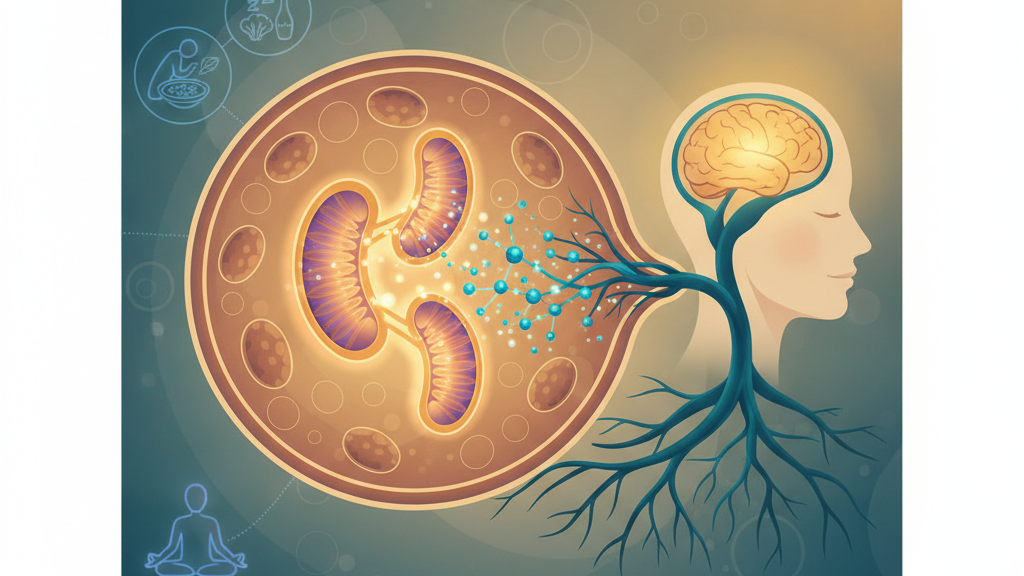
You can do everything "right" — sleep, eat well, rest — and still feel like your battery drains by noon. When fatigue persists despite good inputs, it is worth looking one level deeper than the nervous system, to the tiny power plants inside your cells. And it turns out the nervous system and those power plants are in constant conversation, with the vagus nerve as a key line.
Where Your Energy Actually Comes From
Every cell makes its energy in structures called mitochondria, which convert food and oxygen into ATP — the molecule your body spends to do everything from firing a neuron to contracting a muscle. When mitochondria underproduce ATP, no amount of sleep fully compensates, because the shortage is at the point of energy generation, not energy scheduling. This is why some fatigue feels bone-deep and rest-resistant in a way ordinary tiredness does not.
Inflammation Throttles the Power Plants
Mitochondria are exquisitely sensitive to inflammation. Chronic low-grade inflammation and the oxidative stress that comes with it impair mitochondrial function, so cells generate less ATP and more waste (Mitochondrial dysfunction and inflammation — review). In fatigue-dominant conditions like ME/CFS and long COVID, researchers repeatedly find this pairing of inflammation and impaired cellular energy metabolism. The two reinforce each other: inflammation damages mitochondria, and damaged mitochondria release signals that provoke more inflammation.
The Vagal Link to Cellular Energy
Here is where the nervous system enters. The vagus nerve's cholinergic anti-inflammatory pathway is one of the body's main brakes on systemic inflammation (Tracey, The inflammatory reflex). By keeping inflammation in check, healthy vagal tone helps protect the environment mitochondria need to work efficiently. When vagal tone is low, inflammation runs higher, and the cellular power plants pay the price. There is also a direct autonomic dimension: sympathetic overdrive is metabolically expensive, so a body stuck in fight-or-flight is spending ATP on alarm it could be investing in repair.
The Feedback Loop That Traps People
This creates a self-perpetuating trap. Low vagal tone allows more inflammation, which impairs mitochondria and lowers ATP. Low energy makes it harder to sleep well, move, and do the very things that would raise vagal tone — so the cycle tightens. Breaking in at any point helps, but the leverage is highest where the loop is easiest to influence: vagal tone, inflammation, and sleep.
Supporting Both Systems at Once
- Lower the inflammatory load. Prioritize sleep, resolve gut issues, and reduce ultra-processed intake — all of which take pressure off the mitochondria.
- Raise vagal tone. Daily slow breathing, humming, and cold-water face exposure support the anti-inflammatory reflex that protects cellular energy.
- Move within your envelope. Exercise is the single strongest stimulus for building new mitochondria — but in post-exertional-malaise states, gentle, sub-threshold movement is what helps; overreaching sets you back.
- Feed the machinery. Mitochondria depend on nutrients including B vitamins, magnesium, and CoQ10; broad deficiencies impair ATP output. Address diet first, and discuss targeted supplementation with a clinician.
- Protect deep sleep. Repair and mitochondrial maintenance are night-shift work.
A Note on Claims
Cellular-energy science is genuinely promising, and it is also a magnet for overblown marketing. No supplement "recharges your mitochondria" overnight. The durable gains come from consistently lowering inflammation, raising vagal tone, sleeping deeply, and moving without crashing — the same unglamorous levers, working at the cellular level.
The takeaway: Rest-resistant fatigue often reflects a cellular energy shortfall, and mitochondria are throttled by the same chronic inflammation the vagus nerve is built to suppress. Healthy vagal tone protects the conditions mitochondria need to make ATP. You cannot bypass the biology with a pill — but you can influence the loop by lowering inflammation, raising vagal tone, and moving within your limits.
Have a question?
Have a question about something specific? Send us a message.
Visit VagusSkool.com/contact — we'll try to get back to you within 24 hours.