Hashimoto's, the Thyroid, and the Vagal Anti-Inflammatory Reflex
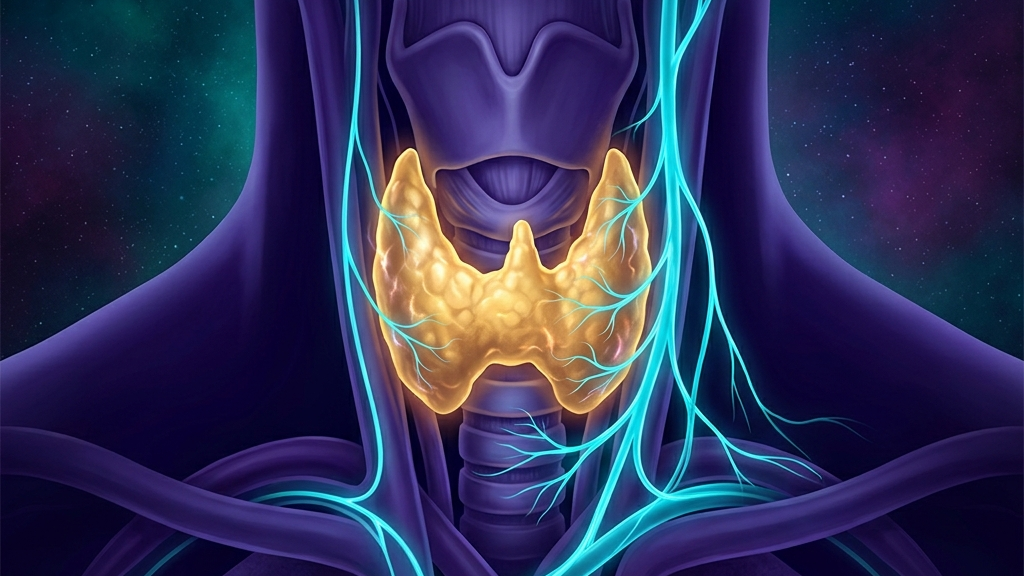
Hashimoto's thyroiditis is the most common autoimmune disease in the world. It is also one of the most under-treated. Standard care provides thyroid hormone replacement and rarely addresses the underlying autoimmunity. The result is a patient who is biochemically replaced but never feels well — because the immune attack continues, the inflammation continues, and the autonomic dysregulation that fuels both continues. The vagus nerve runs the body's primary anti-inflammatory program, and in Hashimoto's, it is reliably under-active.
The Disease in Plain Language
Hashimoto's is an autoimmune disease characterized by destruction of thyroid follicular cells through cell- and antibody-mediated mechanisms (StatPearls). The classic markers — elevated TPO antibodies, often elevated thyroglobulin antibodies — represent an immune system that has identified the thyroid as foreign. The clinical consequences range from euthyroid autoimmunity (antibodies present, thyroid still working) through subclinical hypothyroidism to overt hypothyroidism. The full disease arc can span decades.
Why the Vagus Matters
The vagus nerve runs the cholinergic anti-inflammatory pathway — the body's central neural mechanism for shutting down systemic inflammation. Vagal efferents release acetylcholine onto α7 nicotinic receptors on macrophages and microglia, suppressing pro-inflammatory cytokine production (TNF-α, IL-1β, IL-6). The vagus also acts via afferent fibers that signal the hypothalamus to engage the HPA anti-inflammatory axis.
In autoimmune disease, this two-arm vagal anti-inflammatory function is consistently compromised. Hashimoto's is no exception — patients show measurable autonomic dysregulation including low HRV, sympathetic dominance, and reduced vagal output. The disease is not "caused by" vagal dysfunction, but vagal dysfunction is part of why it accelerates and resists resolution.
The Hashimoto's-Vagus Loop
The picture is a vicious cycle:
- Chronic stress, infection, or environmental triggers suppress vagal tone.
- Suppressed vagal tone releases the cholinergic anti-inflammatory brake.
- Systemic inflammation rises; immune tolerance breaks down.
- Autoimmune attack on the thyroid intensifies.
- Falling thyroid hormone production reduces metabolic capacity, which further compromises stress resilience and autonomic regulation.
- The loop tightens.
This is why so many Hashimoto's patients describe a downward spiral that no single intervention seems to interrupt.
The Patient Profile
The recognizable Hashimoto's phenotype includes weight gain or weight resistance, cold intolerance, fatigue, hair thinning, dry skin, brain fog, sleep disturbance, low mood, and a panel of subtle autonomic features — palpitations, GI dysmotility, temperature dysregulation, low HRV. Many patients carry other autoimmune features as well: a personal or family history of celiac, eczema, vitiligo, or psoriasis.
The Standard Care Gap
Standard endocrine care for Hashimoto's amounts to thyroid hormone replacement when TSH crosses a threshold. This addresses the consequence of the disease but not the disease itself. The autoimmune process continues, antibody titers stay elevated, and patients often feel only partially better even with optimized hormone levels. Closing this gap requires addressing the upstream factors: gut health, nutrient status, stress and HPA axis function, environmental exposures, and — increasingly — autonomic regulation.
A Vagus-Aware Hashimoto's Protocol
Standard Foundations
- Appropriate thyroid hormone replacement, optimized to symptoms and free T3/T4, not TSH alone
- Address gut health — Hashimoto's commonly co-occurs with celiac disease, gluten sensitivity, and dysbiosis
- Optimize selenium, zinc, iron, B12, and vitamin D status
- Identify and reduce environmental triggers (mold, halogen exposure, smoking)
The Vagal Layer
- Daily six-per-minute breathing — the cheapest and most reliable vagal-tone intervention
- Humming and chanting — the vagus innervates the vocal cords; vibration amplifies signal
- Cold-water face immersion — engages the mammalian dive reflex
- HRV biofeedback for measurable progress tracking
- Stress load management — chronic sympathetic activation directly suppresses the cholinergic anti-inflammatory pathway
- Sleep prioritization — vagal tone rebuilds overnight; chronic sleep deprivation actively impairs autoimmune resolution
- Auricular taVNS where available — early evidence suggests potential utility in autoimmune populations
Address the Wider Autoimmune Picture
Many Hashimoto's patients have other autoimmune conditions — diagnosed or undiagnosed. Treating the broader autoimmune diathesis (anti-inflammatory diet, gut healing, sleep, vagal tone) tends to benefit all of them at once.
Clinical takeaway: Hashimoto's is a chronic inflammatory disease in an autonomic context. Thyroid hormone replacement is necessary; it is not sufficient. Restoring vagal tone — and through it the cholinergic anti-inflammatory pathway — is one of the most underused interventions in autoimmune thyroid care.
Have a question?
Have a question about something specific? Send us a message.
Visit VagusSkool.com/contact — we'll try to get back to you within 24 hours.