Vagus Nerve Stimulation and Neuroplasticity — Rewiring the Brain Through the Body
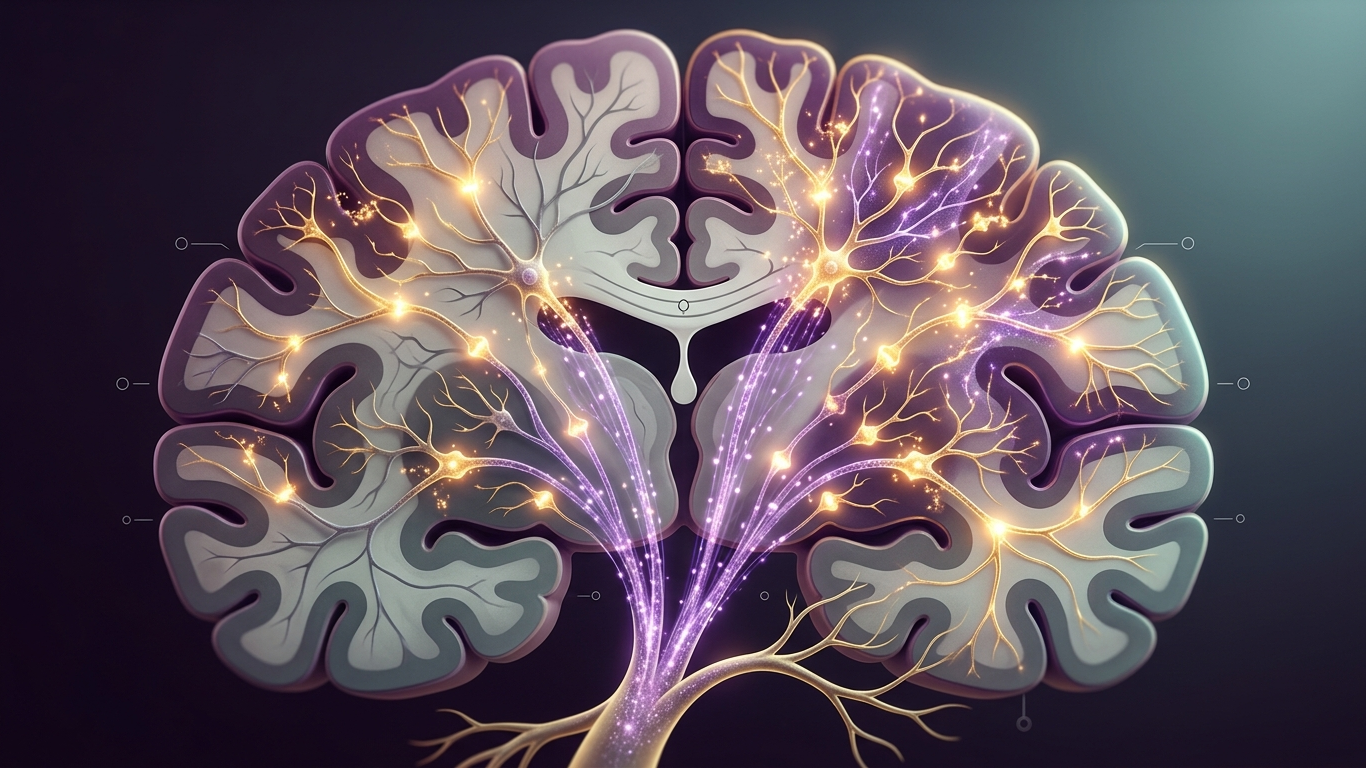
Vagus Nerve Stimulation and Neuroplasticity — Rewiring the Brain Through the Body
Thesis
Vagus nerve stimulation doesn't just regulate autonomic function — it triggers the release of neuromodulators (norepinephrine, acetylcholine, BDNF) that gate neuroplasticity in the cortex. When paired with specific sensory or motor training, VNS creates a targeted plasticity window that strengthens desired neural connections while weakening pathological ones. This was proven by reversing tinnitus-related cortical changes in rats — and has since been translated to FDA-approved stroke rehabilitation devices in humans.
Key Questions
- How does vagus nerve stimulation release neuromodulators that enable neuroplasticity?
- What is "targeted plasticity" and how does pairing VNS with training work?
- Can VNS-paired rehabilitation reverse maladaptive neural changes?
- What human clinical applications have emerged from this research?
Supporting Research
Engineer, N.D. et al. (2011). Reversing pathological neural activity using targeted plasticity. Nature, 470, 101–104.
DOI: 10.1038/nature09656 | PubMed
Hulsey, D.R. et al. (2017). Vagus Nerve Stimulation Improves Forelimb Recovery after Cerebral Ischemia. Journal of Neuroscience, 37(33), 8033–8045.
The Neuromodulatory Cocktail
When the vagus nerve is stimulated, it activates projections from the nucleus tractus solitarius (NTS) to key neuromodulatory centers:
- Locus coeruleus → Norepinephrine: Enhances signal-to-noise ratio in cortical neurons, making relevant neural activity more salient
- Nucleus basalis → Acetylcholine: Opens a plasticity window in cortical circuits, allowing synaptic strengthening
- Hippocampus/amygdala → BDNF: Brain-derived neurotrophic factor promotes synaptic growth and consolidation
Together, this cocktail creates conditions for Hebbian plasticity: "neurons that fire together, wire together." The key insight is timing — if you pair VNS with a specific stimulus (tone, movement, sensation), the plasticity is targeted to circuits activated by that stimulus.
The Tinnitus Experiment
Engineer et al. induced tinnitus in rats via intense noise exposure, creating pathological cortical changes: degraded frequency tuning and increased neural synchronization in auditory cortex. Then they paired tones (matching the tinnitus frequency) with brief VNS pulses:
- 50 tones paired with 500μs VNS pulses (0.8mA)
- ~300 pairings per day for 10 days
- Results: Normal auditory cortical maps restored, neural hyperactivity eliminated, behavioral tinnitus measures normalized
- Effects persisted for weeks after therapy ended
- Unpaired controls showed no improvement
This was the first demonstration that VNS-paired stimulation could reverse — not just prevent — pathological neural changes.
Translation to Stroke Rehabilitation
The same principle was applied to motor recovery. After stroke, the motor cortex loses connections to affected limbs. VNS paired with rehabilitative movements:
- Strengthens surviving cortical connections to the affected limb
- Enhances BDNF-dependent synaptic growth
- Improves motor function beyond what rehabilitation alone achieves
- The Vivistim system (FDA-approved 2021) uses this approach for upper limb stroke rehabilitation in humans
Why This Matters
VNS transforms rehabilitation from passive recovery to active neural reprogramming. Instead of waiting for spontaneous plasticity, VNS creates a controllable plasticity window that can be directed at specific circuits. This has implications far beyond tinnitus and stroke: any condition involving maladaptive neural changes — chronic pain, PTSD (fear circuits), addiction (reward circuits), phantom limb pain — could potentially benefit from VNS-paired targeted plasticity.
Experimental Predictions
- VNS paired with exposure therapy should enhance fear extinction in PTSD beyond exposure alone
- Timing of VNS relative to stimulus should be critical — optimal pairing within a 100ms window
- Higher VNS intensity should produce stronger plasticity up to a threshold, beyond which effects plateau or reverse
- Combining VNS with pharmacological neuromodulator enhancement should produce synergistic plasticity effects
Have a question?
Have a question about something specific? Send us a message.
Visit VagusSkool.com/contact — we'll try to get back to you within 24 hours.