How the Vagus Nerve Controls Your Heart Rate
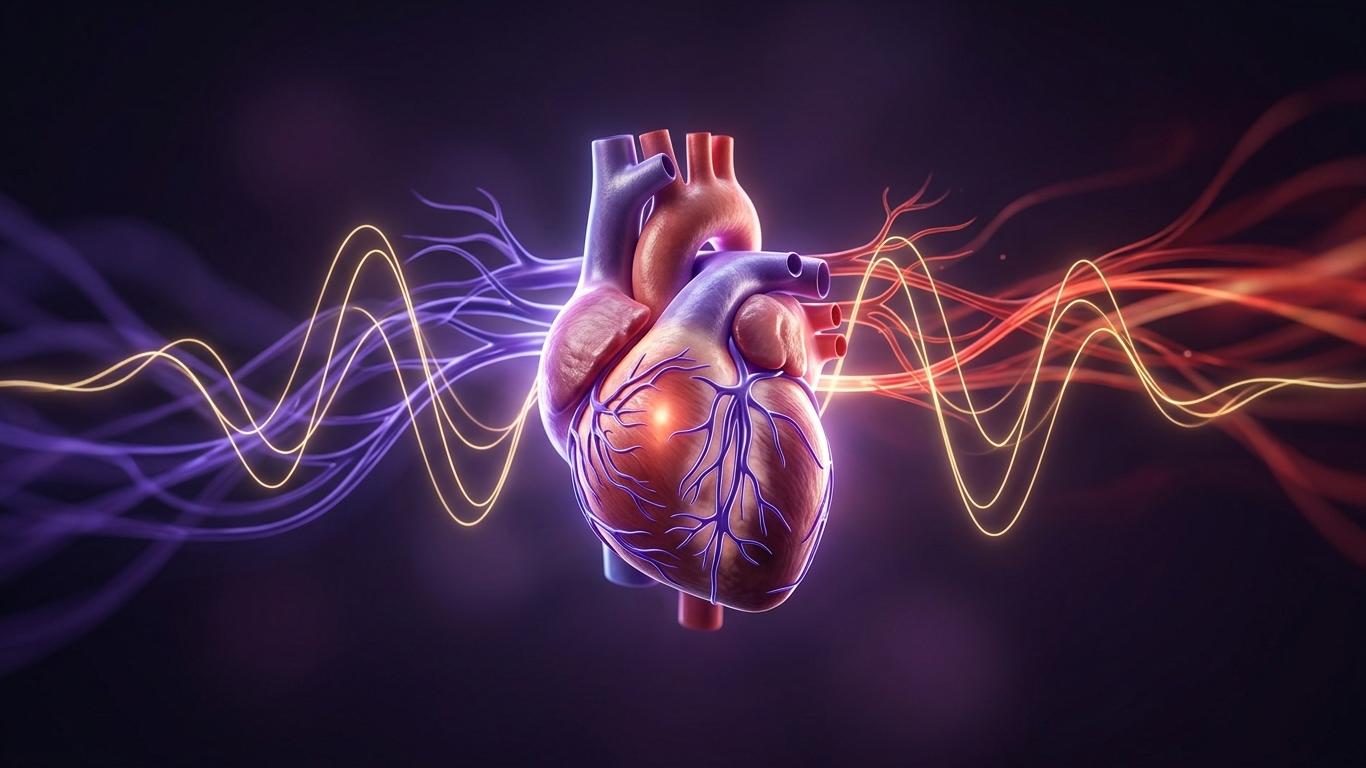
Your heart beats roughly 100,000 times today. It will do the same tomorrow. The astonishing thing isn't that it keeps going — it's that it adjusts, beat by beat, to everything you do, think, and feel. The conductor behind that adjustment is the vagus nerve, and how strongly it speaks to your heart is one of the best predictors of how long and how well you'll live.
The Cardiac Vagus Nerve
Your heart beats roughly 100,000 times per day, but it's not working alone. The vagus nerve provides constant parasympathetic input that slows the heart rate from its intrinsic pacemaker rate of about 100 bpm down to the typical resting rate of 60–80 bpm. Without vagal braking, your resting heart rate would be 100 bpm, every minute, all day.
This vagal cardiac control is mediated primarily through the right vagus nerve, which innervates the sinoatrial (SA) node — the heart's natural pacemaker. Each vagal impulse releases acetylcholine at the SA node, briefly slowing the firing rate. When you take a slow breath, increase social engagement, or simply rest, vagal output increases and your heart slows accordingly.
Heart Rate Variability: The Vagal Signature
The constant fluctuation in beat-to-beat intervals — heart rate variability (HRV) — is primarily driven by vagal modulation. Higher HRV means the vagus nerve is actively adjusting heart rate to match current demands, a sign of a healthy, flexible autonomic nervous system.
Low HRV indicates sympathetic dominance or reduced vagal input, associated with increased cardiovascular risk, stress, and poorer health outcomes. Multiple large studies have found that low HRV predicts all-cause mortality more reliably than many traditional cardiovascular risk markers — it captures the underlying autonomic dysfunction that often precedes cardiac events by years.
What "good" HRV looks like
HRV is highly individual — values vary by age, fitness, genetics, and measurement device. A 25-year-old elite endurance athlete might have an RMSSD of 100+ ms; a healthy 60-year-old might be in the 30–50 ms range. What matters is your personal trend over weeks and months, not the comparison to anyone else's number.
Breathing and Heart Rate
Respiratory sinus arrhythmia (RSA) — the natural increase in heart rate during inhalation and decrease during exhalation — is a direct vagal phenomenon. During inhalation, vagal tone briefly decreases (heart speeds up). During exhalation, vagal tone increases (heart slows down).
This is why extended exhales are so calming: they maximize the parasympathetic braking effect on the heart. A 4-second inhale followed by an 8-second exhale will, within two or three cycles, produce a measurable drop in heart rate. The body is doing physiology, not metaphor.
Without vagal braking, your resting heart rate would be 100 bpm, every minute, all day. The vagus nerve is the only thing keeping the engine from running at redline.
Heart Rate Recovery: The Hidden Vagal Test
One of the cleanest real-world tests of vagal function is heart rate recovery: how quickly your heart rate drops in the first minute after stopping exercise. A drop of more than 18 bpm in the first minute is considered healthy; a drop of less than 12 bpm is associated with significantly increased mortality risk.
This metric is essentially measuring how fast vagal tone reactivates after sympathetic dominance. Athletes train this reactivation deliberately — and you can too, with as little as 10 minutes of daily resonance breathing.
Clinical Significance
- Bradycardia: Excessive vagal tone can dangerously slow the heart (vasovagal syncope). This is the mechanism behind fainting at the sight of blood or during medical procedures.
- Atrial fibrillation: Vagal denervation of the heart is a risk factor for arrhythmias. Some forms of AFib are actually triggered by elevated vagal tone in susceptible individuals.
- Heart failure: Reduced vagal tone contributes to chronic sympathetic overactivation, which accelerates the disease. Vagal nerve stimulation devices are now in clinical trials for heart failure.
- Post-heart attack: Vagal stimulation shows cardioprotective effects in clinical trials, reducing arrhythmia risk and improving recovery.
- POTS and orthostatic intolerance: Patients with postural tachycardia frequently show vagal dysfunction; targeted training can substantially improve symptoms.
What Damages Cardiac Vagal Tone
- Chronic stress and unmanaged anxiety
- Poor sleep, especially less than six hours nightly
- Sedentary behavior — the body interprets prolonged stillness as a threat signal over time
- Excessive alcohol consumption
- Untreated sleep apnea
- Overtraining without adequate recovery
- Highly inflammatory diet patterns
Strengthening Cardiac Vagal Tone
- Slow breathing at 5.5–6 breaths per minute, 10 minutes daily — the highest-yield single intervention
- Regular aerobic exercise (3–5 sessions per week) at moderate intensity
- Cold face immersion activates the diving reflex and acutely raises vagal output
- Meditation and mindfulness practice for chronic baseline shifts
- Adequate sleep — vagal repair occurs during deep slow-wave sleep
- Resistance training with full rest periods between sets
- Reducing alcohol — even moderate drinking measurably suppresses overnight HRV
The Bigger Picture
Cardiologists are increasingly recognizing that the heart's electrical health depends on the nervous system that regulates it. Treating cardiovascular disease without addressing vagal function is like tuning an engine while ignoring the throttle. The vagus nerve is the throttle. Training it isn't fringe — it's the most evidence-backed nervous-system intervention you can do for your heart.
Have a question?
Have a question about something specific? Send us a message.
Visit VagusSkool.com/contact — we'll try to get back to you within 24 hours.