Vagus Nerve and Gut Microbiome — Bacteria That Talk to Your Brain
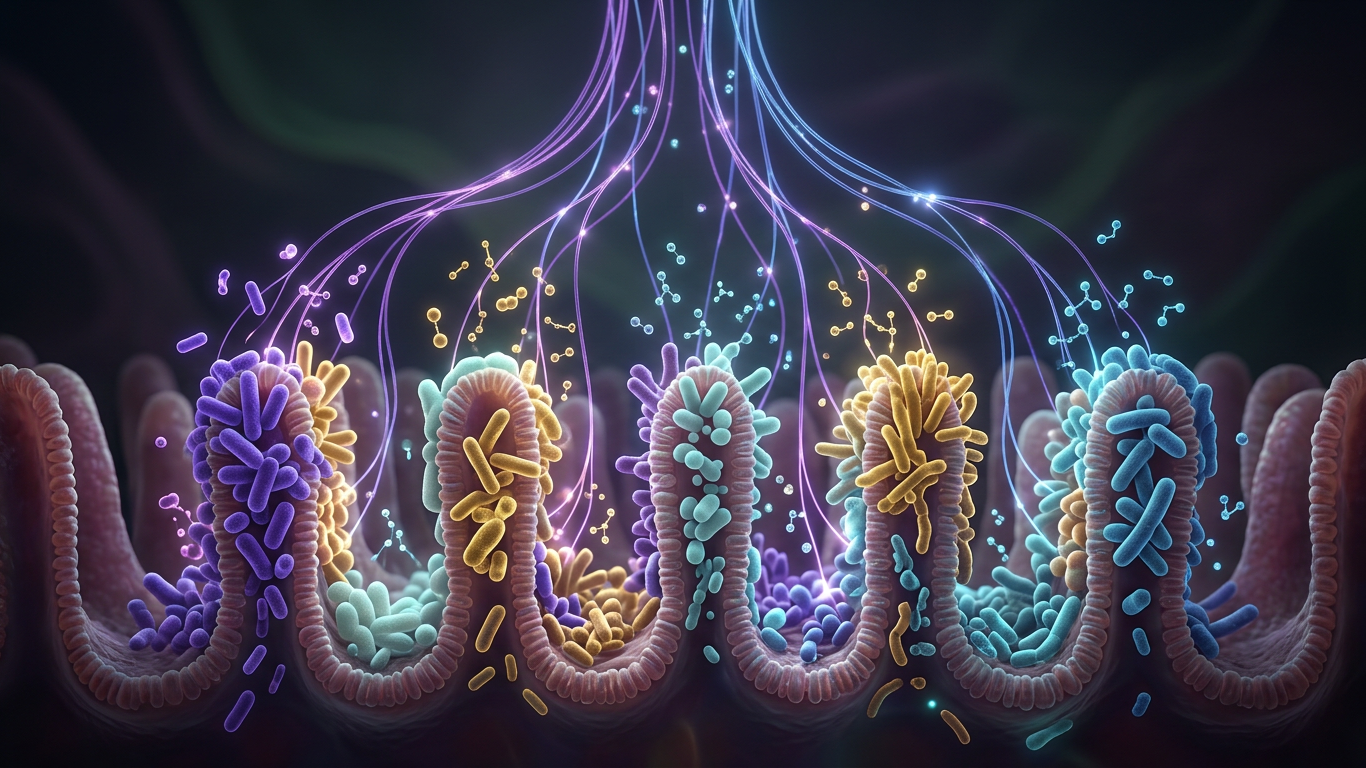
Vagus Nerve and Gut Microbiome — Bacteria That Talk to Your Brain
Thesis
Your gut bacteria are not passive inhabitants — they're active communicators, and the vagus nerve is their primary telephone line to the brain. Specific bacterial strains modulate brain chemistry through vagal pathways, altering GABA receptor expression, stress hormone levels, and emotional behavior. Cut the vagus nerve, and these effects vanish entirely. The microbiome-gut-brain axis is not a metaphor — it's a vagal circuit with measurable molecular components.
Key Questions
- How do gut bacteria communicate with the brain through the vagus nerve?
- Which specific bacterial strains affect brain function, and how?
- Why does vagotomy eliminate probiotic effects on behavior?
- What are the therapeutic implications for psychiatric and neurological conditions?
Supporting Research
Cryan, J.F. & Dinan, T.G. (2012). Mind-altering microorganisms: the impact of the gut microbiota on brain and behaviour. Nature Reviews Neuroscience, 13, 701–712.
DOI: 10.1038/nrn3346 | Nature
Bravo, J.A. et al. (2011). Ingestion of Lactobacillus strain regulates emotional behavior and central GABA receptor expression via the vagus nerve. PNAS, 108(38), 16050–16055.
Multiple Communication Pathways
The gut microbiota communicates with the brain through several channels, but the vagus nerve is the fastest and most direct:
- Neural (vagus nerve): 80–90% of vagal fibers are afferent, carrying gut signals to the NTS, then to higher brain regions. Fastest pathway — millisecond-scale signaling.
- Immune: Microbial metabolites modulate cytokine production, which can activate vagal afferents or enter systemic circulation.
- Endocrine: Gut bacteria influence tryptophan metabolism (serotonin precursor), short-chain fatty acid production, and enteroendocrine cell signaling.
- Neurotransmitter production: Gut bacteria directly produce GABA, serotonin, dopamine, and norepinephrine.
The Lactobacillus Experiment
Bravo et al. (2011) demonstrated the vagal dependency of probiotic effects with elegant specificity:
- Feeding mice Lactobacillus rhamnosus JB-1 reduced anxiety and depression-like behaviors
- It altered GABA receptor expression in the brain (increased GABAα in hippocampus, cortex, amygdala; decreased GABAβ in brainstem)
- It reduced stress-induced corticosterone and ACTH levels
- Critical: In vagotomized mice, NONE of these effects occurred. Cut the vagus, the probiotic becomes biologically inert for brain function.
This proved the vagus nerve isn't just involved — it's the exclusive pathway for this particular bacterial strain's effects on the brain.
Germ-Free Studies
Germ-free animals (raised without any gut bacteria) show dramatic alterations:
- Exaggerated HPA stress response (elevated ACTH and corticosterone)
- Reduced BDNF in hippocampus (impaired neuroplasticity)
- Altered serotonin metabolism
- Social behavior deficits
- All reversible by recolonization with specific bacteria — but only if the vagus nerve is intact
Clinical Implications
- Depression: Altered gut microbiome composition in depressed patients; probiotic supplementation shows antidepressant effects in some trials
- Anxiety: B. longum NCC3001 reduces anxiety scores — vagal pathway dependent
- IBS: Bidirectional gut-brain dysfunction; visceral hypersensitivity mediated by upregulated vagal afferents
- Autism: GI symptoms common in ASD; microbiome alterations correlate with behavioral severity
- Parkinson's: α-synuclein pathology may propagate from gut to brain via the vagus nerve
Why This Matters
The microbiome-gut-brain axis reframes mental health as a whole-body phenomenon. Your mood, cognition, and stress resilience aren't just products of brain chemistry — they're influenced by trillions of bacteria communicating through the vagus nerve. This means diet, probiotics, and gut health aren't just "wellness" advice — they're neuromodulatory interventions with specific molecular mechanisms operating through identifiable neural pathways.
Experimental Predictions
- Specific bacterial strains should show vagal-dependency for their CNS effects (blocked by vagotomy)
- Microbiome diversity should correlate with vagal tone and mental health outcomes
- Combined probiotic + VNS therapy should show synergistic effects on mood
- Restoring microbiome composition should improve vagal tone in dysbiotic patients
Have a question?
Have a question about something specific? Send us a message.
Visit VagusSkool.com/contact — we'll try to get back to you within 24 hours.