Vagus Nerve and Pain Management: A Neural Pathway to Relief
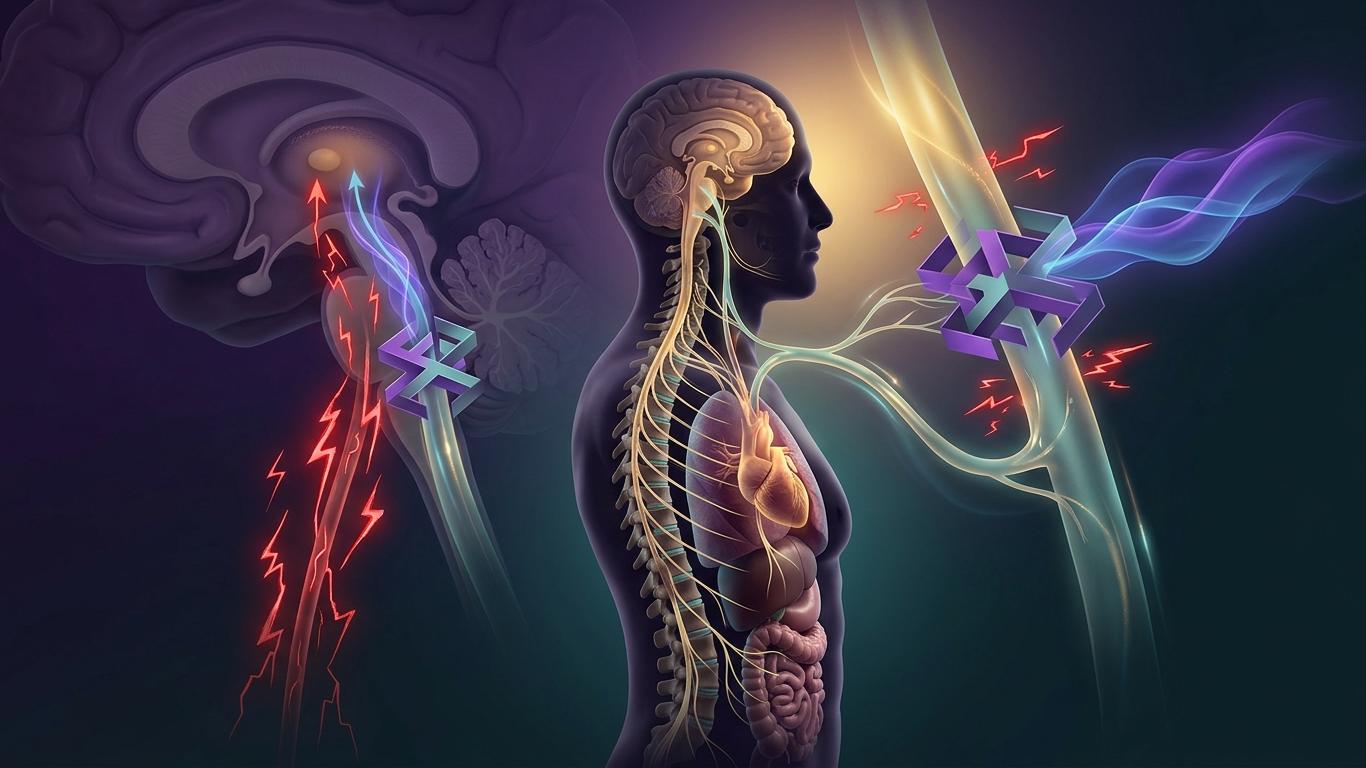
Pain feels like it comes from the place that hurts. But that's only half the story. The actual experience of pain is constructed by your brain, which makes a moment-by-moment decision about how loud the alarm should be. That decision is heavily influenced by a single nerve — and learning to work with it changes pain in a way no painkiller can.
The Vagus Nerve's Role in Pain Processing
Pain isn't just a signal from damaged tissue — it's a complex neurological experience shaped by your autonomic nervous system. The vagus nerve plays a critical role in modulating pain through descending inhibitory pathways that can suppress pain signals before they reach conscious awareness.
This is why stress, anxiety, and low vagal tone amplify pain perception, while relaxation, meditation, and high vagal tone reduce it. Your vagus nerve is literally a pain modulation system built into your body — and unlike pharmaceutical analgesics, it has no ceiling, no tolerance, and no withdrawal.
How It Works
Vagal afferents carry sensory information from the body to the nucleus tractus solitarius (NTS) in the brainstem. The NTS then activates descending pathways that release endogenous opioids (endorphins, enkephalins) and serotonin in the spinal cord, inhibiting pain signal transmission.
This system is bidirectional: pain activates the vagus nerve (contributing to nausea and fainting during acute pain), and vagal activation suppresses pain (explaining why deep breathing and relaxation reduce pain perception). The same nerve that lets you feel pain also lets you turn it down.
The pain "volume knob"
Researchers sometimes describe vagal pain modulation as the brain's volume knob for pain. The signal from the injury is fixed; the perceived loudness is not. People with high vagal tone live with the knob set lower — they experience the same tissue events as less catastrophic. People with chronic low vagal tone live with it set higher, which is why two people with identical injuries can have vastly different pain experiences.
Vagus Nerve Stimulation for Chronic Pain
Implantable VNS has shown promising results for chronic pain conditions including:
- Migraine and cluster headaches — often dramatically responsive
- Fibromyalgia — both pain intensity and accompanying fatigue improve
- Rheumatoid arthritis — via the cholinergic anti-inflammatory pathway
- Neuropathic pain that hasn't responded to standard medications
- Inflammatory bowel disease pain
- Complex regional pain syndrome (CRPS)
Non-invasive transcutaneous VNS (taVNS) — stimulating the auricular branch through the ear with a small electrode — is emerging as an accessible alternative, with clinical trials from 2023–2025 showing significant pain reduction in fibromyalgia and migraine patients. Several FDA-cleared consumer devices now exist in this category.
The signal from the injury is fixed. The perceived loudness is not. People with high vagal tone live with the volume knob set lower.
The Inflammatory Layer
Much chronic pain is sustained by chronic low-grade inflammation. The vagus nerve's cholinergic anti-inflammatory pathway directly suppresses pro-inflammatory cytokines — particularly TNF-alpha and IL-6 — that sensitize pain receptors and keep the nervous system in a "high gain" state.
This means that vagal training doesn't just blunt pain perception in the moment; it actually reduces the underlying biochemical drivers of chronic pain over time. People who consistently practice vagal toning often report that their baseline pain levels drop weeks after they started — even though they didn't change anything else about their condition.
Natural Vagal Pain Management
- Diaphragmatic breathing: Activates vagal descending inhibition. The acute effect is measurable within minutes of slow breathing.
- Cold therapy: Cold water immersion triggers analgesic vagal reflexes — part of why an ice pack on the neck can reduce headache intensity beyond what local cooling alone would explain.
- Meditation: Long-term practice structurally changes pain-processing circuits in the insula and anterior cingulate cortex.
- Social connection: Vagal social engagement pathways reduce pain catastrophizing. Lonely people experience higher pain intensity from identical stimuli.
- Acupuncture: Evidence suggests some acupuncture effects are mediated through vagal pathways, particularly for points along the auricle and around the neck.
- Humming and chanting: The vibration directly stimulates vagal branches; some clinicians use this for migraine onset.
Building a Daily Pain-Modulation Practice
If you live with chronic pain, the highest-leverage daily practice is consistent slow breathing — not because it eliminates pain, but because it raises the vagal "set point" that determines how loudly your nervous system signals it.
A workable starter protocol:
- Morning (10 minutes): Resonance breathing at 5.5–6 breaths per minute, ideally with HRV feedback
- Midday (3 minutes): Extended-exhale breathing during a moment of pain spike — 4 in, 8 out, five rounds
- Evening (5 minutes): Body scan or progressive muscle relaxation to encourage parasympathetic recovery
- Weekly: One session of cold exposure, even brief — face immersion or end-of-shower cold
The Paradigm Shift
Understanding pain through the vagus nerve lens shifts treatment from symptom masking (painkillers) to neural retraining. By strengthening vagal tone, you build a more resilient pain-processing system — one that responds proportionally to threats instead of amplifying signals unnecessarily.
This doesn't mean abandoning pharmaceutical or interventional pain treatment. It means recognizing that your nervous system itself is part of the pain, not just a passive bystander reporting it. Treat the nerve, and the volume knob you've been fighting starts moving in your favor.
Have a question?
Have a question about something specific? Send us a message.
Visit VagusSkool.com/contact — we'll try to get back to you within 24 hours.