The Vagus Nerve and Hormonal Balance: A Hidden Connection
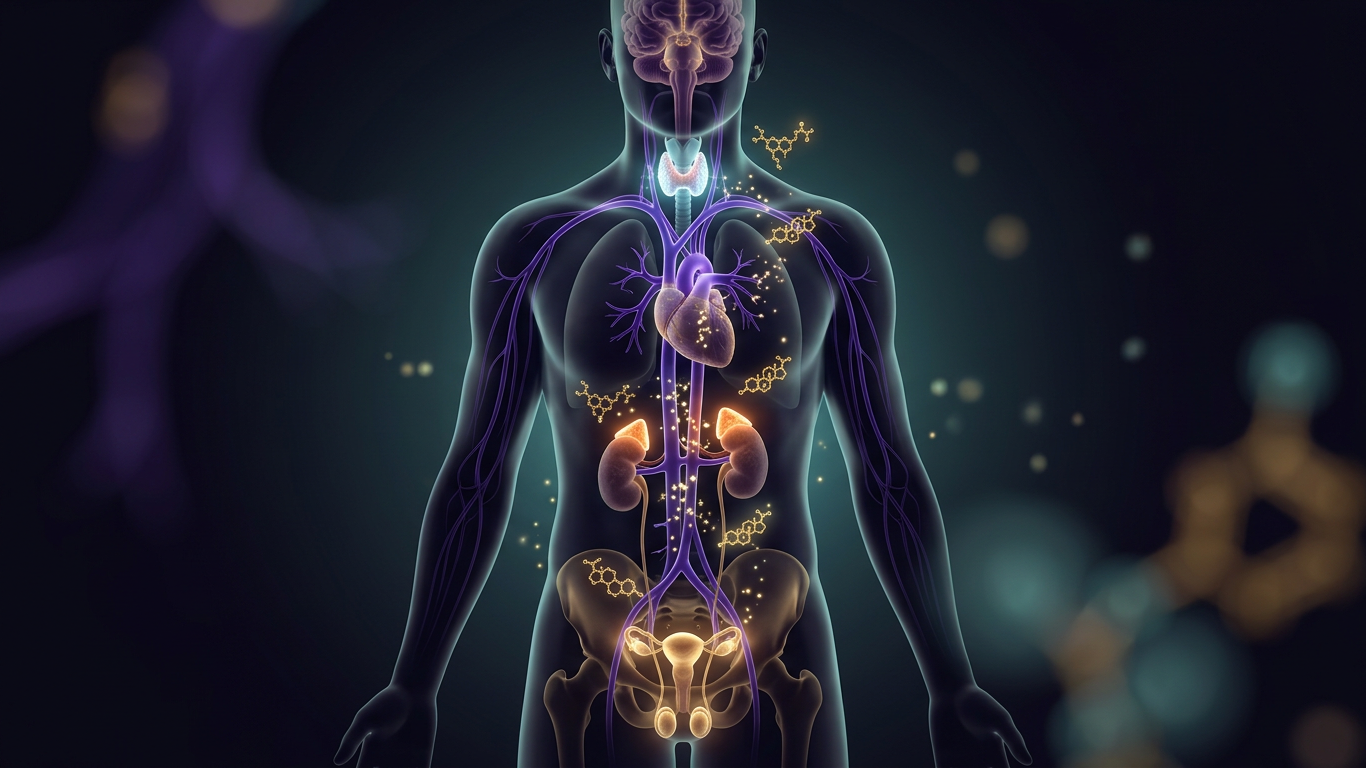
If your hormones feel "off" — fatigue, weight gain, mood swings, sleep problems — the standard playbook tests cortisol, thyroid, insulin, and sex hormones. But there's a hidden variable that quietly orchestrates all of them, and most labs never look at it. It's a single nerve that runs from your brainstem to your gut, and it's almost certainly involved.
The Vagus Nerve as an Endocrine Conductor
Most people think of hormones as chemical messengers floating through the bloodstream. But the vagus nerve acts as a direct neural conductor, communicating with every major endocrine organ — the adrenal glands, pancreas, thyroid, ovaries, and testes — in real time. Hormones are the postal service; the vagus nerve is the cell-tower network.
This neural-hormonal axis means that vagal tone directly influences your hormonal balance. Poor vagal tone correlates with cortisol dysregulation, insulin resistance, thyroid dysfunction, and reproductive hormone imbalances — and the relationships are causal, not just correlational. Animal studies that surgically disrupt vagal input to specific endocrine organs reproduce the same dysfunctions seen in chronic stress.
Cortisol and the Stress Response
The vagus nerve is the primary brake on the HPA (hypothalamic-pituitary-adrenal) axis. When vagal tone is high, the vagus nerve signals the adrenal glands to reduce cortisol output. When vagal tone is low, the stress response runs unchecked, leading to chronic elevated cortisol — a precursor to anxiety, weight gain, insomnia, and immune suppression.
This is why people with low HRV often present with classic "wired and tired" symptoms: cortisol that spikes too high in the morning or stays elevated into the evening, disrupting sleep and energy. Restoring vagal tone is one of the few interventions that can normalize cortisol rhythm without medication.
Insulin and Blood Sugar
The vagus nerve innervates the pancreas and directly modulates insulin secretion. Research shows that vagal stimulation improves insulin sensitivity and glucose metabolism, making it a potential therapeutic target for type 2 diabetes and metabolic syndrome.
The cephalic phase of insulin release — the small insulin pulse that happens before food even reaches your stomach — is entirely vagally mediated. This pre-emptive insulin release is essential for smooth glucose handling. People with vagal dysfunction lose this phase and end up with sharper post-meal glucose spikes, even when eating identical foods.
Practical implication
Eating in a stressed state (low vagal activity) produces worse glucose responses than eating the same meal in a calm state. The five-minute "pre-meal pause" that some metabolic-health programs recommend isn't woo — it's a deliberate vagal warm-up before food arrives.
Thyroid Function
Vagal signaling influences thyroid-stimulating hormone (TSH) release from the pituitary gland. Chronic stress and low vagal tone can suppress thyroid function, leading to symptoms like fatigue, weight gain, and brain fog — even when standard thyroid tests appear normal.
This pattern — clinically hypothyroid symptoms with "normal" labs — is one of the most common reasons patients bounce between doctors. The autonomic input to the thyroid isn't measured by TSH or T4, but it's often the missing piece. Vagal tone work alongside conventional thyroid evaluation produces better outcomes than either alone.
Oxytocin and Social Bonding
The vagus nerve and oxytocin system are deeply intertwined. Vagal activation promotes oxytocin release, which in turn strengthens vagal tone — creating a positive feedback loop that supports social bonding, trust, and emotional wellbeing.
This is the neurobiology behind why meaningful connection — eye contact, warm conversation, physical touch — feels physiologically restorative. It's not metaphor. The ventral vagal complex literally responds to safe social cues with measurable shifts in heart rate, breathing, and hormone release.
If your hormones feel off and your bloodwork looks "fine," the missing variable is almost always autonomic. The vagus nerve writes the music your endocrine system plays.
Sex Hormones: The Quiet Vagal Connection
Estrogen, progesterone, and testosterone all show measurable links to vagal tone. Women with PCOS, PMS, and perimenopausal symptoms tend to have lower HRV. Men with low testosterone often present with reduced HRV alongside other autonomic markers.
The mechanism appears to involve vagal regulation of pituitary signaling and ovarian/testicular blood flow. Vagal toning practices won't replace hormone therapy when it's needed, but they often reduce dose requirements and smooth out symptom volatility — particularly the cyclical mood and sleep disruptions tied to hormonal shifts.
Supporting Hormonal Balance Through Vagal Health
Regular vagal toning practices — slow breathing, cold exposure, meditation, social connection, and gut health optimization — can restore hormonal balance by strengthening the neural pathways that regulate endocrine function. The interventions that actually move HRV measurably:
- Resonant breathing at 5–6 breaths per minute, 10 minutes daily
- Brief cold exposure — 30 seconds at the end of a shower is enough to start
- Consistent meal timing in a calm environment (not at your desk, not while scrolling)
- Quality sleep — vagal recovery and hormone synthesis both happen here
- Gut-supportive nutrition — fermented foods, fiber, polyphenols. Your gut microbiome talks directly to your vagus nerve
A New Framework
If you've been chasing hormones with labs and supplements without lasting improvement, the missing layer may be autonomic. Strengthening your vagus nerve doesn't replace endocrine medicine — it provides the neural substrate that lets endocrine medicine work. Treat the conductor, and the orchestra plays better.
Have a question?
Have a question about something specific? Send us a message.
Visit VagusSkool.com/contact — we'll try to get back to you within 24 hours.