Trapped in Fight-or-Flight: Why Some Nervous Systems Cannot Stand Down
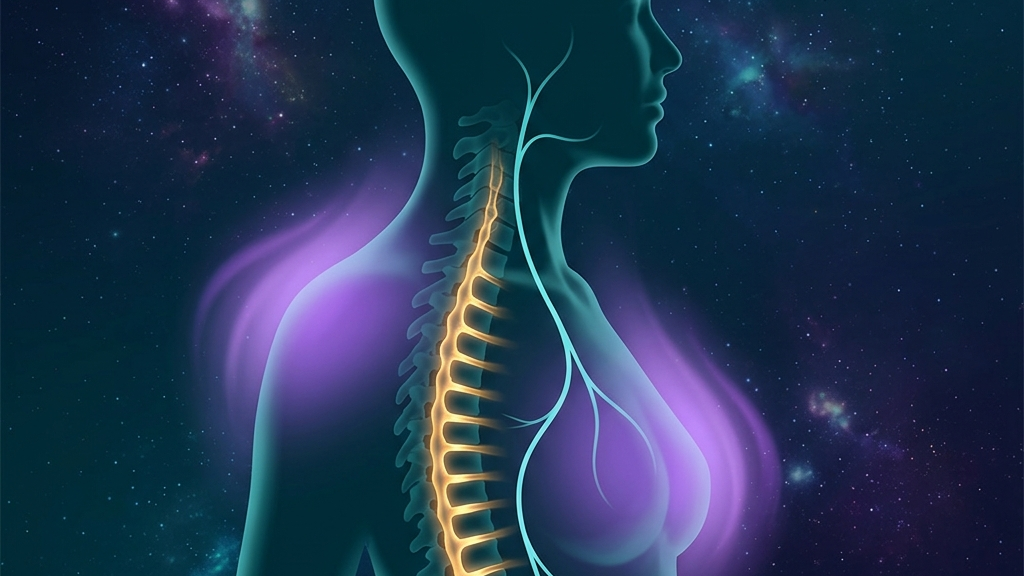
"I cannot relax. Even when nothing is wrong, my body acts like something is wrong." That sentence, in some variation, opens dozens of patient conversations every week. It is not a personality. It is not weakness. It is a measurable state of chronic sympathetic activation — a nervous system that has lost reliable access to its parasympathetic brake. And it is fixable, but not with the tools most patients are handed first.
What "Stuck in Fight-or-Flight" Actually Means
Polyvagal theory, the most useful clinical framework for this problem, describes three autonomic states: ventral vagal (calm, safe, socially engaged), sympathetic (mobilized for action), and dorsal vagal (shutdown, conserved energy) (Polyvagal Institute). A healthy nervous system shifts between these states fluidly — sympathetic activation rises in response to an actual threat, then resolves as ventral vagal regulation takes over.
In a chronically activated patient, that resolution never arrives. Ordinary inputs — a work meeting, a busy grocery store, a loud sound — are processed as threat. The body stays in sustained low-grade mobilization. This is what we mean by "trapped." The sympathetic switch is stuck on; the vagal brake is not strong enough to override it.
The Clinical Signature
Patients who are stuck in fight-or-flight present with a recognizable phenotype:
- Resting heart rate consistently elevated (often 80+ bpm)
- Low heart rate variability — particularly low RMSSD and HF-HRV
- Cold hands and feet despite normal core temperature
- Shallow upper-chest breathing, often unconscious
- Difficulty falling asleep despite genuine exhaustion
- GI tightness, acid reflux, or unexplained bloating
- Jaw clenching, teeth grinding, neck and shoulder bracing
- Hyper-startle response and noise sensitivity
- "Tired but wired" sensation — fatigue stacked on top of activation
These are the downstream consequences of a sustained catecholamine drive that the parasympathetic system cannot adequately counter.
Why Relaxation Techniques Often Fail Here
The standard advice — "just breathe," "try meditation," "manage your stress" — fails for one reason: a nervous system in chronic mobilization cannot drop into rest from sheer effort. The ventral vagal system is offline. Asking a patient to "calm down" is like asking them to use a muscle they have not been able to access for years. Recovery requires rebuilding the access pathway, not telling the system to be different.
The Vagal Brake, In Plain Language
The ventral vagal complex acts as a brake on the heart, modulating heart rate beat-to-beat. When you exhale, vagal output rises and heart rate slows. When you inhale, vagal output falls and heart rate quickens. This oscillation — respiratory sinus arrhythmia — produces measurable HRV. A patient stuck in fight-or-flight has a weak brake. Training the brake is the central project of recovery.
A Vagal Restoration Protocol
Phase 1: Send Safety Signals (Weeks 1–2)
Begin with the cheapest, most reliable interventions:
- Extended exhale breathing. Six breaths per minute, with the exhale roughly twice the inhale. Twenty minutes, twice daily. Non-negotiable consistency.
- Cold-water face immersion. 30–60 seconds, daily. Triggers the mammalian dive reflex — one of the strongest endogenous vagal activators we have.
- Humming, chanting, or singing. The vagus nerve innervates the vocal cords. Vibration amplifies the signal.
- Reduce sympathetic load. Limit caffeine, blue light at night, fragmented multitasking, and stimulating media. The system needs a quieter environment to begin rebuilding.
Phase 2: Build Vagal Capacity (Weeks 3–8)
- HRV biofeedback. Track RMSSD daily. Aim for a rising weekly average.
- Co-regulation. The nervous system regulates fastest in the presence of another regulated nervous system. Time with calm, safe people is medicine.
- Movement that lowers, not raises, sympathetic tone. Walking, yoga, gentle resistance work. High-intensity training too early often delays recovery.
- Auricular taVNS where available. Non-invasive vagal stimulation increasingly used in this population, with measurable HRV improvement.
Phase 3: Generalize the State (Weeks 8+)
Once the patient can access ventral vagal regulation deliberately, the work becomes generalization — practicing the shift in increasingly challenging contexts. Mild stressors, then moderate ones, with the parasympathetic skill applied as an anchor. This is the rehab arc.
The Most Common Recovery Mistake
Patients improve, feel better, and stop the practices. Vagal tone, like aerobic capacity, requires maintenance. Without continued training, the system drifts back toward its old baseline. Lifelong practice is realistic and small — even 10 minutes daily preserves what was built.
Clinical takeaway: Chronic fight-or-flight is a vagal-brake deficit. It does not respond to willpower or surface-level relaxation. It responds to consistent, dose-dependent training of the parasympathetic system — the same way any deconditioned physiological capacity responds to rehab.
References & Further Reading
Have a question?
Have a question about something specific? Send us a message.
Visit VagusSkool.com/contact — we'll try to get back to you within 24 hours.