Transcutaneous Vagus Nerve Stimulation — Non-Invasive Brain Modulation at Home
Transcutaneous Vagus Nerve Stimulation — Non-Invasive Brain Modulation at Home
Thesis
Vagus nerve stimulation no longer requires surgery. Transcutaneous VNS (tVNS) devices — small, handheld stimulators applied to the neck or ear — can activate the vagus nerve through the skin. The gammaCore device demonstrated efficacy for migraine treatment, and research is expanding to depression, PTSD, epilepsy, and inflammatory conditions. tVNS democratizes access to a therapeutic modality that was previously limited to patients willing to undergo implant surgery, opening the door to at-home treatment of conditions that were once hospital-only.
Key Questions
- How does transcutaneous stimulation reach the vagus nerve through the skin?
- What clinical conditions respond to non-invasive VNS?
- How does tVNS compare to implanted (iVNS) in efficacy?
- What are the safety and tolerability profiles?
Supporting Research
Barbanti, P. et al. (2015). Non-invasive vagus nerve stimulation for acute treatment of high-frequency and chronic migraine. Journal of Headache and Pain, 16, 61.
DOI: 10.1186/s10194-015-0542-4 | PubMed
Yap, J.Y.Y. et al. (2020). Transcutaneous Vagus Nerve Stimulation in Healthy Humans. Frontiers in Neuroscience, 14, 585.
How tVNS Works
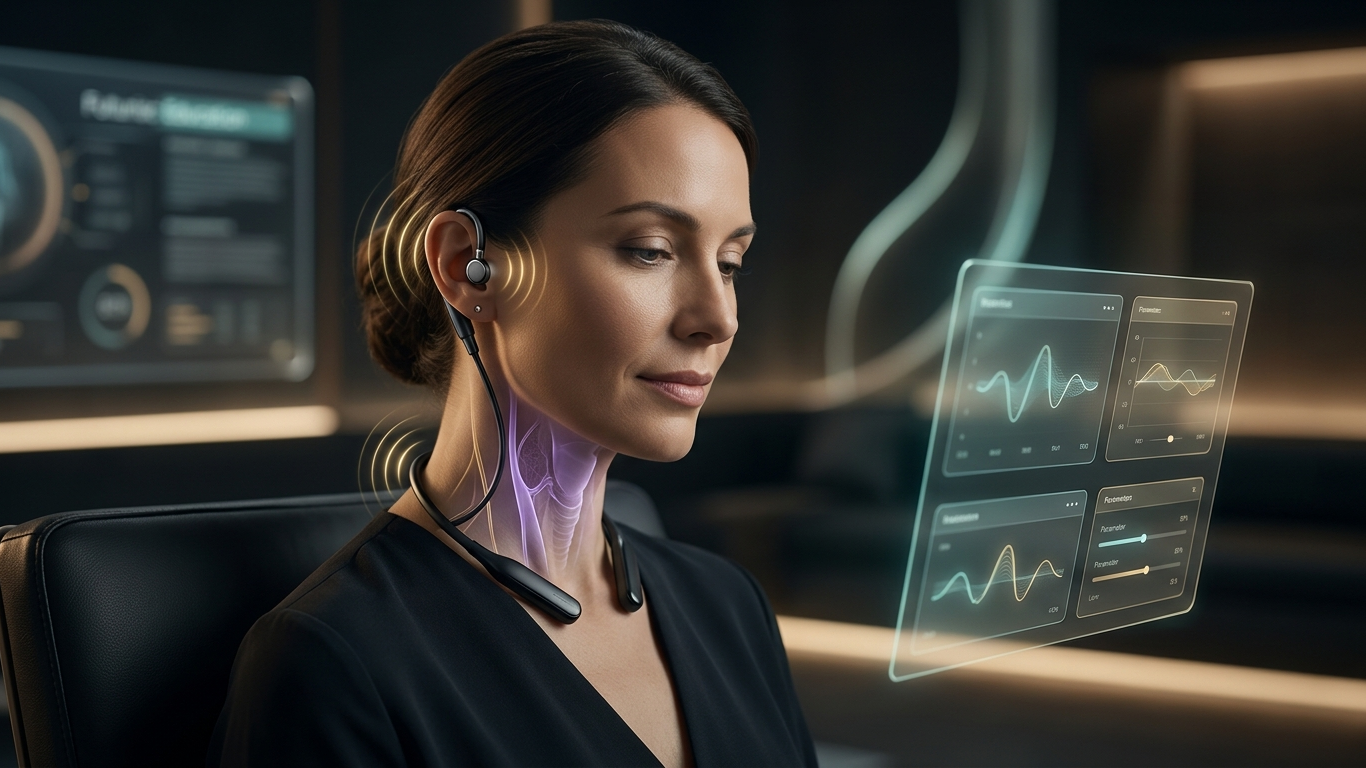
The cervical vagus nerve runs close to the skin surface in the neck. The auricular branch innervates the ear's cymba concha at just 1–1.5mm depth. Transcutaneous devices deliver low-intensity electrical pulses through surface electrodes or contact pads, activating vagal afferent fibers without breaking the skin. The signal reaches the same brainstem nuclei (NTS, locus coeruleus, dorsal motor nucleus) as implanted VNS, though at lower intensities.
Clinical Evidence: Migraine
Barbanti et al. tested the gammaCore device on 48 patients treating 131 migraine attacks (high-frequency episodic and chronic migraine):
- Pain relief (≥50% VAS reduction): 38.2% at 1 hour, 51.1% at 2 hours
- Pain freedom: 17.6% at 1 hour, 22.9% at 2 hours
- Safety: Well-tolerated, no serious adverse events
- Practical: May reduce medication overuse dependency
Physiological Effects in Healthy Subjects
Yap et al. (2020) reviewed tVNS effects in healthy humans, finding:
- Increased high-frequency HRV (vagal tone marker)
- Reduced sympathetic markers (skin conductance, blood pressure)
- Anti-inflammatory effects (reduced TNF-α, IL-6)
- Improved mood and reduced anxiety scores
- Enhanced cognitive performance in some tasks
tVNS vs. iVNS: Trade-offs
- Efficacy: iVNS delivers stronger, more reliable stimulation. tVNS is lower intensity but sufficient for many conditions.
- Side effects: tVNS has fewer side effects (no voice alteration, no surgical risks). Common complaint is local skin tingling.
- Access: tVNS requires no surgery, no hospital, no anesthesia. Can be used at home.
- Cost: tVNS devices cost hundreds vs. thousands for implanted systems.
- Compliance: tVNS requires daily user action; iVNS is always on.
Conditions Under Investigation
- Migraine and cluster headache (FDA-cleared)
- Epilepsy (FDA-cleared for iVNS, tVNS trials ongoing)
- Treatment-resistant depression
- PTSD and anxiety disorders
- Rheumatoid arthritis and inflammatory conditions
- Post-COVID autonomic dysfunction
- Tinnitus
Why This Matters
tVNS makes vagal modulation accessible to anyone with a device and a few minutes per day. This could transform treatment of chronic conditions that currently require daily medications with systemic side effects. Instead of swallowing a pill that affects your entire body, you can stimulate a specific nerve that modulates inflammation, mood, and autonomic function — then turn it off. The precision of bioelectronic medicine, delivered non-invasively.
Experimental Predictions
- Higher stimulation doses (longer duration, more sessions) should show dose-response improvements
- tVNS combined with resonance frequency breathing should show synergistic effects
- Home-based tVNS should show comparable outcomes to clinic-based tVNS for chronic conditions
- Personalized stimulation parameters (frequency, intensity, duration) should outperform one-size-fits-all protocols
Have a question?
Have a question about something specific? Send us a message.
Visit VagusSkool.com/contact — we'll try to get back to you within 24 hours.