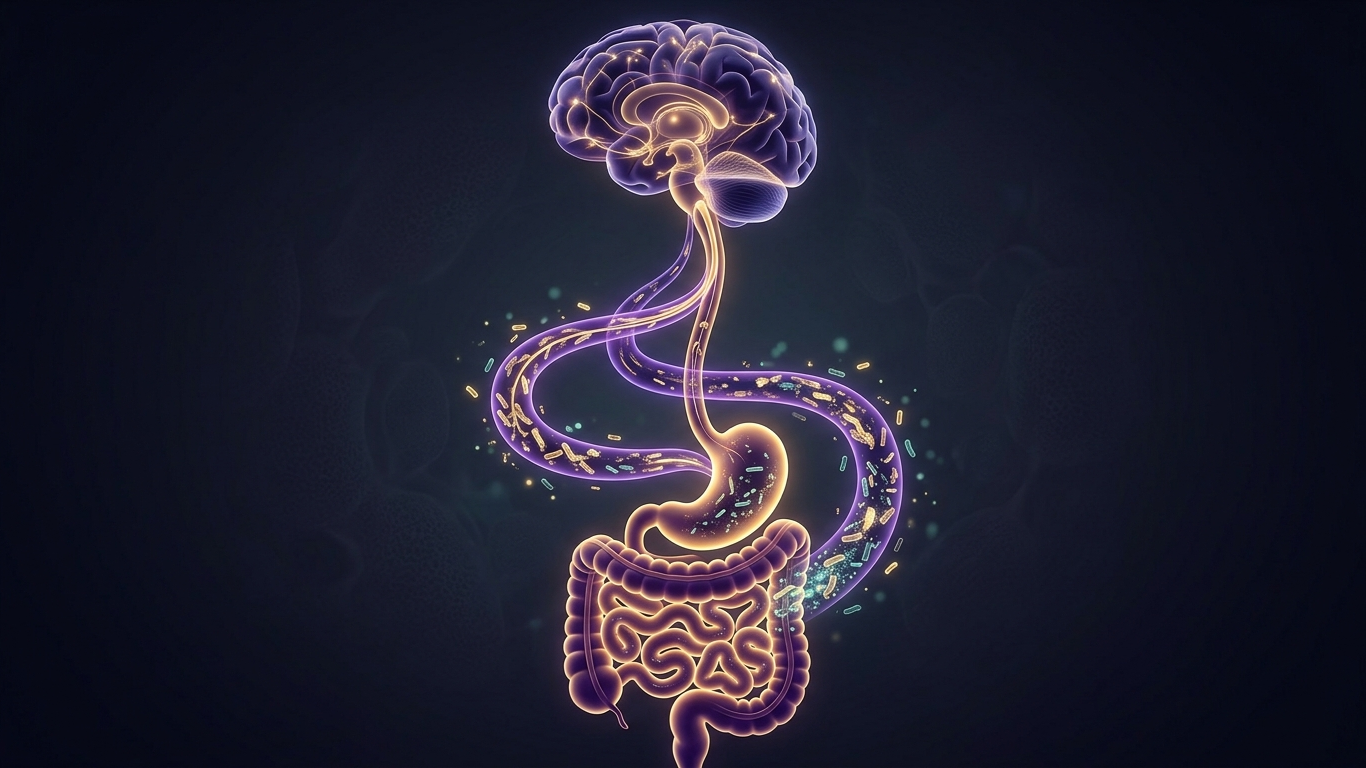
The Gut-Brain Highway: How Vagus Nerve Health Transforms Mental Wellness
Your gut and brain are connected by a superhighway called the vagus nerve — and traffic jams on this highway could be the root cause of your anxiety, depression, and chronic inflammation.
The Hidden Communication Channel
Here's a fact that surprises most people: 90% of the fibers in the vagus nerve run from the gut to the brain — not the other way around. Your gut microbiome literally talks to your brain via this critical nerve pathway, and this two-way communication system explains why gut issues so often coincide with mood disorders like anxiety and depression.
The vagus nerve — Latin for "wandering" — is the longest cranial nerve in your body, stretching from the brainstem all the way down through your neck, chest, and abdomen. It serves as the primary information highway between your gut and your brain, transmitting signals about the state of your digestive system, immune function, and overall well-being.
Think of it as a biological fiber-optic cable. When it's working well, the signals flow clearly and your brain gets accurate updates about what's happening below. When it's impaired, the communication breaks down — and that's when problems start.
What Happens When the Highway Gets Congested
Researchers and clinicians use a measure called vagal tone to describe how active and responsive your vagus nerve is. Low vagal tone means poor gut-brain communication, and the downstream effects are significant:
- Anxiety and panic disorders — the brain receives distorted or incomplete signals from the body
- Depression — neurotransmitter production in the gut (where 95% of your serotonin is made) gets disrupted
- Brain fog — inflammatory signals pass through the vagus nerve and affect cognitive function
- Digestive issues — IBS, bloating, and motility problems often accompany low vagal tone
- Chronic inflammation — the vagus nerve's anti-inflammatory reflex becomes impaired
The modern lifestyle is particularly brutal on vagal tone. Constant stress activates the sympathetic nervous system (your "fight-or-flight" mode) at the expense of the parasympathetic system — which the vagus nerve controls. Add in poor sleep, processed food, sedentary behavior, and screen overload, and you have a recipe for chronically low vagal tone.
The Science: What Recent Research Tells Us
The past few years have produced remarkable research validating the gut-brain-vagus connection:
- Transcutaneous auricular vagus nerve stimulation (taVNS) — a non-invasive technique that stimulates the vagus nerve through the ear — has shown significant results in reducing insomnia, particularly in breast cancer patients undergoing treatment (2025-2026 clinical studies).
- Heart rate variability (HRV) has emerged as a reliable biomarker for vagal tone. Higher HRV generally indicates stronger parasympathetic activity and better vagal function.
- Immune function research has revealed the "inflammatory reflex" — a pathway where the vagus nerve directly modulates immune response, reducing systemic inflammation. This has implications for autoimmune conditions, metabolic syndrome, and even neurodegenerative diseases.
- Emotional regulation studies show that individuals with higher vagal tone demonstrate greater emotional resilience, faster stress recovery, and better interpersonal functioning.
5 Evidence-Based Ways to Unblock Your Highway
The encouraging news is that vagal tone is trainable. Here are five research-backed practices you can start today:
A. Resonance Breathing (5-6 breaths per minute)
This is arguably the most accessible and well-studied vagus nerve exercise. The technique is simple: inhale for 4-5 seconds, then exhale for 4-5 seconds, maintaining a slow, rhythmic pace. This breathing pattern directly activates the parasympathetic nervous system and can increase your HRV within minutes.
The "resonance" in the name refers to the point where your heart rate, blood pressure, and respiration synchronize — creating a physiological sweet spot that maximizes vagal activation. Research shows that even five minutes of daily resonance breathing can produce measurable improvements in HRV and stress resilience within two weeks.
B. Cold Exposure
Cold exposure is one of the most potent acute stimulators of the vagus nerve. Options include cold showers, ice packs placed on the sides of the neck, or cold water face immersion. The mechanism involves activating the mammalian dive reflex — an ancient survival response that dramatically increases parasympathetic activity and vagal tone.
Start gently: even ending your shower with 30 seconds of cold water can begin building this response. Over time, you can gradually extend the duration and reduce the temperature.
C. Humming, Singing, and Gargling
The vagus nerve passes directly through the throat, and activities that create vibration in this area stimulate it directly. Humming, chanting "om," singing loudly, or even vigorous gargling all activate the vagus nerve through mechanical vibration.
Research has shown that even two minutes of sustained humming produces measurable increases in vagal tone. This is one of the simplest exercises you can do — try humming during your morning routine or singing along with music in the car.
D. Probiotics and Fermented Foods
Your gut microbiome plays a central role in vagal signaling. A healthy, diverse microbiome produces short-chain fatty acids, neurotransmitters, and other metabolites that communicate directly with the vagus nerve. Research on specific strains — particularly Lactobacillus rhamnosus and Bifidobacterium longum — has demonstrated measurable effects on anxiety, stress response, and vagal tone.
Incorporate fermented foods like yogurt, kimchi, sauerkraut, kefir, and kombucha into your daily diet. These provide both the beneficial bacteria and the prebiotic fibers that support a healthy gut environment.
E. Social Connection and Laughter
This one may surprise you: genuine social connection is a powerful vagus nerve stimulant. The social engagement system — described by Dr. Stephen Porges in polyvagal theory — is mediated entirely by the vagus nerve. Eye contact, warm conversation, physical touch, and genuine laughter all activate the ventral vagal complex, boosting parasympathetic tone.
Isolation and loneliness, conversely, are associated with reduced vagal tone and poorer health outcomes. Prioritizing authentic human connection isn't just emotionally healthy — it's physiologically essential for your nervous system.
Measuring Your Progress
One of the most empowering aspects of vagal tone training is that you can measure your progress directly:
- HRV tracking via wearables — devices like Oura Ring, Apple Watch, and Whoop provide daily HRV measurements that reflect your autonomic nervous system balance
- Subjective markers — pay attention to improvements in digestion, sleep quality, emotional stability, and your stress response over time
- Dedicated HRV apps — HRV4Training and EliteHRV offer guided measurement sessions and trend tracking over weeks and months
Start Today
Here's a simple challenge: try resonance breathing for just five minutes daily for one week. Track your HRV each morning and notice how you feel. The changes often come faster than people expect — your vagus nerve is remarkably responsive to consistent, targeted stimulation.
For guided programs, deeper dives into the science, and a community of people exploring vagal health together, visit VagusSkool — where nervous system health is the foundation of everything we teach.