Sensory Hypersensitivity and Hyperacusis: When the Nervous System Has the Volume Cranked Up
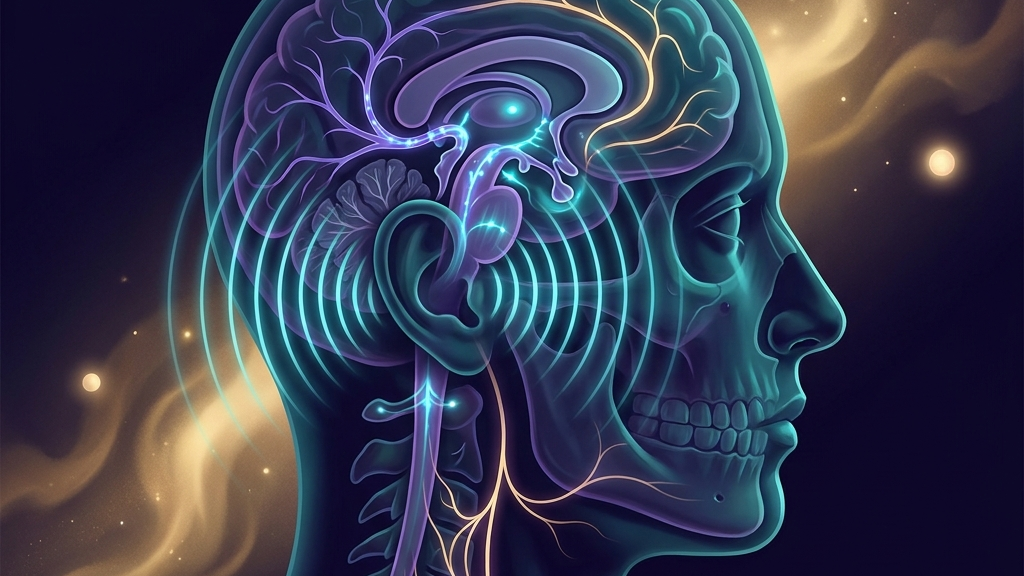
"Everything is too loud." "Fluorescent lights make me sick." "I can hear my own heartbeat." Patients describing these experiences are often labeled anxious, sensitive, or overstimulated — and then sent home. They are right that something is wrong. The diagnosis is central sensitization, often expressed loudest in the auditory system as hyperacusis, and the nervous system has lost its ability to dampen incoming signals. The vagus nerve is one of the few accessible levers for restoring that dampening.
Hyperacusis: The Tip of the Sensory Iceberg
Hyperacusis is reduced tolerance to everyday sounds, often perceived as excessively loud or even painful (StatPearls). It is a malfunction of central auditory pathways — not the ear itself. The cochlea hears normally; the brain interprets normal sounds as threats.
The current best mechanistic frame is enhanced central gain: sensory neurons recalibrate to amplify incoming signals, often after damage, illness, or persistent stress (Frontiers in Neurology, 2014). The same mechanism appears in tinnitus, chronic pain, photophobia, and chemical sensitivity — different sensory systems running the same software bug.
Central Sensitization Is a Whole-Nervous-System Problem
Central sensitization is the unifying mechanism behind a wide swath of "mystery" symptoms: fibromyalgia, migraine, IBS, vulvodynia, multiple chemical sensitivity, post-concussive syndrome, and large parts of long COVID. The shared substrate is an autonomic state that has lost its parasympathetic ceiling. CGRP and other neuropeptides drive the inflammatory amplification (Cleveland Clinic overview).
Why the Vagus Nerve Matters Here
Three vagal mechanisms converge on sensory dampening:
- Cholinergic anti-inflammation. Vagal acetylcholine release suppresses neuroinflammation that contributes to central sensitization.
- Modulation of brainstem gain. The locus coeruleus and noradrenergic gain control system are tightly linked to vagal afferents — and modulating vagus reshapes the gain set point.
- Visceral safety signaling. Sustained vagal activity signals "you are safe" to the threat-detection circuits, expanding sensory tolerance over time.
The Patient Profile
The classic patient is "sensitive to everything": sound, light, smell, touch, motion, temperature shifts. They often have anxiety, but the anxiety is a consequence — not the cause. Frequent overlapping diagnoses include POTS, MCAS, hEDS, migraine, ME/CFS, and long COVID. Sleep is poor. HRV is low. The window of stimulus tolerance is narrow and shrinks under stress.
A Vagus-First Sensory Recovery Framework
- Stop the input race. Persistent over-exposure to triggering stimuli does not desensitize a sensitized system — it inflames it. Strategic stimulus reduction precedes any retraining.
- Slow nasal breathing as an anchor. Six per minute, twice daily, expands the autonomic tolerance window.
- Graded exposure paired with parasympathetic anchoring. Reintroduce sound and light after activating vagal tone, not before. The order matters.
- Limbic system retraining (DNRS, Gupta) has signal in this population and works in part by deconditioning the threat circuit that drives sensory amplification.
- taVNS where appropriate. Auricular taVNS protocols are increasingly used in chronic pain, hyperacusis, and central sensitization adjacent conditions. Begin at the lowest tolerable intensity.
- Address comorbidities. MCAS, POTS, sleep disorders, and migraine all amplify central gain. Each treated lowers the baseline.
Clinical takeaway: Sensory hypersensitivity is a calibration problem, not a personality trait. The nervous system's volume knob is stuck — and the vagus nerve is one of the most reliable tools we have for turning it back down.
Have a question?
Have a question about something specific? Send us a message.
Visit VagusSkool.com/contact — we'll try to get back to you within 24 hours.