The Pelvic Floor Won't Relax: Chronic Pelvic Tension, Pain, and the Vagus–Sacral Connection
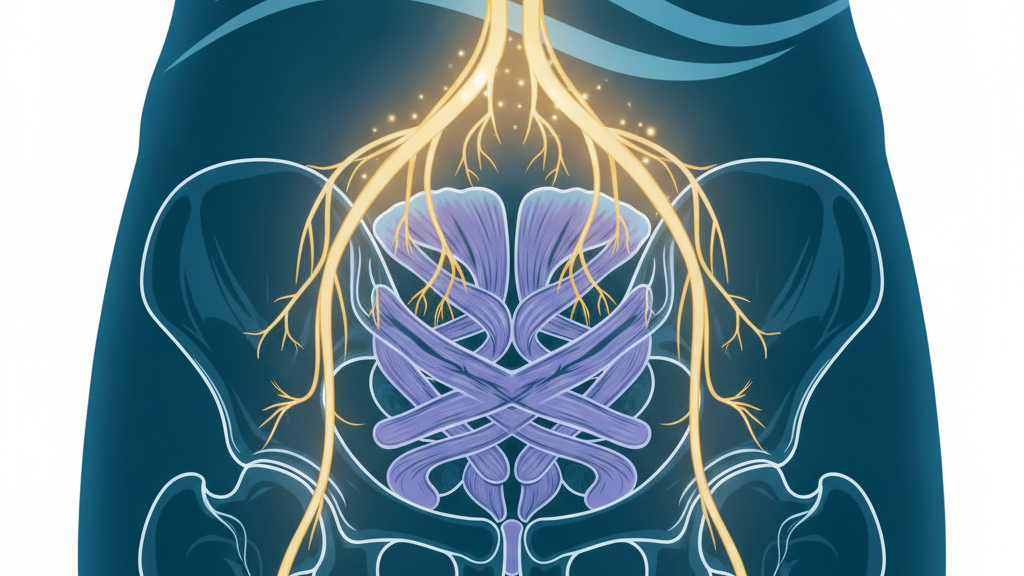
Pelvic floor problems are among the most under-discussed concerns people bring to us — pelvic pain, pressure, urinary urgency, painful sex, constipation, a sense of never fully emptying. People are often told to "do more Kegels," which for many makes things worse. The reason is that a large share of pelvic floor dysfunction is not weakness at all. It is a muscle group that cannot let go — and that is a nervous-system problem.
The Pelvic Floor Is a Muscle That Holds Tension
The pelvic floor is a sling of muscles at the base of the pelvis that supports the organs and controls the bladder and bowel. Like any muscle, it can be too weak — or too tight. A hypertonic (over-tight) pelvic floor cannot fully relax, and it produces a specific cluster: pelvic pain and pressure, urinary frequency and urgency, incomplete emptying, constipation and straining, and pain with intercourse (Pelvic Floor Dysfunction — StatPearls). Strengthening a muscle that is already clenched only tightens the vise, which is why Kegels backfire for this pattern.
Why the Nervous System Clenches It
The pelvic floor is a reliable holding site for stress and threat. When the nervous system is stuck in fight-or-flight, muscles brace — the jaw, the shoulders, and the pelvic floor among them. This bracing is often unconscious and chronic. For people with a history of trauma, the pelvic floor can become a near-permanent guard site, held tight around the clock. This is why pelvic tension so often travels with the other signs of sympathetic overdrive: jaw clenching, shallow breathing, and gut that will not settle.
The Vagus–Sacral Partnership
Parasympathetic control of the pelvic organs comes primarily from the sacral nerves rather than the vagus itself, but the two operate as one parasympathetic team, and the vagus sets the overall autonomic tone the pelvic floor responds to. The pelvic floor also shares deep functional links with the diaphragm: they move together with every breath. This is the practical key — because you can reach the diaphragm and the vagus consciously through the breath, you have a direct, non-invasive route to releasing the pelvic floor (brain–gut and autonomic regulation review).
The Bladder, Bowel, and Pain Overlap
A hypertonic pelvic floor helps explain why bladder urgency, constipation, and pelvic pain so often occur together and resist single-organ treatment. A clenched floor cannot coordinate the relaxation that normal urination and defecation require, and chronically tense muscle becomes painful in its own right. Treating these as one autonomic-muscular pattern, rather than three separate conditions, is usually more productive.
Releasing, Not Strengthening
- Down-regulate first. Slow, long-exhale breathing lowers the sympathetic bracing that keeps the floor tight. This is the foundation, not an add-on.
- Breathe into the pelvic floor. Diaphragmatic breathing that lets the belly and pelvic floor gently descend on the inhale teaches the muscles to release; the pelvic floor and diaphragm move as a pair.
- Stop the reflexive Kegels if your pattern is tension-based. Focus on lengthening and relaxation instead.
- See a pelvic floor physical therapist. This is the highest-yield step. Skilled pelvic PTs assess tone directly and use manual release, down-training, and biofeedback that general advice cannot match.
- Address the whole autonomic picture. Because pelvic guarding rides on overall threat state, general vagal and stress work reduces the baseline tension the floor holds.
When to Get Evaluated
Pelvic pain, urinary or bowel changes, and pain with sex all deserve proper assessment to rule out infection, gynecological or urological conditions, and other causes. An autonomic and muscular framing complements that evaluation — it does not replace it, and a pelvic floor physical therapist is a core part of the team.
The takeaway: Much pelvic floor dysfunction is a muscle that cannot relax, not one that is too weak — a holding site for a nervous system stuck in fight-or-flight. That is why Kegels often make it worse and why breath, which links the diaphragm, the vagus, and the pelvic floor, is such a powerful release tool. Down-training the tension, ideally with a pelvic floor physical therapist, addresses the actual mechanism.
Have a question?
Have a question about something specific? Send us a message.
Visit VagusSkool.com/contact — we'll try to get back to you within 24 hours.