Panic Attacks Through a Polyvagal Lens: Why Your Body Sounds the Alarm Without a Threat
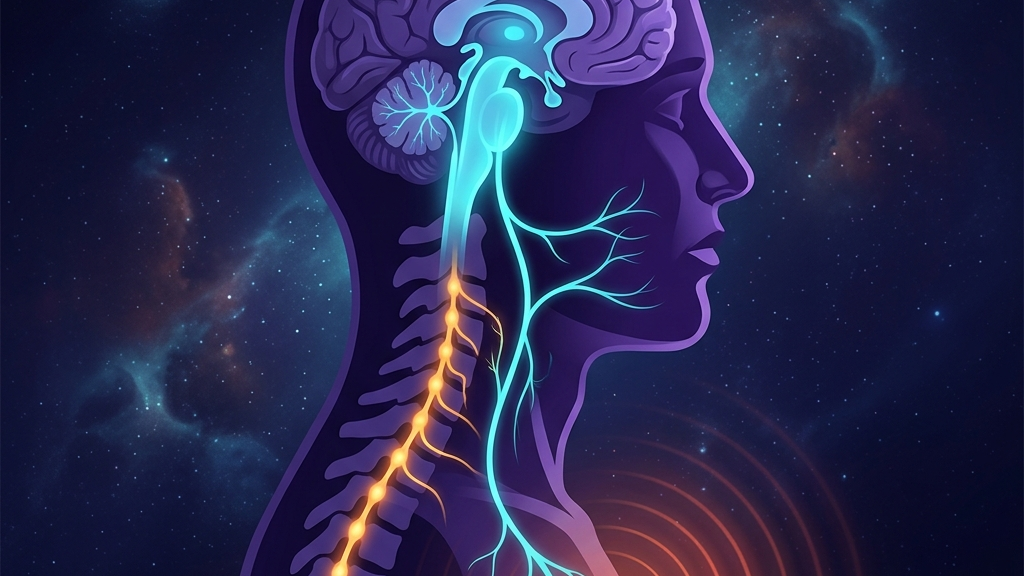
Panic attacks have been miscategorized for decades. The traditional cognitive framing — that catastrophic thoughts about bodily sensations drive panic — is partial at best. The deeper truth, clarified by polyvagal theory, is that panic is a neuroceptive event. The autonomic threat-detection system fires before the cortex is aware of anything. By the time the patient consciously experiences panic, the body has already mobilized. The cognitive narrative is a downstream attempt to explain what the body has already done.
What Neuroception Is
Neuroception, a term coined by Stephen Porges, refers to the continuous, subconscious neural process that scans environmental and visceral cues for safety, danger, or life-threat (Polyvagal Institute). It operates below awareness, in subcortical limbic and temporal cortex regions. When neuroception detects danger, it triggers sympathetic mobilization — heart rate rises, breathing accelerates, peripheral blood flow shifts toward muscles, attention narrows. This happens in milliseconds. The patient becomes aware after the fact.
In panic disorder, neuroception is mis-calibrated. The system perceives danger in safe environments. The mobilization fires anyway. The patient — finding no actual threat — concludes that something is wrong with their body, which triggers further sympathetic activation. The feedback loop is what creates the full panic episode.
Why Panic Is Not "Just Anxiety"
Anxiety is a sustained low-grade sympathetic activation — a chronic background hum. Panic is a discrete sympathetic surge: full mobilization compressed into seconds. They share an autonomic substrate but produce different phenomenology. A patient can have anxiety without ever experiencing panic. A patient can experience panic with little ongoing anxiety between episodes. The treatments overlap but are not identical.
The Anatomy of a Panic Attack
A typical panic episode follows a predictable autonomic sequence:
- Neuroception flags a stimulus — often subtle, often unconscious — as threatening.
- The ventral vagal brake disengages within milliseconds.
- Sympathetic activation surges: heart rate jumps 20–40+ beats per minute, breathing becomes rapid and shallow, peripheral vasoconstriction produces cold extremities, blood pressure rises.
- The patient consciously notices the bodily changes and interprets them as dangerous — "I am having a heart attack," "I am dying," "I am losing control."
- The cognitive interpretation feeds back into neuroception, reinforcing the threat signal.
- The episode crests, plateaus, and gradually resolves as sympathetic tone falls and parasympathetic tone recovers.
Why Cognitive Reframing Often Fails Mid-Attack
By the time the patient is in full mobilization, the prefrontal cortex — the seat of cognitive reframing — has reduced perfusion and limited online capacity. Telling a panicking person to "think differently" is asking a system that has been temporarily downshifted to perform its highest function. The intervention has to be somatic first; cognition can return after the body settles.
The Vagus-First Panic Protocol
In the Moment
- Extended exhale breathing. Inhale four, exhale six to eight. The exhale directly activates the vagal brake. Even two to three slow exhales begin to break the sympathetic surge.
- Cold-water face immersion. Triggers the mammalian dive reflex — one of the fastest endogenous vagal activators. Lean over a sink full of cold water for 30 seconds.
- Orienting. Slowly name five things you can see, four you can hear, three you can touch. Engages the prefrontal cortex and signals environmental safety.
- Movement. Walking, gentle shaking, or rhythmic motion can complete the sympathetic discharge that was triggered.
Between Episodes
The deeper work is retraining neuroception. This means:
- Building baseline vagal tone. Daily extended-exhale breathing, cold exposure, humming, and singing. Higher resting vagal tone produces a more accurate neuroceptive system.
- Interoceptive accuracy training. Many panic patients have lost the ability to distinguish normal body sensations from danger signals. Body-based therapies — Somatic Experiencing, sensorimotor approaches — help rebuild this discrimination.
- Co-regulation. Sustained time with calm, regulated people retrains neuroception faster than any solo practice.
- Treating comorbidities. POTS, MCAS, hypoglycemia, sleep deprivation, and caffeine sensitivity can mimic or trigger panic. Each treated lowers the substrate that panic emerges from.
A Note on Medications
SSRIs and benzodiazepines have a role — particularly during initial recovery — but neither retrains the underlying neuroceptive system. They lower the volume on the symptom while autonomic retraining does the deeper work. Long-term reliance on benzodiazepines, in particular, can blunt the body's natural vagal recovery capacity if used as the sole intervention.
Clinical takeaway: Panic is a neuroceptive event, not a cognitive one. The intervention must reach the autonomic nervous system directly before reframing can do its work. Vagal tone is the underlying capacity that makes recovery possible — train it consistently, and panic loses its hold.
Have a question?
Have a question about something specific? Send us a message.
Visit VagusSkool.com/contact — we'll try to get back to you within 24 hours.