Overactive Bladder, Pelvic Floor, and the Vagus Nerve
You’re in the middle of a meeting, a movie, a long drive, and the urge hits. Hard, sudden, impossible to ignore. You’ve mapped the bathroom in every place you frequent. You’ve started timing your fluids. You’ve cut the coffee, the wine, the soda — and you still can’t predict when the urge will spike.
Overactive bladder (OAB) is one of the most under-discussed quality-of-life conditions. It affects an estimated one in six adults, more women than men, and the rate climbs with age. What rarely gets explained is that it isn’t purely a bladder problem. It’s an autonomic and pelvic floor problem, and the vagus nerve plays a quiet but important role.
How Bladder Control Actually Works
The bladder is controlled by two competing systems:
- Sympathetic nervous system: Tells the bladder to fill and hold
- Parasympathetic nervous system: Tells the bladder to contract and empty
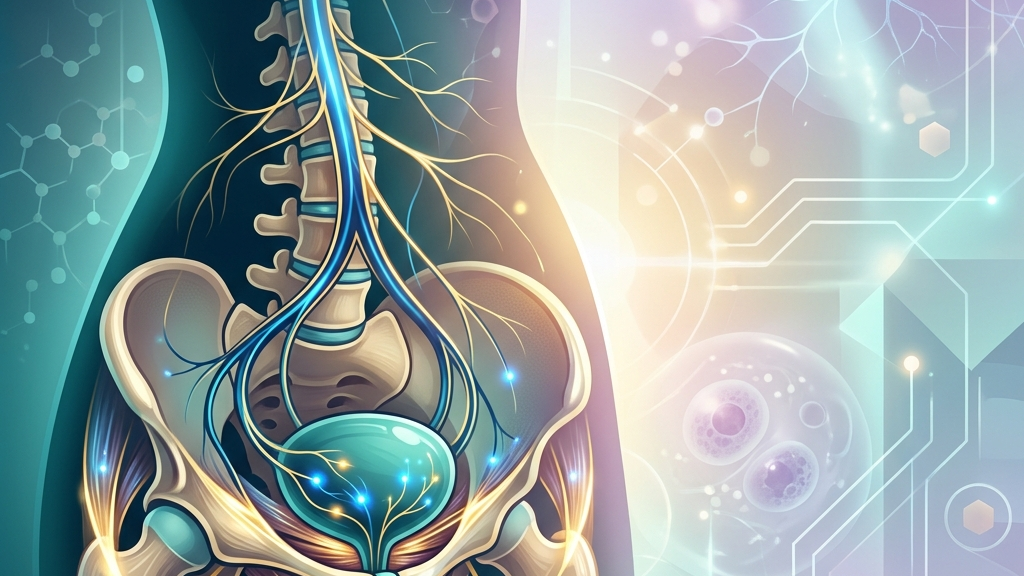
The parasympathetic input to the bladder doesn’t come from the vagus nerve directly — it comes from sacral nerves at the base of the spine. But the vagus nerve and the sacral parasympathetic system communicate constantly through the brainstem and the gut-brain axis. When vagal tone is low and the sympathetic-parasympathetic balance is off, the bladder’s coordination suffers.
The result is a bladder that contracts when it shouldn’t, urgency that comes faster than the brain can process, and a frustrated nervous system that has stopped trusting itself.
The Pelvic Floor Connection
Your pelvic floor is a hammock of muscles that holds up your bladder, uterus or prostate, and rectum. It also functions as part of your stress response — chronically tight pelvic floors are extremely common in people who hold tension elsewhere (jaw, shoulders, gut).
A tight pelvic floor compresses the bladder and the nerves around it, which paradoxically can produce both urinary urgency and difficulty emptying. Many people experience both at different times. The muscle tension is reading the bladder as fuller than it is.
An overactive bladder often isn’t a bladder that’s broken. It’s a nervous system that’s lost the ability to coordinate it.
What’s Happening Beyond the Bladder
People with OAB often have a recognizable cluster of co-occurring symptoms:
- Constipation or unpredictable bowel movements
- Anxiety, especially around being away from a bathroom
- Sleep disruption from nighttime urgency (nocturia)
- Pelvic pain or pressure that comes and goes
- Gut symptoms: bloating, IBS-like patterns
- Tension in the lower back and hips
These aren’t coincidence. They’re all expressions of the same autonomic and pelvic floor pattern.
What the Vagus Nerve Has to Do With It
The vagus nerve influences the bladder indirectly through several pathways:
- It modulates the brainstem regions that coordinate sacral parasympathetic output
- It controls inflammation, including in the bladder wall and surrounding tissue
- It signals from the gut, where intestinal pressure and microbiome activity affect pelvic neural firing
- It contributes to overall sympathetic-parasympathetic balance — the platform that bladder control sits on
This is why vagal training, despite not directly innervating the bladder, often produces meaningful improvements in OAB symptoms over weeks of consistent practice.
What Actually Helps
Pelvic Floor Work
This is the single highest-leverage intervention for OAB. Note: it’s usually relaxation, not strengthening. Most people with overactive bladder have a chronically tight, overworked pelvic floor that needs to release. A pelvic floor physiotherapist can teach this in a few sessions and the gains are often dramatic.
Breathing That Reaches the Pelvis
Diaphragmatic breathing — belly breathing — is mechanically connected to the pelvic floor. Each full breath gently massages the pelvic structures and trains the floor to release on the exhale. Five minutes daily of slow belly breathing produces measurable pelvic effects over a few weeks.
Hydration Patterns
Most people with OAB cut fluids, which paradoxically concentrates urine and irritates the bladder more. The fix is consistent fluid through the day, tapering in the evening, with attention to bladder irritants (caffeine, alcohol, carbonation, artificial sweeteners, citrus) rather than total volume.
Bladder Training
Gradual schedule extension — deliberately delaying urination by small increments over weeks — retrains the bladder-brain communication. This is most effective when paired with breath work to manage the urgency waves.
Vagal Toning
Slow breathing, cold exposure, humming, gargling — all the standard practices. They don’t target the bladder specifically, but they support the autonomic platform on which bladder control rests. Many people with OAB notice their symptoms ease as their general autonomic regulation improves.
Tibial Nerve Stimulation
For more severe cases, percutaneous tibial nerve stimulation (PTNS) is an FDA-cleared treatment that uses gentle electrical stimulation behind the inner ankle. The tibial nerve communicates with the same sacral nerves that control the bladder. Most people notice improvement after several sessions.
What to Ask Your Doctor
- A referral to a pelvic floor physical therapist (the most under-prescribed treatment for OAB)
- Whether tibial nerve stimulation is appropriate
- Whether your medications could be contributing (some blood pressure and antidepressant medications worsen urgency)
- Workup for hidden contributors: untreated UTI, bladder lining inflammation, hormonal shifts in perimenopause
The Bigger Picture
Overactive bladder is rarely just about the bladder. It’s an expression of an autonomic system that has lost some coordination, often combined with a pelvic floor that’s holding too much. Both pieces are trainable. The bladder is responsive when given the right inputs — a calm nervous system, a relaxed pelvic floor, consistent hydration, and gentle bladder retraining.
Pick one thing this week: five minutes of belly breathing daily, or a referral to a pelvic floor PT. The system can come back online. It just needs the right inputs, given long enough.
Have a question?
Have a question about something specific? Send us a message.
Visit VagusSkool.com/contact — we'll try to get back to you within 24 hours.