Meditation and Vagal Activation: The Science of Inner Calm
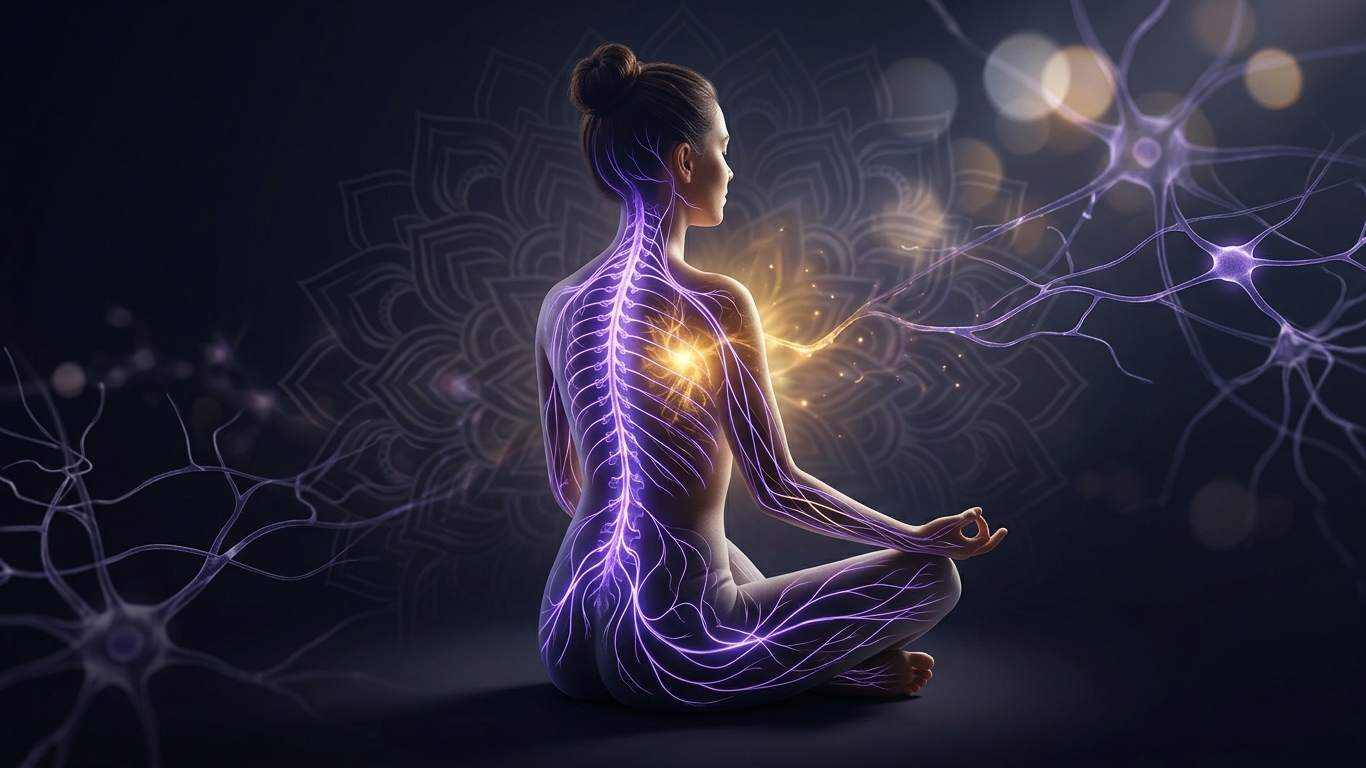
Most people think meditation is about quieting the mind. But inside your body, something far more measurable is happening — every breath you take during a focused practice is sending direct electrical signals to one of the most powerful regulators of human physiology: the vagus nerve.
How Meditation Activates the Vagus Nerve
Meditation isn't just a mental exercise — it's a physiological intervention. When you sit in stillness and focus on your breath, you directly stimulate vagal afferent fibers that travel from your lungs, heart, and gut to your brainstem. This triggers a cascade of parasympathetic responses: slower heart rate, deeper breathing, reduced cortisol, and enhanced digestion.
The vagus nerve is the primary conduit between mind and body. Meditation strengthens this connection, creating a feedback loop where mental calm produces physical relaxation, which in turn deepens mental calm. Over weeks and months of consistent practice, the loop tightens — the same situation that used to provoke a stress response now elicits a more measured, vagal-led response.
The Mechanism: Vagal Afferents Carry the Signal
About 80% of the fibers in the vagus nerve are afferent — they carry information from the body to the brain, not the other way around. When you slow your breath during meditation, stretch receptors in your lungs and chest send a continuous "all clear" signal up the vagal pathway to the nucleus tractus solitarius in your brainstem. The brain reads these signals as evidence of safety and downregulates threat detection accordingly.
This is why meditation can produce mood shifts that feel almost chemical. They are. Vagal afferent activity modulates serotonin release, GABA tone, and noradrenaline levels — the same neurochemistry targeted by anti-anxiety medications, but reached through the breath instead of a pill.
Types of Meditation That Boost Vagal Tone
Not all meditation practices activate the vagus nerve equally. Each style emphasizes a different vagal pathway, and the most effective approaches include:
- Loving-kindness meditation (Metta): Generates positive emotions that directly increase vagal tone through social engagement pathways. Barbara Fredrickson's research showed that just nine weeks of metta practice produced measurable HRV increases — and the effect compounded over time.
- Slow breathing meditation: 5–6 breaths per minute maximizes respiratory sinus arrhythmia, the natural heart-rate oscillation driven by the vagus nerve. This pace is often called the "resonant frequency" because it locks the cardiovascular and respiratory systems into a single coupled rhythm.
- Body scan meditation: Interoceptive awareness — the brain's ability to read internal body signals — strengthens vagal communication. fMRI studies show that experienced body-scan practitioners have a larger and more active insular cortex, the brain's interoception hub.
- Chanting and humming: Vibrations in the throat directly stimulate the auricular branch of the vagus nerve. Studies on Bhramari pranayama (humming bee breath) show acute HRV improvements after just a few minutes of practice.
What about apps and guided meditation?
Apps like Calm, Headspace, and Insight Timer can absolutely produce vagal benefits, but the active ingredient is breath pacing and attention training, not the voice itself. If guided audio distracts you, silent practice with simple breath counting may produce stronger effects. Use the apps as scaffolding, then graduate to your own practice.
The Research
The science on meditation and vagal tone is strong and growing.
A 2018 study in the journal Frontiers in Human Neuroscience found that eight weeks of mindfulness meditation increased HRV by 20% and reduced inflammatory markers like IL-6 and TNF-alpha by 15%. A separate imaging study showed that experienced meditators had measurably thicker vagus nerve fibers than non-meditators, suggesting structural neuroplastic changes — your nervous system literally remodels itself in response to consistent practice.
More recent work from 2024 has shown that even brief micro-meditations (3–5 minutes) repeated throughout the day can produce HRV changes comparable to longer single sessions, which means frequency matters as much as duration.
The same situation that used to provoke a stress response now elicits a more measured, vagal-led response. That isn't willpower — it's a remodeled nervous system.
What's Happening Minute by Minute
Within the first 60 seconds of a meditation session, vagal afferent activity begins to rise. Heart rate variability climbs, and cortisol output begins to taper. By minute five, parasympathetic dominance is well established and digestive activity often picks up — that subtle stomach gurgle is a sign your vagus is back online.
By the 15-minute mark, the prefrontal cortex shows increased activity (calm, deliberate thought), while the amygdala (threat detection) quiets. This is the neurological signature of the calm-but-alert state experienced meditators describe.
Common Pitfalls
- Forcing the breath: Vagal activation depends on relaxed, easy breathing. Aggressive breath control can paradoxically increase sympathetic activity.
- Tense posture: A rigid, upright posture creates muscular tension that competes with vagal calming signals. Aim for "alert but soft."
- Expecting silence: Thoughts will arise — that's normal. The vagal benefit comes from returning attention to the breath, not from achieving a thoughtless state.
- Inconsistency: Vagal neuroplasticity requires repeated stimulus. Five minutes daily beats sixty minutes once a week.
Building a Practice
Start with five minutes daily. Focus on slow, diaphragmatic breathing with extended exhales — the exhale is where vagal tone peaks during each respiratory cycle. As your nervous system adapts, gradually increase to 20–30 minutes. The goal isn't perfection — it's consistent practice that retrains your autonomic baseline.
A simple starter protocol: inhale through the nose for 4 seconds, exhale through the nose or pursed lips for 6 seconds. Keep this rhythm for 5 minutes, then sit quietly for another 2 minutes simply observing your breath without controlling it. Done daily, this produces measurable HRV improvements within 2–4 weeks.
Start This Week
Pick one practice and commit to five minutes daily for 14 days. Track how you feel. The shifts are usually subtle at first — slightly easier sleep, less reactivity in difficult conversations, a clearer head in the morning. These small changes are the visible surface of a deeper transformation: your vagus nerve coming back online.
Have a question?
Have a question about something specific? Send us a message.
Visit VagusSkool.com/contact — we'll try to get back to you within 24 hours.