Long COVID, Chronic Fatigue, and Post-Viral Vagal Dysfunction
If you’ve been told you "should be over it by now," and you’re not, this article is for you. The symptoms read like a checklist of strange, scattered complaints — brain fog, racing heart, exhaustion that doesn’t respond to rest, gut weirdness, sleep that doesn’t restore, mild exertion that wrecks your week. They don’t fit a tidy diagnosis. They don’t respond to the obvious fixes. And the clinical conversation is often unsatisfying.
What’s slowly becoming clear, across long COVID, ME/CFS, and other post-viral conditions, is that they share a common thread: autonomic dysregulation, with the vagus nerve at the center. Recognizing this changes how recovery happens.
What Viral Illness Does to the Vagus Nerve
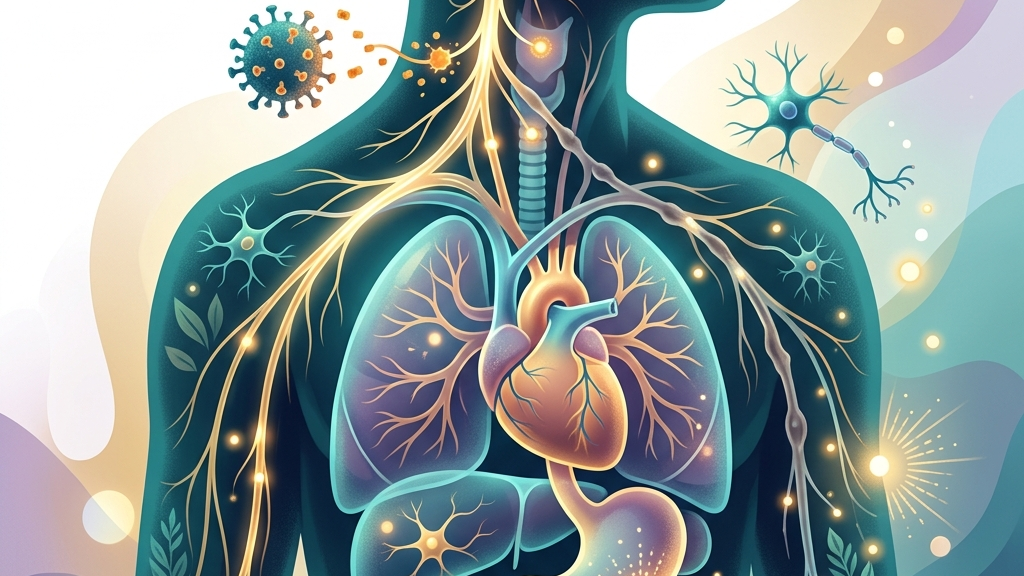
The vagus nerve is unusually long and exposed compared to most cranial nerves. It runs through the same regions where viruses replicate — the throat, lungs, and gut. Some viruses appear to directly inflame or damage vagal fibers; others trigger autoimmune cross-reactivity that affects autonomic regulation. Either way, the post-viral autonomic state we now call long COVID isn’t metaphorical — it has real biological correlates that can be measured.
Several findings have been replicated:
- Many long COVID and post-viral fatigue patients have measurably reduced HRV (lower vagal tone)
- Many have orthostatic intolerance — heart racing or near-fainting on standing (POTS-like patterns)
- Many have GI dysfunction, particularly slowed motility and altered microbiomes
- Many have altered cortisol rhythms and inflammatory markers
- Many have small-fiber neuropathy on testing
None of these are coincidence. They all reflect the same upstream issue: an autonomic nervous system, particularly its parasympathetic vagal arm, that hasn’t come back online after the viral hit.
Why "Just Rest" Isn’t the Answer
The most common advice to people in this state — rest, then gradually exercise — often makes things worse. The graded exercise model that worked for some illnesses backfires here, because in post-viral fatigue the body has lost the ability to recover from exertion. Doing more makes the next day worse, not better. This is the hallmark of post-exertional malaise (PEM), and it deserves to be respected, not pushed through.
The current best understanding: recovery in long COVID and post-viral fatigue happens by stabilizing the autonomic platform first, then very gradually expanding capacity. The order matters. Skipping the stabilization phase is what produces the cycle of crash-recovery-crash that defines so many people’s experience of these conditions.
Post-exertional malaise isn’t weakness. It’s a body that’s been told to rest by an exhausted nervous system, and is enforcing that rest the only way it knows how.
The Stabilization Phase
Before you push, you need a platform that can support pushing. The pieces:
Hydration and Electrolytes
Many post-viral patients have low intravascular volume, which worsens orthostatic symptoms. Adequate fluids and salt (within medical guidance) often produce immediate stability. This isn’t a cure — it’s the floor.
Pacing
The single most important skill in post-viral recovery is learning to stop short of your symptom threshold, every day. Do less than you can. Stay below the line that triggers PEM. This feels counterintuitive, but it’s the only way the system gets the steady, low-stress signal it needs to repair.
Sleep
Sleep architecture is often disrupted in long COVID. Cool dark rooms, consistent times, no late alcohol, and aggressive treatment of any sleep apnea. Some patients respond to specific supplements (melatonin, magnesium glycinate) for sleep onset, though always discuss with a clinician.
Slow Breathing
Resonance breathing (around six breaths per minute), five to ten minutes daily, sometimes more if tolerated. Often the only "active" autonomic training that doesn’t trigger PEM in early recovery, because it’s parasympathetic by design.
Compression and Postural Care
For orthostatic patterns, compression garments and avoiding sudden upright transitions help significantly.
Then — Slow Expansion
Once your platform is stable for a few weeks, you can start gently widening the envelope:
- Recumbent or supine cardio (stationary bike, swimming) avoids the orthostatic hit while building cardiovascular vagal tone
- Short walks of 5–10 minutes, with several rest days between
- Strength training in tiny increments — light dumbbells, low reps, long rest
- Continued daily breath work as the foundation
Progress is measured in weeks and months, not days. Setbacks happen — a cold, a hormonal shift, a stressful event can drop you back. Recovery is rarely linear. The trend is what matters.
Specific Tools That Are Showing Promise
Transcutaneous Vagal Stimulation
Several small studies and case series have explored taVNS in long COVID, with promising early signals around fatigue, brain fog, and POTS-like symptoms. Devices are FDA-cleared for related indications and increasingly accessible. This is an active research area.
HRV Biofeedback
Lower-effort than exercise, with measurable autonomic effects over weeks. Often well-tolerated when other interventions trigger PEM.
Anti-Inflammatory Patterns
Diet patterns that reduce systemic inflammation — less ultra-processed food, more omega-3, more polyphenol-rich foods — give the system a quieter background to recover in.
What’s Worth Asking About Medically
- A formal autonomic workup (tilt-table test, autonomic reflex testing) if not yet done
- Bloodwork for inflammation, thyroid, B12, iron, vitamin D, ferritin
- Sleep study if symptoms include unrefreshing sleep or snoring
- Consideration of low-dose naltrexone or other emerging treatments — there’s a small but growing evidence base for these in post-viral fatigue
- Referral to a long COVID or dysautonomia clinic, where one exists in your area
What to Tell People Who Don’t Get It
Post-viral fatigue is not in your head. It’s in your nervous system, your immune system, and your mitochondria. The fatigue is real. The brain fog is real. The crashes after exertion are real. The path forward is real, too — it’s just slower and more autonomic-focused than people without these conditions tend to expect.
A Place to Start
If you’re in early or mid-recovery, the highest-leverage starting points are usually three: pacing under your symptom threshold, daily slow breathing, and adequate hydration with salt. That’s the platform. Almost everything else builds on it. Your nervous system can come back. It just needs steadier signals, given long enough, with no heroics. The system is responsive when given a real chance.
Have a question?
Have a question about something specific? Send us a message.
Visit VagusSkool.com/contact — we'll try to get back to you within 24 hours.