Internal Vibrations and Body Buzzing: The Symptom That Confuses Every Clinician
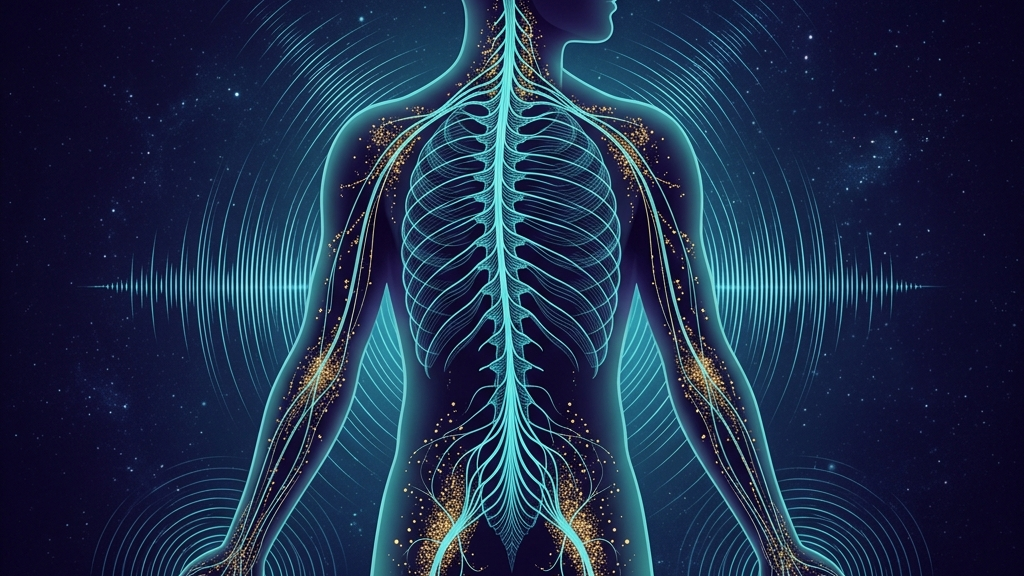
Few symptoms confuse clinicians as reliably as internal vibration. A patient says, "It feels like there is a phone vibrating inside my chest" or "My whole body is humming." Physical exam is normal. Standard tremor evaluation finds nothing. Many of these patients walk out with a functional neurological disorder label or, worse, a referral for anxiety care. A 2025 paper in Neurology International reframed the picture — internal tremor in Long COVID and adjacent populations is increasingly understood as a sign of dysautonomia, small fiber neuropathy, and mast cell activation (PMC 11768041, 2025).
What Internal Vibration Actually Feels Like
The classic description: a subjective sensation of buzzing, humming, vibrating, or rapid trembling that occurs inside the body but is not visible to an observer and is not picked up on physical examination. Patients describe:
- "A washing machine running in my chest"
- "My bones are vibrating"
- "It feels like my skin is electrified"
- "My whole core is shaking from the inside"
The sensation may be constant, episodic, or triggered by specific positions, stressors, foods, or stimuli.
The Major Etiologic Categories
1. Dysautonomic Internal Tremor
The most common cause in the patient populations we see. Higher rates of mast cell activation syndrome, small fiber neuropathy, and POTS are found in patients with internal tremor than in those without (Neurology International, 2025). Proposed mechanisms include hypovolemia, cerebral hypoperfusion, a hyperadrenergic state, mast cell activation, and neuropathic processes affecting small nerve fibers.
2. Small Fiber Neuropathy
Damage to the unmyelinated C fibers and thinly myelinated Aδ fibers that carry autonomic and pain signals. Common after viral illness (including SARS-CoV-2), in autoimmune disease, in diabetes, and in some genetic conditions. Skin biopsy with intraepidermal nerve fiber density measurement is the gold standard for diagnosis.
3. Mast Cell-Driven Vibration
Mast cell degranulation releases mediators that affect nerve excitability and vascular tone. Patients describe vibrations that flare with reactions, foods, or stress.
4. Functional Neurological Origin
In FND, internal tremor probably reflects an increase in the brain's "volume knob" for body sensations. The patient becomes aware of normal physiological tremor that is then amplified by attention and threat appraisal (Neurosymptoms.org). This is a real category — but it is over-diagnosed when the dysautonomic categories above are not properly evaluated.
5. Medication and Substance Effects
Stimulants, SSRIs, withdrawal states, and thyroid medication adjustments can all produce internal vibration. History matters.
Why It Gets Misattributed
The combination of normal physical exam, normal imaging, and a symptom the clinician cannot directly observe creates a diagnostic vacuum. The default fill is "anxiety" or "functional" — both of which can be partially true while missing the underlying autonomic or neuropathic lesion. Patients in the dysautonomic category in particular often have years of dismissal before someone tests for small fiber neuropathy or runs a tilt-table.
The Diagnostic Workup
- Tilt-table or active stand test for orthostatic intolerance
- Plasma catecholamines (supine and standing) for hyperadrenergic phenotype
- Skin punch biopsy for small fiber neuropathy when clinically indicated
- Serum tryptase plus urinary mast cell mediators where MCAS is suspected
- Thyroid function, ferritin, B12 — common contributors that should be excluded
- Targeted history for trauma, infection, medication changes
A Vagus-First Treatment Framework
- Lower sympathetic load. Internal vibration almost always worsens with sympathetic activation. Sleep, hydration, salt (in POTS-adjacent patients), and slow breathing are the foundation.
- Restore vagal tone. Daily six-per-minute breathing, cold-water face immersion, humming. Months of consistency, not weeks.
- Treat the substrate. If MCAS is present, stabilize the mast cells. If hyperadrenergic POTS is present, address volume and consider clonidine or low-dose beta-blockade. If SFN is present, address the underlying cause (autoimmune, infectious, metabolic).
- Address the limbic amplification. Limbic system retraining (DNRS, Gupta) and body-based therapies help patients in whom the brain's "volume knob" has become a contributor.
- Pace recovery. Internal vibration tends to fluctuate. The trend matters more than any single day.
Clinical takeaway: Internal vibration is not in the patient's head. It is real, and in most cases reflects an underlying dysautonomic, neuropathic, or mast cell process. The workup is autonomic and neurologic, not psychiatric.
References & Further Reading
Have a question?
Have a question about something specific? Send us a message.
Visit VagusSkool.com/contact — we'll try to get back to you within 24 hours.