Insomnia and the Vagus Nerve: What the Latest taVNS Trials Actually Show
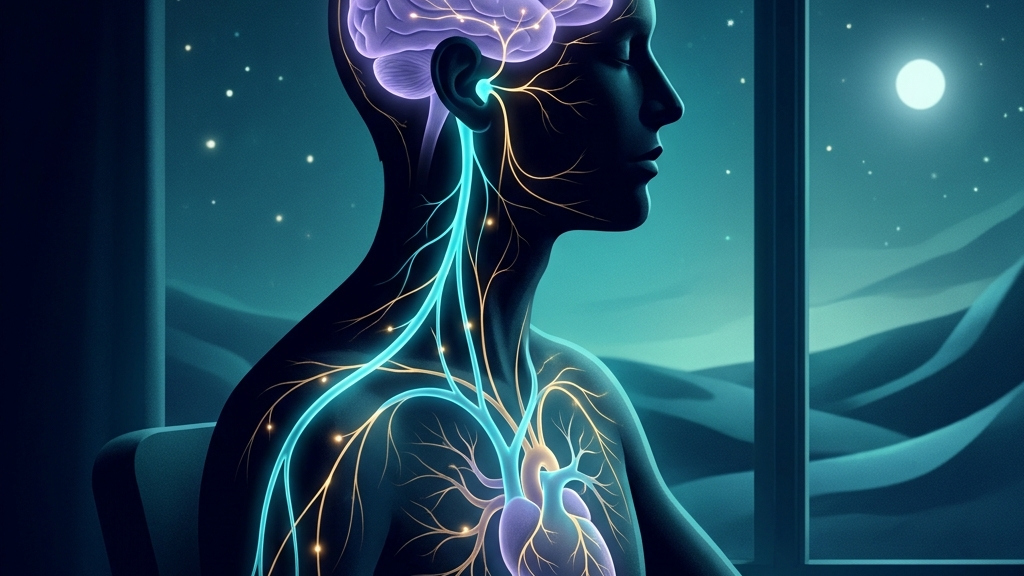
Insomnia is not a sleep problem. It is an autonomic problem that expresses itself at night. Sleep onset, sleep maintenance, and overnight parasympathetic dominance all depend on vagal tone — and we now have randomized trial evidence that activating the vagus nerve directly can reverse chronic insomnia within weeks.
Sleep Is a Parasympathetic Process
The transition into sleep requires a shift from sympathetic to parasympathetic dominance. High-frequency HRV — a clean marker of vagal output — rises sharply in the minutes before sleep onset. Higher pre-sleep parasympathetic tone is correlated with shorter sleep latency and a higher proportion of deep, restorative sleep (Frontiers in Neuroscience, 2021).
If the vagal brake is weak, the autonomic system simply cannot make the handoff. The patient lies in bed cognitively tired but physiologically activated — what neurologists call "wired and tired." This is not a willpower problem. It is a measurable autonomic failure.
The taVNS Evidence Is Now Real
Three lines of clinical evidence have converged in the last two years:
- A double-blind, randomized, sham-controlled trial in chronic insomnia disorder showed significant improvement in sleep quality and sleep efficiency after six weeks of nightly transcutaneous auricular VNS (Sleep Medicine, 2025).
- A separate randomized clinical trial in JAMA Network Open demonstrated reductions in insomnia severity index scores comparable to standard pharmacological options, without sedation carryover (JAMA Network Open).
- A pilot trial in breast-cancer insomnia patients found improved sleep onset latency, sleep efficiency, and a measurable rise in RMSSD after two weeks of nightly bilateral stimulation (Scientific Reports, 2025).
The mechanism is consistent across studies: parasympathetic activation, modulation of GABA, norepinephrine, and serotonin pathways, and a measurable rise in vagal tone that persists between sessions.
A Vagus-First Insomnia Protocol
The Pre-Sleep Wind-Down
Begin two hours before lights-out. Reduce bright light exposure, lower ambient temperature, and complete any cognitive work. The autonomic system needs runway.
The 6-Breaths-Per-Minute Practice
Twenty minutes of slow nasal breathing at roughly six breaths per minute, with a longer exhale than inhale, produces measurable HRV elevation. Done consistently, this becomes a conditioned cue for parasympathetic shift.
Auricular Stimulation, If Available
Where access permits, twenty to thirty minutes of low-intensity auricular taVNS in the hour before bed has the strongest current evidence base. Devices vary in quality — clinical-grade units used in trials are not equivalent to consumer-grade ear clips.
Address the Daytime Dysregulation
Insomnia at night is almost always preceded by sympathetic over-activation during the day: blue-light flooding, fragmented attention, low HRV, missed meals. The night follows the day. Treat the day.
Clinical takeaway: Chronic insomnia is, for most patients, a vagal-tone problem dressed up as a sleep problem. The new generation of randomized taVNS trials is now showing that direct vagal activation produces measurable and sustained improvement — without the cognitive carryover of pharmacological sedation.
References & Further Reading
- taVNS for chronic insomnia: double-blind randomized sham-controlled trial. Sleep Medicine, 2025. Read
- Auricular VNS for chronic insomnia disorder. JAMA Network Open. Read
- Bilateral taVNS for insomnia in breast cancer. Scientific Reports, 2025. Read
- Brain functional mechanisms of taVNS in primary insomnia. Frontiers in Neuroscience. Read
- taVNS for insomnia: narrative review. Nature and Science of Sleep. Read
Have a question?
Have a question about something specific? Send us a message.
Visit VagusSkool.com/contact — we'll try to get back to you within 24 hours.