HRV Biofeedback: Training Your Vagus Nerve with Technology
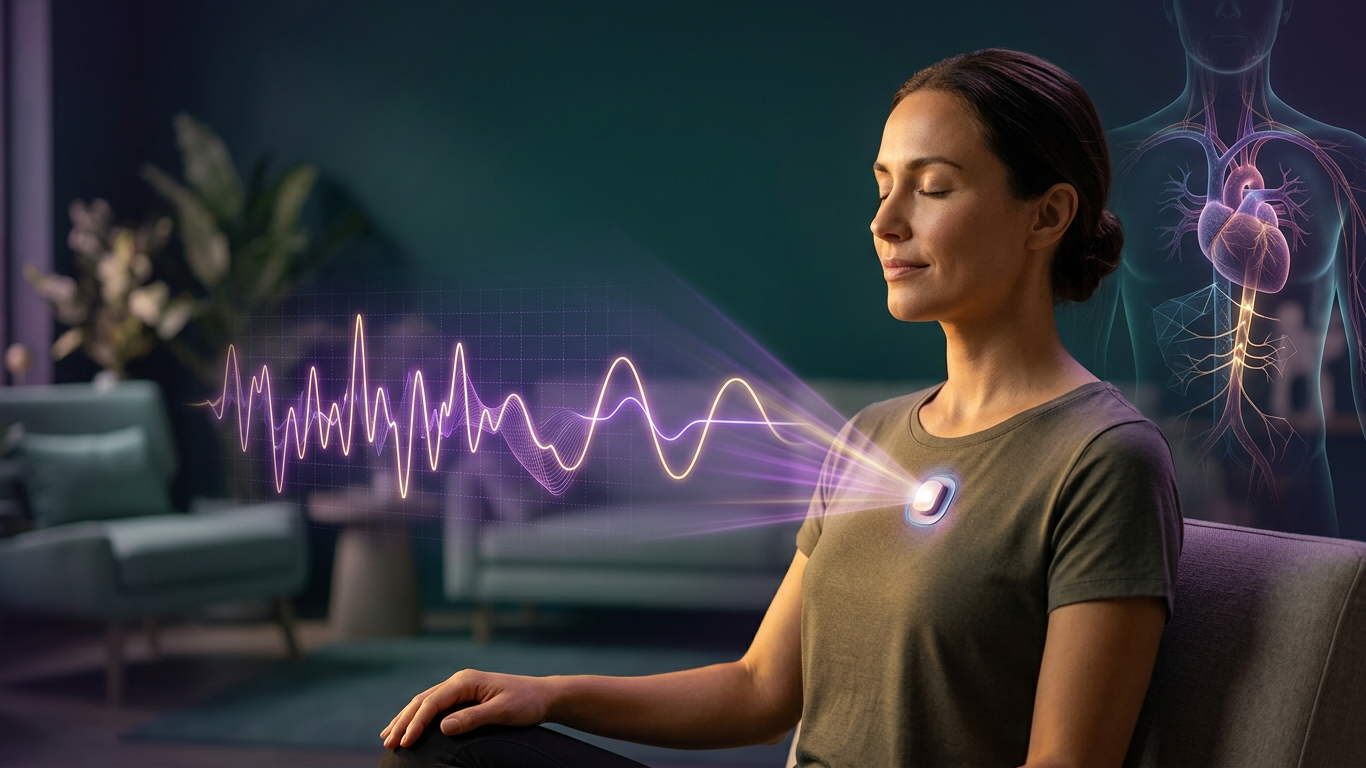
For most of human history, the only way to know how your nervous system was doing was how you felt. Today, a $300 wearable can show you the millisecond-level dance between your heart and your vagus nerve — and a 10-minute daily practice can use that data to retrain it.
What Is HRV Biofeedback?
Heart rate variability (HRV) biofeedback is a technique that uses real-time monitoring of your heartbeat intervals to train your autonomic nervous system. By observing your HRV data as you breathe, you learn to shift your body into a parasympathetic state — governed by the vagus nerve — on demand.
Unlike passive relaxation techniques, HRV biofeedback is an active training protocol. You see your nervous system's response in real time and learn which breathing patterns, mental states, and physiological shifts produce the highest vagal tone. The closed feedback loop is what makes the technique remarkably efficient: you skip the years of trial-and-error that traditional contemplative practices required.
The Science Behind It
When you inhale, your heart rate naturally increases slightly. When you exhale, it decreases. This oscillation — called respiratory sinus arrhythmia (RSA) — is directly mediated by the vagus nerve. Greater oscillation amplitude means stronger vagal tone.
HRV biofeedback amplifies this natural rhythm. Studies show that regular practice increases vagal tone by 15–30% over 4–8 weeks, with measurable improvements in stress resilience, emotional regulation, and cardiovascular health. Crucially, the improvements persist outside of practice sessions — your autonomic baseline shifts permanently.
Why Resonance Matters
At a breathing rate of about 5.5–6 breaths per minute, the cardiovascular and respiratory systems lock into a single coupled oscillation called the resonance frequency. At this frequency, RSA amplitude reaches its maximum and vagal training stimulus is strongest. Faster or slower breathing produces meaningful but smaller effects.
How to Practice
Most HRV biofeedback protocols use a breathing rate of about 5.5–6 breaths per minute — roughly 10 seconds per breath cycle (5 seconds in, 5 seconds out). Some people respond better to slightly asymmetric patterns like 4 in, 6 out — both fall within the resonance range.
A typical session looks like this:
- Minutes 0–2: Settle in, observe baseline HRV without trying to change it.
- Minutes 2–12: Breathe at your resonance pace. Watch the HRV graph rise as your respiration synchronizes with your heart rhythm.
- Minutes 12–15: Stop pacing, breathe naturally, observe how the elevated state lingers.
Sessions typically last 10–20 minutes daily. Twenty minutes once is good; 10 minutes twice is better.
Devices Worth Considering
The market has matured rapidly. Each tier serves different goals:
- Oura Ring, Whoop, Apple Watch: Excellent for trend tracking — they measure overnight HRV and morning readiness, which informs lifestyle decisions but isn't ideal for live biofeedback during practice.
- HeartMath Inner Balance: A dedicated biofeedback sensor with a coherence-focused app. Strong educational content and a clear scoring system that beginners find motivating.
- Elite HRV / HRV4Training: Use a chest strap or finger sensor for clinical-grade accuracy. Best for serious practitioners and athletes optimizing training load.
- Polar H10 chest strap + free apps: Most accurate consumer option. Pairs with most biofeedback apps for under $100 in hardware.
The closed feedback loop is what makes biofeedback so efficient — you skip the years of trial-and-error that traditional contemplative practices required.
Key Benefits
- Reduced cortisol and stress hormone levels
- Improved emotional regulation and anxiety management
- Better sleep quality through enhanced parasympathetic activity
- Enhanced athletic recovery and performance
- Lower blood pressure and improved cardiovascular health
- Faster heart-rate recovery after exertion
- Greater interoceptive awareness — you start noticing autonomic state shifts in real life, not just on the screen
What the Research Says
HRV biofeedback has been studied for everything from PTSD and depression to asthma, fibromyalgia, and athletic performance. A 2017 meta-analysis in Psychological Medicine reviewed 24 randomized controlled trials and found large effect sizes for anxiety reduction (Hedges' g of around 0.83) — comparable to or exceeding many pharmaceutical interventions.
More recent work (2023–2024) has explored HRV biofeedback for long COVID, where vagal dysfunction appears to be a central feature. Early results are encouraging: patients training resonance breathing daily report improved energy, sleep, and orthostatic tolerance.
Common Mistakes
- Chasing the score: Trying to "win" your HRV reading creates effort and sympathetic activation, reducing the score. Soft attention works better than hard focus.
- Inconsistent timing: HRV varies with circadian rhythm, recent meals, caffeine, and hydration. Practice at the same time each day for cleaner trend data.
- Overbreathing: Slow breathing should feel comfortable. If you feel light-headed, you're likely breathing too deeply — focus on slowing the rate, not maximizing the volume.
- Ignoring overnight HRV: Your morning HRV reflects yesterday's recovery. If it dips for several days, that's a stronger signal to rest than any subjective tiredness.
Getting Started
Begin with five-minute sessions at a comfortable breathing pace. As you develop awareness of your body's response, gradually extend to 15–20 minutes. Consistency matters more than duration — daily practice builds lasting changes in vagal tone, while sporadic long sessions don't.
If you're new to this, start without a device. Spend a week breathing 5 in / 5 out for 10 minutes daily. When that feels natural, add a wearable for objective feedback. The technology is a multiplier, not a prerequisite.
The Bigger Picture
HRV biofeedback is the first widely available tool that lets ordinary people interact with their autonomic nervous system as a measurable, trainable variable. It turns abstract concepts like "stress resilience" into concrete daily numbers — and makes the work of nervous-system regulation feel like training, not therapy.
Have a question?
Have a question about something specific? Send us a message.
Visit VagusSkool.com/contact — we'll try to get back to you within 24 hours.