Heart Palpitations and the Vagus Nerve: When the Beat Is Loud but Not Dangerous
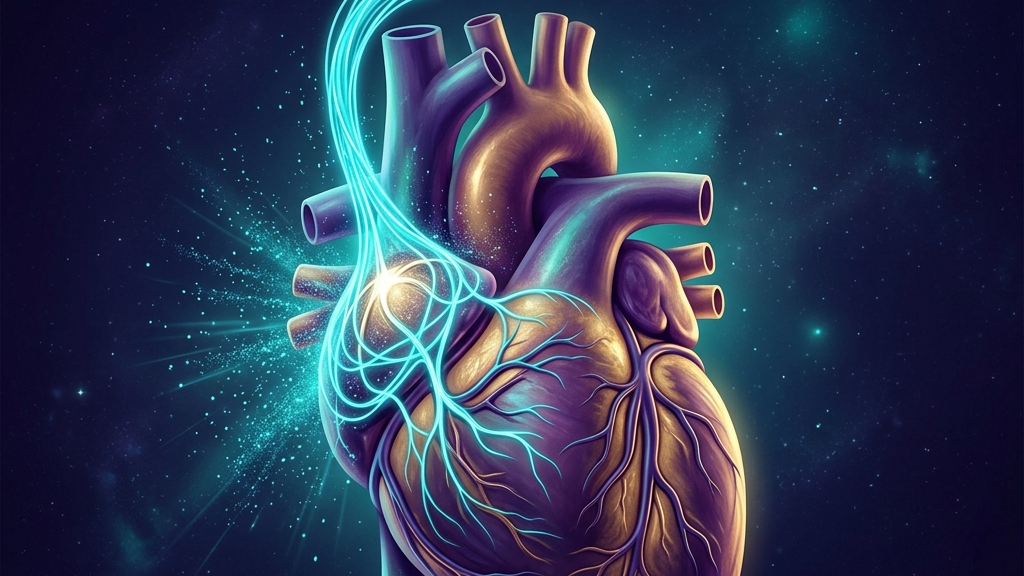
Heart palpitations are one of the most frightening symptoms a patient can experience, and one of the most reliably benign. The skipped beat, the heavy thud, the hollow flutter — these sensations almost always trace back to autonomic activity in a healthy heart, not to electrical disease of the heart itself. Understanding the mechanism is usually the most therapeutic part of the visit.
What Palpitations Actually Are
A palpitation is the conscious awareness of a heartbeat that is normally invisible. The most common types in autonomically dysregulated patients are:
- Premature atrial contractions (PACs) — an extra beat originating in the atria, followed by a brief pause and a forceful "catch-up" beat that the patient perceives as a thud.
- Premature ventricular contractions (PVCs) — similar mechanism, originating in the ventricles, often felt as a hollow flip.
- Vagal-mediated bradycardic episodes — sudden surges of vagal output that slow the heart abruptly, perceived as a "drop."
- Sinus tachycardia awareness — feeling the normal acceleration of the heart in response to position changes, anxiety, or post-prandial digestion.
In structurally healthy hearts, these are generally benign and largely controllable with lifestyle adjustments and autonomic regulation (Wikipedia overview).
The Vagal Mechanism
The vagus nerve provides the dominant parasympathetic drive to the sinoatrial node — the heart's natural pacemaker. Sudden surges in vagal output can produce a perceptible drop in rate. Withdrawal of vagal output can produce a perceptible surge. Both feel abnormal even when they are physiologically normal.
The clinical insight is this: imbalance between sympathetic and vagal drive is probably the most prevalent autonomic mechanism behind benign arrhythmia awareness (PMC 5103306). The heart is fine. The autonomic regulation around it is noisy.
Why Palpitations Get Worse With Anxiety
The loop is well-described: anxiety raises cortisol and adrenaline, which destabilizes parasympathetic tone, which causes more palpitations, which causes more anxiety. The palpitations themselves become a trigger for further nervous-system activation. Patients can spend years caught in this loop without anyone explaining why it is so self-reinforcing.
When Palpitations Need a Workup
Most palpitations are benign — but not all. A real cardiac workup is indicated when palpitations are accompanied by:
- Syncope or pre-syncope
- Chest pain
- Shortness of breath at rest
- A family history of sudden cardiac death
- A documented structural heart abnormality
- Sustained rapid heart rates over 150 bpm without clear trigger
For everyone else, the gold standard is a normal ECG plus a normal Holter or event monitor. Once structural disease is ruled out, the work becomes autonomic, not cardiac.
The Vagus-First Palpitation Protocol
1. Reframe the Sensation
The single most underrated intervention is education. Patients who understand that their palpitations are autonomic noise — not heart disease — often see immediate reduction in frequency, because the anxiety loop loses its driver.
2. Reduce Mechanical Triggers
- Caffeine reduction, particularly afternoon and evening
- Alcohol moderation
- Avoidance of nicotine and stimulant medications when possible
- Adequate hydration and salt intake (especially in POTS-adjacent patients)
- Avoiding lying down immediately after large meals
3. Train the Vagal Brake
- Slow nasal breathing at six per minute, twice daily
- Cold-water face immersion (vagal maneuver) for acute episodes (Healthline overview)
- Humming and singing as daily vagal exercise
- HRV biofeedback for measurable progress tracking
4. Address the Whole Autonomic Picture
Palpitations rarely travel alone. Most patients also have low HRV, GI tightness, sleep difficulty, and orthostatic symptoms. Treating the palpitations in isolation rarely works. Treating the autonomic system as a whole reliably does.
Clinical takeaway: In a structurally normal heart, palpitations are almost always autonomic. The intervention is not cardiac — it is vagal. The most therapeutic words in the visit are often "your heart is healthy, your nervous system is loud, and we can train that."
Have a question?
Have a question about something specific? Send us a message.
Visit VagusSkool.com/contact — we'll try to get back to you within 24 hours.