When the Gut Stops Moving: Gastroparesis, Constipation, and the Vagus Nerve's Grip on Motility
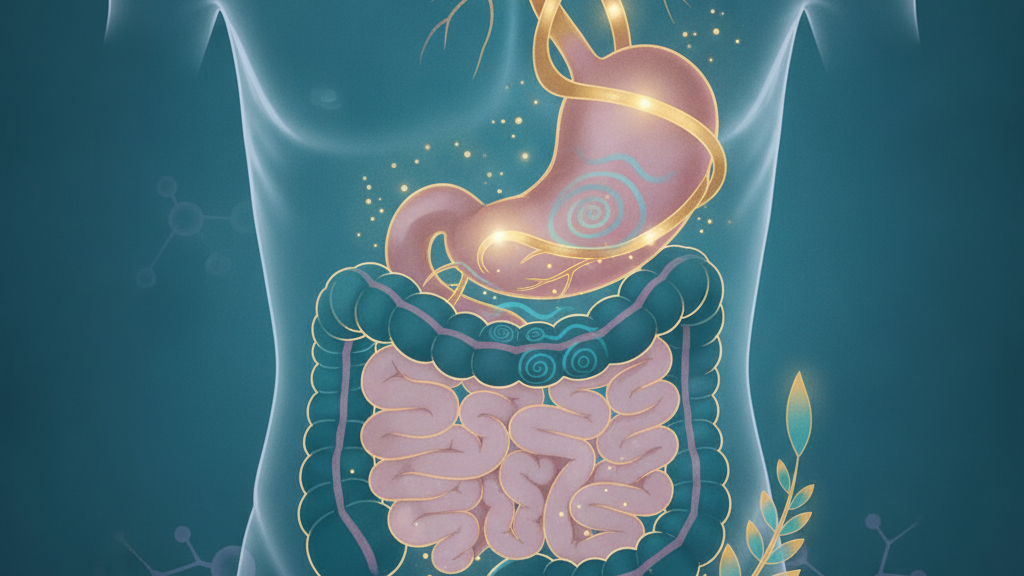
Bloating that arrives after just a few bites. Fullness that lasts for hours. Constipation that no amount of fiber seems to fix. When digestion slows to a crawl, the problem is usually not the stomach or the colon themselves — it is the nerve that is supposed to be telling them to move. That nerve is the vagus.
Digestion Runs on Motility
Food moves through you because of motility — the coordinated, wave-like muscle contractions that push contents from the stomach through the intestines. This is largely automatic, driven by the gut's own nervous system (the enteric nervous system) in close conversation with the vagus nerve, which carries the parasympathetic "go" signals that keep things moving (Breit et al., brain–gut axis review). When vagal signaling to the gut weakens, the waves lose their rhythm and transit slows.
Gastroparesis: A Stomach That Empties Too Slowly
Gastroparesis literally means "stomach paralysis" — delayed emptying of the stomach without a physical blockage. The symptoms are distinctive: early fullness after only a small amount of food, prolonged bloating, nausea, and sometimes bringing up undigested food eaten hours earlier (NIDDK: Gastroparesis). The single most common identifiable cause is vagus nerve damage — most often from long-standing diabetes, but also from viral infection, surgery, or autonomic dysfunction. That is the clearest possible demonstration of how central the vagus is to gastric motility: damage the nerve, and the stomach stops emptying.
The "Stuck Gut" Below the Stomach
The same principle applies further down. When the parasympathetic drive to the intestines is low — as in chronic fight-or-flight, where the body keeps digestion switched off in favor of alertness — colonic transit slows and constipation follows. This is why so many people notice their digestion seizes up during stressful periods and eases when they finally relax. The gut is not being stubborn; it is obeying an autonomic instruction to deprioritize digestion.
The Migrating Motor Complex: The Housekeeper
Between meals, a vagally influenced cleanup wave called the migrating motor complex sweeps residue through the gut. Grazing all day and chronic stress both suppress it. When this housekeeper underperforms, residue and bacteria linger, contributing to bloating and, in some cases, small intestinal bacterial overgrowth. Restoring the spacing between meals and the parasympathetic tone that drives the sweep is part of getting motility back.
Supporting Motility Through the Nerve
- Eat in a parasympathetic state. Sit, slow down, and take several slow breaths before the first bite. Eating while stressed or rushed suppresses the exact signals that drive motility.
- Stimulate the vagus. Humming, gargling, and long-exhale breathing raise the parasympathetic tone that keeps the gut moving.
- Space your meals. Leaving gaps between meals lets the migrating motor complex do its cleanup work rather than being constantly interrupted.
- Move after eating. A gentle walk measurably speeds gastric emptying and colonic transit.
- Adjust the food itself when emptying is slow. In gastroparesis, smaller, lower-fat, lower-insoluble-fiber meals are easier for a sluggish stomach to move; hydration matters throughout.
When to See a Doctor
Slow motility deserves evaluation, because some causes are specific and treatable. See a clinician for persistent vomiting, inability to keep food or fluids down, unintended weight loss, severe or worsening abdominal pain, or a marked change in bowel habits. Diabetes management is central when it is the driver, and gastroparesis has specific diagnostic tests and treatments.
The takeaway: Bloating, early fullness, and stubborn constipation are frequently motility problems, and motility is a vagal job. The clearest proof is gastroparesis, whose most common cause is vagus nerve damage. Whether the driver is nerve injury or simply a nervous system stuck in fight-or-flight, supporting parasympathetic tone — and eating in a calm, well-spaced way — helps the digestive waves find their rhythm again. Persistent or severe symptoms need a medical workup.
Have a question?
Have a question about something specific? Send us a message.
Visit VagusSkool.com/contact — we'll try to get back to you within 24 hours.