Dysautonomia and the Vagus Nerve: A Practical Guide
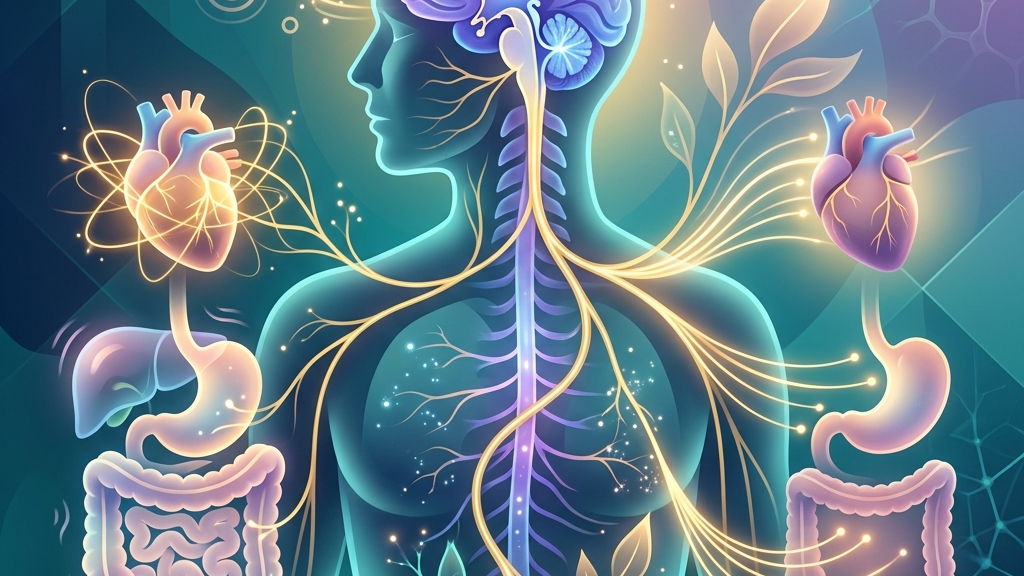
Dysautonomia is a strange diagnosis. Half the people who have it have never heard the word; the other half have spent years collecting it from doctor after doctor. The symptoms don’t make tidy sense. Heart races standing up. Stomach won’t empty. Brain fog comes and goes. You’re cold, then sweating. You faint, or almost do. The bloodwork looks "fine."
If this is you, the most important reframing is also the simplest: dysautonomia is not random. It’s your autonomic nervous system not coordinating itself the way it used to. And the vagus nerve is at the center of that coordination.
What Dysautonomia Actually Is
Your autonomic nervous system runs everything you don’t consciously control: heart rate, blood pressure, digestion, body temperature, breathing rhythm. It does this through two main branches — sympathetic (activation) and parasympathetic (mostly via the vagus nerve, recovery and stability).
Dysautonomia is the umbrella term for any condition where these two branches stop working together properly. POTS (postural orthostatic tachycardia syndrome) is one form. Neurocardiogenic syncope is another. Many people with long COVID, EDS, mast-cell issues, fibromyalgia, and post-viral fatigue have a dysautonomia component layered into their picture.
The shared feature: the system overshoots in one direction, undershoots in the other, and doesn’t settle back smoothly the way a regulated nervous system would.
Why the Vagus Nerve Is the Common Thread
The vagus nerve carries roughly 75% of your parasympathetic signaling. When vagal tone is low or unstable, almost every dysautonomia symptom worsens:
- Heart rate doesn’t recover quickly after standing up (POTS pattern)
- Blood pressure regulation lags or overcorrects (dizziness, near-fainting)
- Digestion slows or becomes unpredictable (gastroparesis, IBS-like symptoms)
- Temperature regulation falters (cold extremities, sudden flushing)
- Sleep architecture breaks down (light, fragmented, unrefreshing)
- Inflammation rises (vagal anti-inflammatory pathway weakens)
This is why a single thread — strengthening vagal tone — often improves multiple symptoms at once. It’s not magic. It’s the system’s natural coordinator coming back online.
Dysautonomia isn’t random chaos. It’s a coordinator that’s gone quiet — and the coordinator has a name.
The Common Triggers
People often develop dysautonomia after a trigger event, even if they didn’t connect the two at the time:
- A viral illness (flu, mono, COVID-19 are all common antecedents)
- A surgery or major medical procedure
- A long stretch of chronic stress, often ending with a "crash"
- A concussion or head injury
- Pregnancy and postpartum hormonal shifts
- Adolescence — POTS often debuts in teens and young adults
The pattern is consistent: a stressor pushes the autonomic system harder than it can recover from, and afterward, baseline coordination doesn’t fully return. It can stay reduced for months or years — but in most cases, it’s trainable back.
A Practical Recovery Approach
Phase 1: Stabilize the Basics (Weeks 1–4)
- Hydration and electrolytes: Many dysautonomia patterns improve with consistent salt and fluid intake. This isn’t a cure, but it stabilizes the platform. Talk to a clinician about target levels appropriate for you.
- Compression garments: For orthostatic patterns, mid-thigh or abdominal compression helps blood return to the heart and reduces tachycardia.
- Sleep priority: Consistent bedtime; cool, dark room; no caffeine after noon.
- Slow breathing, twice daily: Five minutes of four-in, six-out breathing. This is the foundational vagal training input.
Phase 2: Gentle Vagal Training (Weeks 4–12)
- Recumbent or supine cardio: Stationary bike, recumbent bike, swimming. Avoids the orthostatic challenge while still building cardiovascular vagal tone.
- Cold exposure: Brief face immersion in cold water; activates the dive reflex without the systemic stress of full cold plunges.
- Humming, singing, gargling: Three to five minutes daily. Stimulates the auricular and pharyngeal vagal branches.
- HRV tracking: A wearable can show whether your interventions are improving your morning baseline. Trends matter, not single readings.
Phase 3: Re-Building Tolerance (Months 3–6)
- Gradual return to upright exercise
- Resistance training with rest periods
- Slowly normalizing daily activity
- Continued daily vagal practice as foundation
What’s Worth Asking About Medically
- A formal autonomic workup if you haven’t had one (tilt-table test, autonomic reflex testing)
- Whether transcutaneous vagal stimulation could be added to your plan — several FDA-cleared devices now exist
- Cardiology evaluation to rule out structural causes
- Endocrinology if you have unexplained fatigue, hair loss, or temperature dysregulation — the thyroid pattern often overlaps
- A referral to a dysautonomia-literate clinician; not all neurologists or cardiologists know this space well
What to Expect Over Time
Recovery from dysautonomia is rarely a straight line. Most people experience three to six months of slow, layered improvement, with occasional setbacks during illness, life stress, or hormonal shifts. The trajectory is usually upward, even when individual weeks aren’t. Expect plateaus. Expect to drop back temporarily after a flu. Trust the trend.
Start With the Foundation
If dysautonomia is part of your life right now, don’t try to do all of this. Start with two pieces: enough hydration and electrolytes to stabilize your baseline, and ten minutes of slow nasal breathing daily. That’s the platform. Everything else builds on it. Your vagus nerve isn’t broken — it’s out of practice. And practice is something you can give it.
Have a question?
Have a question about something specific? Send us a message.
Visit VagusSkool.com/contact — we'll try to get back to you within 24 hours.