Depression Through the Vagal Lens: Beyond Serotonin
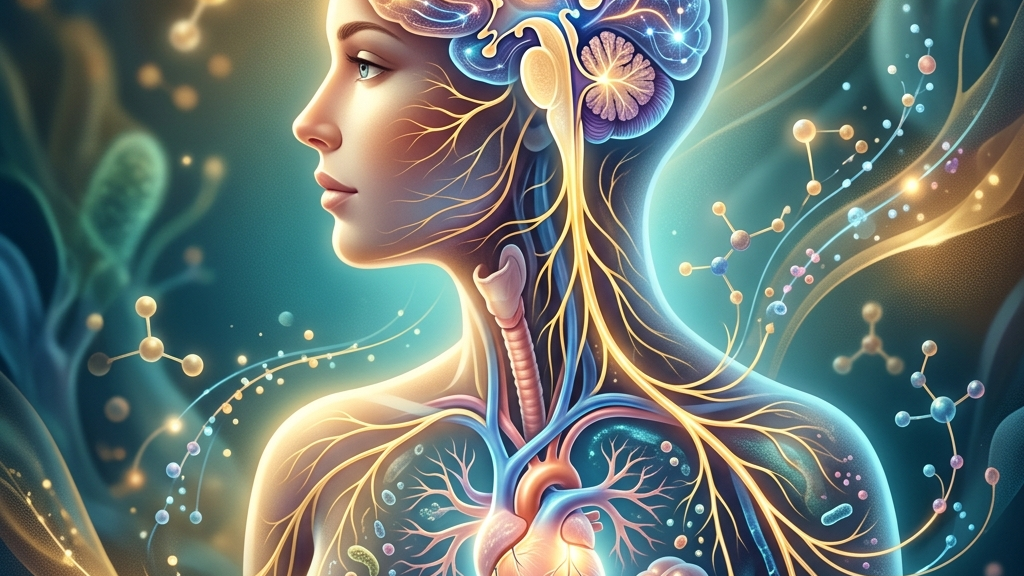
For most of the last 30 years, depression has been told as a serotonin story. Brain chemistry is off; medications adjust it; you feel better. For many people that’s been life-changing. For many others, it hasn’t been enough — and the gap between "this should be working" and "I still feel awful" has been hard to explain.
A newer scientific story is filling in some of that gap. Depression isn’t only a brain-chemistry condition. For a meaningful share of people, it’s a vagal nerve and inflammation problem with cognitive and emotional symptoms. That reframe doesn’t replace medication — but it does open doors that pure neurochemistry never could.
Two Big Pieces of the New Story
Depression and Inflammation
Patients with depression often have measurably elevated inflammatory markers — even when nothing is overtly inflamed. Several large reviews have found that the depression-inflammation link is consistent enough that some researchers describe a subset of depression as "neuroinflammatory."
The vagus nerve is the body’s primary anti-inflammatory pathway. When vagal tone is low, inflammation rises. When inflammation rises, mood drops. The relationship runs both directions.
Depression and the Vagus Nerve
People with depression tend to show lower heart rate variability — the most accessible marker of vagal tone. The lower the HRV, the more severe and treatment-resistant the depression tends to be on average.
Vagus nerve stimulation (VNS) was actually FDA-approved for treatment-resistant depression in 2005. An implanted device sends mild electrical pulses to the vagus nerve. Long-term studies show that some people who hadn’t responded to multiple antidepressants enter remission with VNS, and stay there. This was the original clinical proof that the vagus nerve plays a real role in mood, not just a metaphorical one.
For decades depression was a chemical story. The newer story is that the chemistry sits inside a nervous system, and the nervous system has a coordinator that goes quiet when the system is stuck.
Why "Just Push Through It" Backfires
The most common advice given to people with mild-to-moderate depression — exercise, see friends, get sunlight — is correct. But it’s often delivered as if motivation should arrive first. It doesn’t.
In a low-vagal-tone state, the nervous system has already pulled back from engagement. The brain interprets effort, social interaction, and even mild stress as expensive. Pep talks don’t change this. What does change it: small, repeatable physiological inputs that gently nudge the vagus nerve back into activity.
Once the nervous system is back online, motivation often returns on its own.
Daily Vagal Practices That Help With Depression
Morning Light
Ten minutes outdoors within an hour of waking. Daylight to the eyes is one of the strongest non-medication antidepressant inputs we know about. It also stabilizes vagal rhythm by anchoring the body clock.
Slow Breathing
Five to ten minutes of four-in, six-out breathing. Studies have specifically tested resonance breathing in depression, and the results are positive — modest, consistent, with no side effects. Cumulative practice over weeks raises baseline vagal tone.
Movement, Even Small
The dose-response curve for exercise and depression is real, but it’s flatter than most people think. A 15-minute walk daily produces meaningful effects. You don’t need to run, lift, or sweat. Movement — especially outdoor movement — is information your nervous system reads as engagement.
Cold Exposure
Brief cold — 30 seconds at the end of a shower, or face immersion — produces a sharp vagal activation followed by mild euphoria for many people. There’s emerging evidence that consistent cold exposure has antidepressant effects, possibly through both vagal and inflammatory pathways.
Real Connection
The ventral vagal complex is the social engagement system. Even short, low-effort connection — a five-minute call with someone safe, time with a pet, a familiar voice — fires it directly. Isolation is one of the fastest ways to lose vagal tone. Connection rebuilds it.
Gut Care
The gut-brain axis sends massive signals up the vagus nerve. People with depression often have measurable gut microbiome differences. Fermented foods, fiber, and reducing constant snacking all give the gut better material to work with — and the vagal signal cleaner content to deliver.
What VNS Tells Us About the Bigger Picture
The fact that mild electrical stimulation of a single nerve in the neck can lift treatment-resistant depression is a remarkable finding. It tells us:
- Mood is genuinely modulated by autonomic state, not just neurotransmitter levels
- The vagus nerve is a therapeutic target, not just a metaphor
- Non-drug interventions that activate the same pathway — breath, cold, movement, connection — are working on real biology, not placebo
It also helps explain why people sometimes feel meaningfully better from things like daily walks and cold showers — these aren’t self-help fluff, they’re a milder, free version of the same intervention.
When to Get Help
Vagal practices work alongside medical care, not instead of it. If your depression is severe, includes thoughts of self-harm, or has lasted long enough to interfere with daily life, please reach out to a clinician. Medications, therapy, and (in some cases) VNS or other neurostimulation can do work that lifestyle can’t do alone. The point isn’t to choose between approaches — it’s to use them together. Vagal practice gives medication a healthier nervous system to work in, and therapy a body that can actually tolerate processing.
A Place to Start
If today is hard, don’t plan a recovery program. Pick the one tiny thing that feels doable: ten minutes of light outside, or one slow exhale through pursed lips, repeated five times. That’s the work. The system rebuilds in inches, not leaps. The vagus nerve doesn’t need much to start coming back online — it just needs you to keep showing up for it, in whatever shape you can.
Have a question?
Have a question about something specific? Send us a message.
Visit VagusSkool.com/contact — we'll try to get back to you within 24 hours.