Cortisol Rhythm: How Your Vagus Nerve Sets Your Daily Stress Curve
Cortisol has become a popular villain. Spiking cortisol is blamed for weight gain, sleep problems, anxiety, and just about anything that feels off. But cortisol itself isn’t the problem. Cortisol is essential, life-supporting, and finely tuned. The problem is when its rhythm goes flat.
And rhythm — like just about every rhythm in your body — is governed by the autonomic nervous system, with the vagus nerve as its primary brake.
What a Healthy Cortisol Rhythm Looks Like
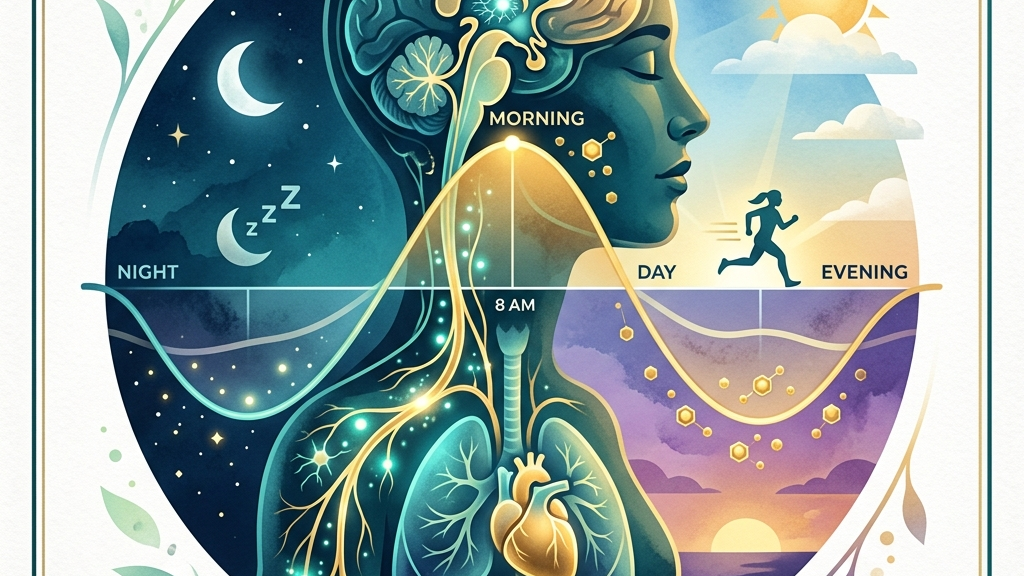
Cortisol follows a daily curve that’s as predictable as the sun:
- Lowest point at night, around 2–4 a.m.
- Begins climbing in the early hours before waking
- Cortisol Awakening Response (CAR): A sharp spike in the first 30–45 minutes after waking — your morning fuel
- Gradual decline through the day
- Drops further in the evening
- Reaches its low point in the night again
This curve isn’t optional. It’s how you wake with energy, focus through the day, wind down for sleep, and recover overnight. When it’s working, you don’t notice cortisol at all.
The Patterns That Go Wrong
Most cortisol problems aren’t about high or low cortisol overall. They’re about a flattened, shifted, or inverted rhythm.
Wired and Tired
The most common modern pattern: cortisol stays elevated into the evening when it should be dropping, and the morning peak is blunted. People wake exhausted, struggle through the morning, get a "second wind" in the late afternoon, can’t fall asleep at night.
Flat Curve
After prolonged stress, the curve flattens. Mornings have no real peak; evenings have no real drop. People feel tired all day, equally, with no clear energy windows.
Inverted Curve
In severe cases, cortisol is lowest in the morning and rises through the day, exactly backward. People feel terrible on waking and most awake at night.
Reactive Spikes
Layered on top of any of the above, sudden spikes in response to caffeine, blood sugar drops, or emotional triggers create the "I just felt my stress hit" sensation many people describe.
Cortisol isn’t the villain. The rhythm is. And the conductor of the rhythm is your vagus nerve.
Why the Vagus Nerve Sets the Curve
The vagus nerve is the primary brake on the HPA axis — the hypothalamus-pituitary-adrenal pathway that produces cortisol. When vagal tone is healthy, the nervous system can release the brake briefly to spike cortisol when needed (mornings, demands, brief stressors), then re-engage the brake to bring it back down.
When vagal tone is low, the brake doesn’t fully engage. Cortisol spikes don’t taper properly. Stress responses run longer than the situation requires. Over weeks and months, this creates the elevated evening cortisol that wrecks sleep — and over years, it can flatten the morning peak that produces wakefulness.
Behaviors That Damage the Rhythm
- Phone in bed first thing in the morning — spikes cortisol before light cues have set the day’s curve
- Caffeine before food — amplifies cortisol on top of an already-rising natural peak
- Late screens and bright light at night — keeps cortisol elevated when it should drop
- Alcohol in the evening — disrupts overnight cortisol nadir
- Skipping breakfast — blood sugar swings amplify cortisol spikes
- Working until bedtime — sympathetic dominance prevents the evening drop
- Inconsistent sleep schedules — the curve has no anchor
How to Restore the Curve
Anchor the Morning
Light to your eyes within 30 minutes of waking is the strongest cue your circadian system has. Ten minutes outdoors before screens. This doesn’t just feel good — it sets the cortisol peak in the right place. People who do this consistently often see the morning peak return within two weeks.
Eat Before Caffeine
Even a small protein-containing meal before your first coffee dramatically reduces the cortisol spike caffeine produces. The order matters more than the type of food.
Slow Breathing Daily
Ten minutes of resonance breathing strengthens vagal tone, which in turn strengthens the brake on the cortisol system. Cumulative effects show up over four to eight weeks.
Wind Down the Evening
The hour before bed should look different from the rest of your day: dimmer light, slower pace, no work email. This isn’t aesthetic — it’s the cue your cortisol curve uses to drop properly.
Move During the Day
Ideally, exercise in the morning or early afternoon. Late-evening high-intensity exercise can spike cortisol exactly when it should be dropping, especially for people whose curve is already disrupted.
Cold Exposure, Carefully Timed
Brief cold in the morning amplifies the natural cortisol awakening response and makes you feel sharper for hours. The same cold at night can disrupt sleep. Timing matters.
How to Tell If Yours Is Off
Several signs suggest a disrupted cortisol rhythm:
- Hard to wake up but hard to fall asleep
- "Second wind" in the late afternoon or evening
- Energy crashes mid-morning that coffee fixes briefly
- Anxiety that worsens in the evening
- Cravings for salt, sugar, or caffeine in late morning
- Frequent waking around 3–4 a.m.
If you want objective data, a four-point salivary cortisol test (DUTCH or similar, ordered by a clinician) can map your actual rhythm. Bloodwork at a single morning time point doesn’t reveal the rhythm — it’s the curve over the day that matters.
The Bigger Picture
Almost everything written about cortisol focuses on lowering it. The smarter goal is restoring its rhythm — high in the morning, low at night, responsive but well-braked in between. That rhythm is set by the conductor that runs your nervous system, and your conductor is, by now, a familiar character: the vagus nerve.
Pick one anchor for your day: morning light before screens, or breakfast before caffeine. Hold it for two weeks and notice what shifts. Most people feel the curve start coming back faster than they expect.
Have a question?
Have a question about something specific? Send us a message.
Visit VagusSkool.com/contact — we'll try to get back to you within 24 hours.