Chronic Nausea: When the Vagus Nerve Loses Its Grip on the Gut
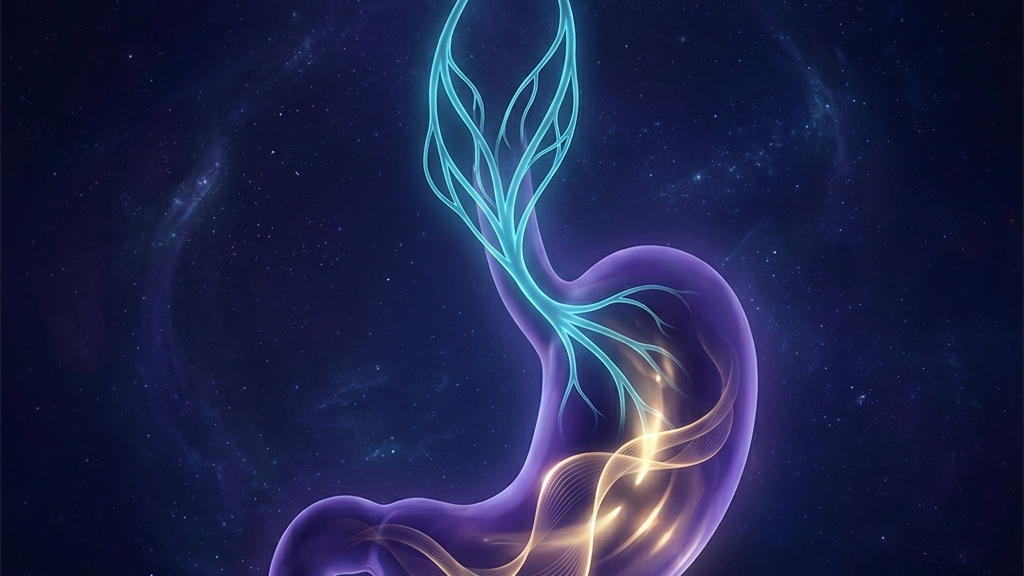
Persistent nausea is one of the most under-investigated symptoms in modern gastroenterology. When endoscopy is normal, when imaging is normal, and when antiemetics produce only partial relief, the underlying problem is most often vagal: the parasympathetic system has lost its capacity to drive coordinated gastric motility. The good news is that this is one of the more directly treatable autonomic problems we have.
The Vagus Nerve Drives Gastric Motility
The vagus nerve provides the dominant parasympathetic drive to the stomach. It coordinates antral contractions, regulates pyloric tone, modulates fundic relaxation, and gates the migrating motor complex between meals. Low vagal tone — measured indirectly by HRV — is consistently associated with gastric motility disturbance, including idiopathic gastroparesis (PMC 7377964).
Gastroparesis: The Diagnosis That Often Gets Missed
Gastroparesis is delayed gastric emptying without mechanical obstruction. Patients present with early satiety, post-prandial fullness, bloating, nausea, and sometimes vomiting. Causes include diabetes (the most common identifiable etiology), post-viral or post-surgical injury, autoimmune disease, autonomic neuropathy, and idiopathic forms — many of which are best understood as functional vagal hypofunction.
Autonomic dysfunction — predominantly vagal/parasympathetic hypofunction — has been documented in both diabetic and idiopathic gastroparesis cohorts (DrOracle review).
Why So Many Patients Are Stuck
Standard care relies on dietary modification, prokinetics, and antiemetics. These help — and they treat the symptom rather than the upstream signal. They do not restore vagal tone, and they do not retrain motility coordination. Many patients spend years cycling through these tools without ever addressing the autonomic substrate.
The taVNS Evidence in Gastroparesis
An open-label pilot study of non-invasive vagal nerve stimulation in idiopathic gastroparesis demonstrated improvement in cardinal symptoms — nausea, fullness, bloating — and accelerated gastric emptying in a meaningful subset of patients (PMC 8054632, 2020). Subsequent clinical reporting has shown reduced reliance on rescue antiemetic medication in dyspepsia and gastroparesis populations (Healio 2023).
This is early-stage evidence — but the mechanism is sound and aligns with everything we know about vagal control of motility.
A Vagus-First Chronic Nausea Protocol
- Confirm the diagnosis. Gastric emptying scintigraphy is the gold standard. SmartPill and breath testing are reasonable alternatives.
- Optimize meal architecture. Smaller, more frequent meals; lower fat and fiber load; liquid calories where solids are not tolerated.
- Standard pharmacology where appropriate. Prokinetics (metoclopramide, domperidone, prucalopride) and antiemetics, layered to symptom pattern.
- Vagal restoration. Slow nasal breathing pre-meal, cold-water face immersion, and consistent sleep — to support the parasympathetic signal that motility depends on.
- Consider non-invasive VNS. Transcutaneous cervical or auricular VNS protocols are increasingly used in motility clinics. Evidence is early but plausible.
- Address co-conditions. POTS, MCAS, EDS, and SIBO are common comorbidities. Each amplifies symptom severity if left untreated.
Clinical takeaway: Chronic nausea without an obvious mechanical cause is, in most cases, a vagal motility problem. The treatment is not just more antiemetics — it is restoring the parasympathetic signal the gut needs to move.
References & Further Reading
- Open-label pilot: non-invasive VNS improves gastric emptying in idiopathic gastroparesis. PMC 8054632, 2020. Read
- Autonomic function in gastroparesis and chronic unexplained nausea. PMC 7377964. Read
- VNS reduces rescue medication need in gastroparesis. Healio, 2023. Read
- Whole gut motility patterns in chronic nausea and vomiting. PMC 11641983. Read
Have a question?
Have a question about something specific? Send us a message.
Visit VagusSkool.com/contact — we'll try to get back to you within 24 hours.