Chronic Dizziness Without a Diagnosis: PPPD and the Vestibulo-Autonomic Link
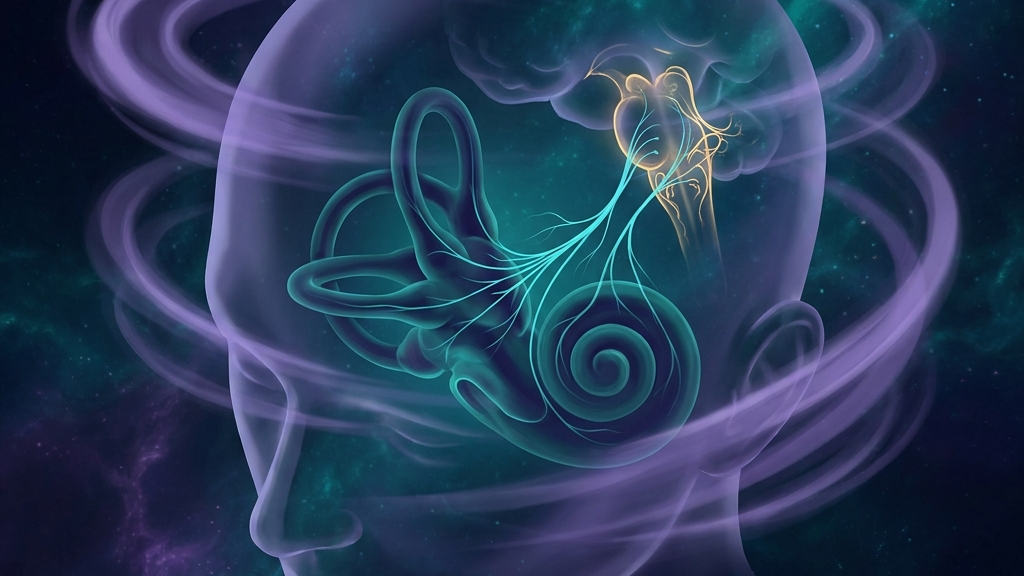
Chronic dizziness is one of the most common complaints in primary care, and one of the most often dismissed. The patient describes swaying, rocking, fogginess, "boat legs," or a sense that the floor is not solid — but the MRI is clean, the audiology is normal, and the cardiac workup is fine. The diagnosis being missed is, more often than not, persistent postural-perceptual dizziness (PPPD) — and its mechanism is autonomic before it is vestibular.
What PPPD Actually Is
PPPD is classified by the Bárány Society as a chronic functional vestibular disorder (PMC 9249299). The core symptom is non-spinning dizziness — described as swaying, rocking, fogginess, or unsteadiness — present for three months or more, present on most days, and worsened by upright posture, motion, and complex visual environments.
It typically follows an inciting event: a vestibular insult (vestibular neuritis, BPPV), a panic attack, a concussion, or a viral illness. The original insult resolves; the brain does not return to baseline.
The Mechanism: A Brain Stuck in Threat Mode
After an acute balance disruption, the brain shifts to greater reliance on visual and somatosensory inputs to maintain stability. This is adaptive in the short term. In PPPD, the shift becomes maladaptive — the brain remains in a heightened state of postural threat detection, hypervigilant to motion, dependent on vision, and physiologically stiff (StatPearls).
Underlying mechanisms include altered cortical network connectivity, vestibulo-autonomic dysregulation, sensory-perceptual dysfunction, hemodynamic shifts, otolith dysfunction, and neurotransmitter abnormalities (Frontiers in Neurology, 2025).
The Vestibulo-Autonomic Bridge
The vestibular system shares brainstem real estate with autonomic nuclei, including the nucleus tractus solitarius — the primary vagal afferent terminus. Vestibular signals routinely modulate heart rate, blood pressure, and gastric activity, and autonomic signals modulate vestibular processing. In PPPD, this bridge is overactive in the wrong direction: motion triggers autonomic alarm, and autonomic alarm amplifies motion sensitivity. The patient is trapped in a self-reinforcing loop.
The Patient Profile
Classic PPPD: persistent non-spinning dizziness, worse on standing, in busy visual environments, or during motion; better when lying still or focused on a single visual task. Frequent comorbidities: anxiety (often new-onset post-event), low HRV, sleep disturbance, fatigue, and post-exertional worsening. Many patients have been told their symptoms are psychiatric — they are not. They are functional, which is not the same as imaginary.
A Vagus-Aware PPPD Recovery Framework
- Vestibular rehabilitation therapy. The evidence-based first-line. Targeted exposure to the motion environments the brain has learned to fear, retraining sensorimotor integration.
- Slow nasal breathing as autonomic anchoring. Six-per-minute breathing reduces the sympathetic over-response to vestibular input. Done before challenging environments, it expands tolerance.
- SSRIs/SNRIs where indicated. Have evidence in PPPD specifically and are not the same as treating depression — they appear to work via neuromodulation of the threat circuit.
- Address autonomic comorbidities. POTS, hEDS, and MCAS are common in this population. Each amplifies the others.
- Sleep, sleep, sleep. Fatigue collapses the brain's ability to compensate. Restoring sleep architecture is part of vestibular rehab, not separate from it.
- Patience. PPPD recovery is measured in months. Linear improvement is rare; trend lines matter more than daily fluctuations.
Clinical takeaway: Chronic dizziness with a clean workup is rarely "nothing." It is most often PPPD — a vestibulo-autonomic loop that requires both vestibular rehab and vagal restoration to break.
Have a question?
Have a question about something specific? Send us a message.
Visit VagusSkool.com/contact — we'll try to get back to you within 24 hours.