Brain Fog and the Vagus Nerve: A Clinical Map of the Cognitive Haze
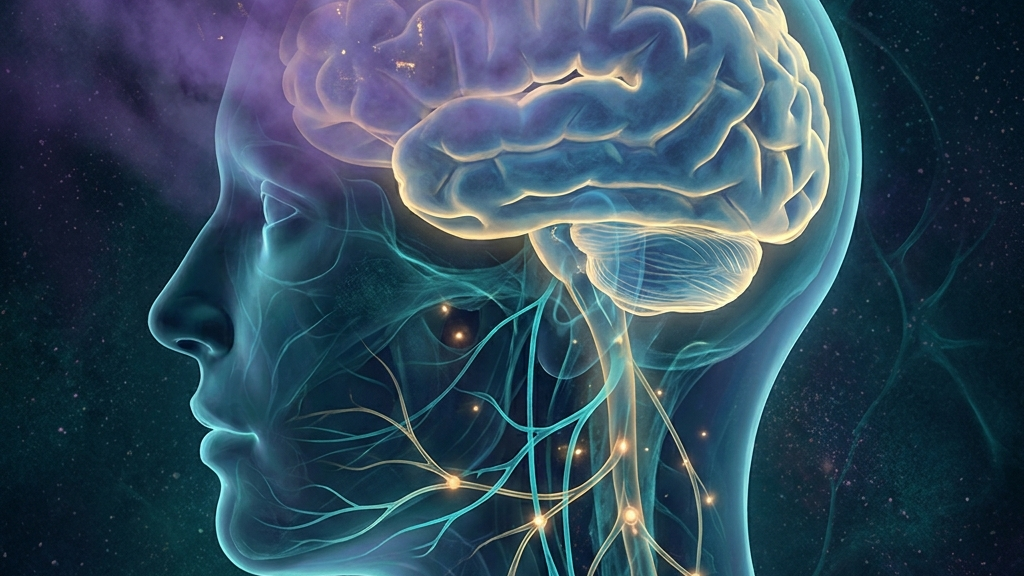
"Brain fog" is one of the most under-diagnosed symptoms in modern clinical medicine. Patients describe it as a slow internet connection between thought and word — slowed processing, word-finding difficulty, mental fatigue out of proportion to effort, and a vague sense that the lights are dimmer. It is not a disease. It is a final common pathway of several measurable physiological breakdowns, and the vagus nerve is implicated in nearly all of them.
What Brain Fog Actually Is
The current best mechanistic synthesis identifies four overlapping drivers of brain fog: chronic neuroinflammation (microglial activation), blood–brain barrier dysfunction, disrupted default mode network connectivity, and impaired cerebral metabolism (Spandidos, 2024). Each of these is gated, in part, by vagal afferent and efferent activity.
The Vagus Nerve's Three Levers Over Cognition
1. The Cholinergic Anti-Inflammatory Reflex
Vagal efferents release acetylcholine that binds α7 nicotinic receptors on microglia and peripheral macrophages, suppressing TNF-α, IL-1β, and IL-6. When vagal tone drops, that brake releases — and chronic low-grade neuroinflammation is one of the most reproducible findings in patients reporting persistent brain fog (Frontiers in Neuroscience, 2024).
2. Gut–Brain Signaling
Roughly 80% of vagal fibers are afferent — sensory — and a large proportion originate in the gut. Microbial metabolites, intestinal permeability, and cytokine signaling all reach the brain via these fibers. Dysbiosis, SIBO, and post-infectious gut changes can therefore present as cognitive symptoms before any GI complaint (Discover Medicine, 2025).
3. Cerebral Perfusion
Vagal tone influences baroreflex function and cardiac output. In patients with low HRV — particularly those with orthostatic intolerance — cerebral blood flow drops on standing, producing the classic "thinking through molasses" sensation that is so commonly described as brain fog.
The Patient Profile
The brain-fog patient walking into the clinic typically presents with several of the following: low resting HRV, post-exertional cognitive worsening, afternoon energy crashes, GI symptoms, and a history of an inciting event — viral illness, severe stress, mold exposure, anesthesia, or a TBI. The fog is the symptom; the autonomic signature is the diagnosis.
A Vagus-First Recovery Framework
- Down-shift the autonomic state first. Slow nasal breathing at six breaths per minute, twice daily, for at least four weeks. This is dose-dependent — sporadic practice does not work.
- Treat the gut, treat the fog. Address dysbiosis, SIBO, food triggers, and intestinal permeability before assuming the problem is "in the brain."
- Restore HRV with a target. RMSSD trended weekly is more useful than daily readings. A rising trend over 6–12 weeks correlates with cognitive recovery in clinical experience.
- Consider non-invasive vagus stimulation. Auricular taVNS and transcutaneous cervical VNS both have signal in cognitive recovery contexts, particularly in post-COVID populations (PubMed 38695969).
- Photobiomodulation is worth a trial. Recent work in post-COVID brain fog suggests measurable benefit from transcranial near-infrared protocols (medRxiv 2025).
Clinical takeaway: Brain fog is rarely a brain problem in isolation. It is the cognitive face of an autonomic and inflammatory loop with the vagus nerve at its center. Treat the loop, and the fog clears.
References & Further Reading
- Mitochondrial dysfunction in chronic neuroinflammatory disorders. International Journal of Molecular Medicine, 2024. Read
- Mechanisms of vagus nerve stimulation in neurodevelopmental disorders: focus on microglia. Frontiers in Neuroscience, 2024. Read
- Intervention modalities for brain fog caused by long-COVID. Systematic review, 2024. PubMed
- Photobiomodulation for cognitive dysfunction in post-COVID. medRxiv, 2025. Read
Have a question?
Have a question about something specific? Send us a message.
Visit VagusSkool.com/contact — we'll try to get back to you within 24 hours.