The Vagus Nerve, Stress Recovery, and the Rhythms of Heart and Connection
The Body’s Longest Nerve and Its Quiet Influence
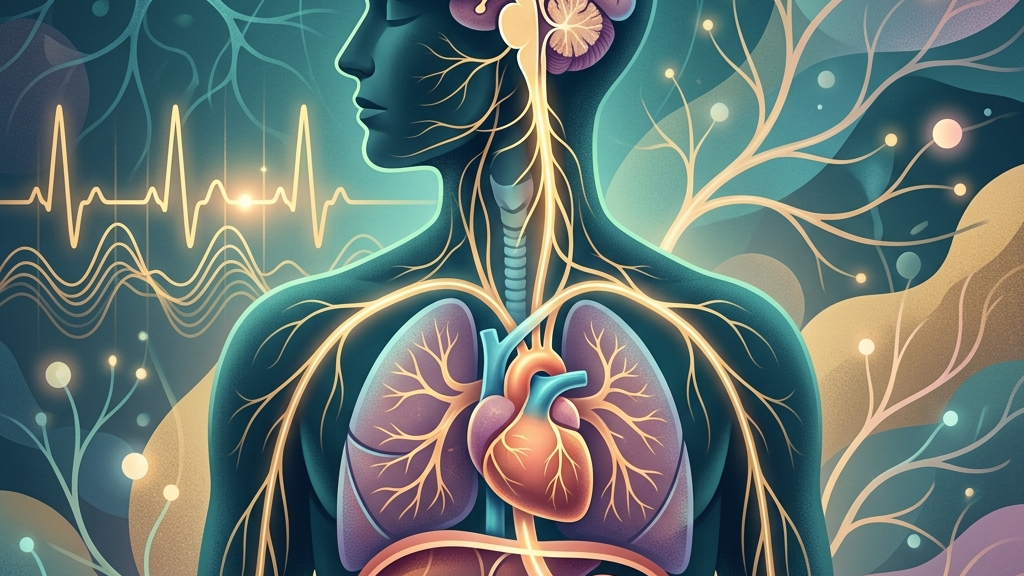
The vagus nerve extends from the brainstem through the neck and into the chest and abdomen, serving as a primary communication pathway between the brain and many internal organs. Research describes it as a key component of the parasympathetic nervous system, the branch often associated with rest and restoration. When its tone is lower, the body may remain in a heightened state longer than necessary after a stressor has passed.
Stress Recovery and the Vagus Nerve
Stress recovery depends in part on the nervous system’s ability to shift out of sympathetic activation. The vagus nerve contributes to this shift by influencing heart rate, breathing patterns, and digestive processes. Studies suggest that practices supporting vagal pathways may help the body return more readily to a baseline state after stress. Heart Rate Variability and Cardiac Vagal Tone explores how cardiac vagal tone reflects this regulatory capacity. Many people find that gentle, consistent attention to breathing rhythms supports a smoother transition from alertness to calm.
Resting Heart Rate as a Window
A stable resting heart rate is one observable sign of autonomic balance. The vagus nerve exerts a braking effect on the heart through its cardiac branches, helping maintain variability and preventing unnecessary acceleration when the body is at rest. Vagus Nerve: Function, Location & Conditions notes its role in regulating heart rate. Neuroanatomy, Cranial Nerve 10 (Vagus Nerve) further details the anatomical pathways involved. Research on heart-rate variability indicates that higher vagal tone often corresponds with greater beat-to-beat flexibility, a marker sometimes linked to resilience. Heart Rate Variability and Cardiac Vagal Tone provides additional context on these relationships.
Connection and the Social Engagement System
Beyond internal regulation, the vagus nerve participates in pathways that support social engagement. It innervates structures involved in voice, facial expression, and listening, contributing to the sense of safety that allows connection with others. When vagal tone is lower, some individuals notice reduced ease in these areas. Vagus Nerve as Modulator of the Brain–Gut Axis and Vagal Sensory Neurons and Gut–Brain Signaling describe broader brain-body loops that include social and emotional dimensions. Vagus Nerve Stimulation, Sleep-Disordered Breathing & Sleep Quality adds that improved vagal function may also relate to better sleep continuity, another factor that can influence daytime social capacity.
Practical Next Steps
Because the vagus nerve influences multiple systems at once, small daily experiments often begin with breath. A longer exhale relative to the inhale is one accessible starting point that many people explore for its potential effect on heart-rate variability. Gentle vocalization, such as humming or soft singing, is another practice some find supportive of throat and neck awareness. Movement that emphasizes slow, rhythmic patterns may also invite a sense of settling. These approaches remain general suggestions; anyone experiencing persistent symptoms is encouraged to consult a qualified professional for personalized evaluation.
Have a question?
Have a question about something specific? Send us a message.
Visit VagusSkool.com/contact — we'll try to get back to you within 24 hours.