The Vagus Nerve’s Quiet Influence on Sleep Quality, Stress Recovery, and Digestive Balance
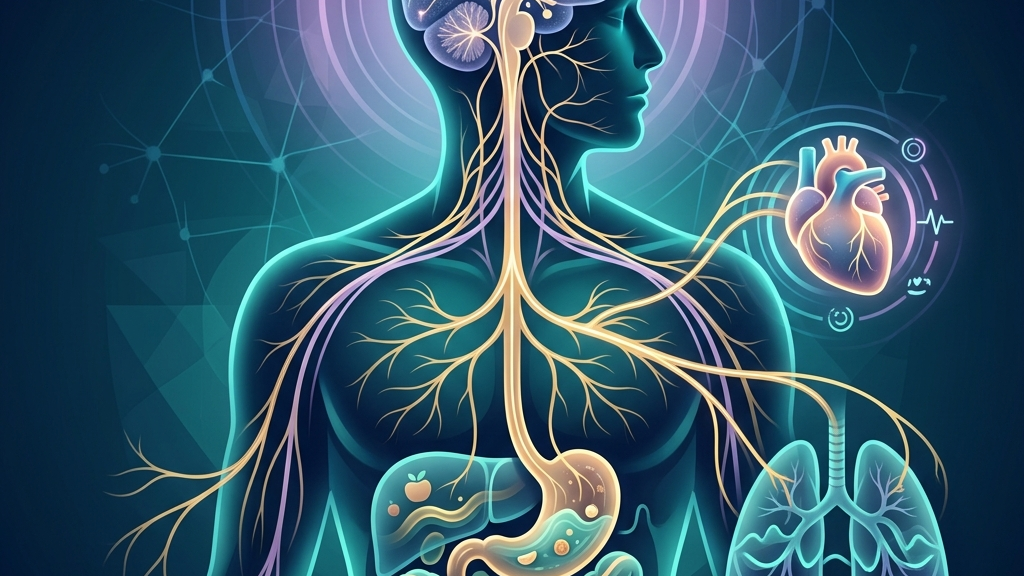
The vagus nerve serves as a primary communication highway between the brain and many of the body’s internal organs, shaping how people move between states of alertness and rest. Its activity is closely tied to patterns of sleep, the body’s ability to recover from daily stressors, and the smooth operation of digestion. Understanding these connections offers a clearer picture of why small shifts in nervous-system regulation can ripple through multiple systems at once.
This article examines the underlying anatomy and physiology of the vagus nerve, then explores its specific relationships with sleep, stress recovery, and digestion in turn. Readers will encounter mechanisms described in plain language, observations commonly reported in everyday experience, and summaries of relevant research drawn from established sources. The goal is to provide context rather than prescriptions, highlighting how these processes interact without implying any guaranteed outcome.
How the vagus nerve works
The vagus nerve is the longest cranial nerve, extending from the brainstem through the neck and into the chest and abdomen, where it branches extensively to reach the heart, lungs, and digestive tract. As the main component of the parasympathetic nervous system, it promotes “rest-and-digest” functions that counterbalance the sympathetic “fight-or-flight” response. Its fibers carry both motor signals that slow heart rate and stimulate digestive secretions and sensory signals that relay information from the organs back to the brain. Motor fibers originate in the dorsal motor nucleus and nucleus ambiguus, traveling downward to release acetylcholine at cardiac ganglia to reduce sinoatrial node firing rate, while sensory fibers, making up roughly 80 percent of the nerve, ascend from baroreceptors in the aortic arch and chemoreceptors in the gut wall. This dual traffic allows moment-to-moment adjustments: after a large meal, for instance, vagal afferents detect gastric distension and signal the brainstem to increase insulin release and slow gastric emptying, preventing blood-sugar spikes while the person continues an ordinary evening routine such as reading or light conversation.
One key feature of vagal function is its contribution to heart-rate variability, a measure of the variation in time between heartbeats that reflects the balance between sympathetic and parasympathetic influences. Higher variability is often associated with greater adaptability, while lower variability may indicate reduced regulatory capacity. The vagus nerve also forms a major part of the gut-brain axis, allowing bidirectional signaling that influences both emotional states and gastrointestinal activity through vagal afferents that detect mechanical and chemical changes in the gut. In daily life this appears when someone feels “butterflies” before a presentation; mechanoreceptors in the stomach wall register subtle tension changes and transmit them via the vagus to the nucleus tractus solitarius, which then modulates prefrontal activity and perceived anxiety. Conversely, after eating a balanced lunch containing fiber and protein, nutrient sensors along the intestinal mucosa trigger vagal signals that promote a calmer mental state during an afternoon work session.
Because the nerve travels near structures involved in swallowing and vocalization, its activity can be modulated by actions that engage the throat and larynx. This anatomical arrangement explains why certain respiratory and vocal practices are studied in relation to vagal tone. The nerve’s extensive reach means that changes in one domain—such as breathing patterns—can influence signaling in distant organs, creating interconnected effects across sleep, stress, and digestion without any single pathway acting in isolation. For example, a person who pauses during a stressful workday to perform a few slow breaths may notice both a steadier pulse and, later that evening, smoother digestion of dinner, illustrating how laryngeal muscle engagement can propagate effects through shared brainstem nuclei to cardiac and enteric branches.
Vagal Tone and Its Connection to Restorative Sleep
During sleep, parasympathetic dominance typically increases, allowing the body to shift resources toward cellular repair and memory consolidation. The vagus nerve supports this shift by helping regulate heart rate and respiratory patterns that become more stable and slower in deep sleep stages. Research on heart-rate variability indicates that stronger vagal modulation often coincides with improved continuity of sleep cycles, though individual differences in baseline tone and external factors play significant roles. In non-REM stage three, vagal outflow helps maintain the slow, rhythmic breathing that supports growth-hormone release and tissue repair; a person who tracks nightly data may observe that nights with fewer than four awakenings often show higher average nocturnal heart-rate variability, reflecting sustained parasympathetic influence rather than abrupt sympathetic surges from noise or temperature changes.
People sometimes notice that evenings characterized by slower, deeper breathing lead to fewer nighttime awakenings or a greater sense of refreshment upon waking. This observation aligns with the nerve’s role in dampening sympathetic overactivity that can otherwise prolong the time needed to fall asleep. Conversely, when vagal signaling is less robust, some individuals report more fragmented rest or difficulty returning to sleep after brief arousals, reflecting the nerve’s contribution to maintaining parasympathetic dominance throughout the night. Consider someone who ends the day with a warm shower followed by reading; the combination of warmth-induced vasodilation and focused attention can enhance vagal braking on heart rate, allowing the transition into stage-two sleep to occur within fifteen minutes instead of the forty-five minutes sometimes required after an evening of screen use and rapid breathing.
The relationship is bidirectional: poor sleep can itself reduce next-day vagal activity, creating a cycle that affects both daytime alertness and nighttime recovery. Studies examining sleep-disordered breathing have explored how intermittent reductions in vagal tone during apneic events may further disrupt sleep architecture. These mechanisms illustrate why consistent sleep timing and pre-sleep wind-down routines are frequently discussed in relation to supporting overall nervous-system balance. When a person maintains the same bedtime across weekdays and weekends, the suprachiasmatic nucleus aligns melatonin onset with vagal peaks, reducing the likelihood that a late-night email will trigger prolonged sympathetic activation that carries into the first sleep cycle.
Vagal Pathways and the Body’s Return to Calm After Stress
Stress activates the sympathetic branch, raising heart rate and redirecting blood flow to muscles while suppressing digestive and restorative functions. The vagus nerve provides a counter-regulatory “brake” that can gradually restore baseline heart rate and promote a return to parasympathetic dominance once the stressor subsides. Heart-rate variability serves as one window into how effectively this braking system operates, with higher variability generally reflecting greater vagal capacity to modulate arousal. After a heated discussion with a colleague, for instance, the vagus can re-engage within minutes if the individual steps outside for a brief walk; baroreceptor feedback from the resulting mild blood-pressure drop strengthens vagal outflow, shortening the period of elevated heart rate from perhaps thirty minutes to under ten.
Many people observe that after periods of sustained tension, they experience lingering physical symptoms such as elevated heart rate, shallow breathing, or gastrointestinal unease. These sensations can correspond to a temporary reduction in vagal tone that delays full physiological recovery. Over time, repeated exposure to stressors without adequate recovery windows may contribute to lower baseline variability, making the transition back to calm feel slower or less complete. A parent juggling remote work and childcare might notice that after back-to-back video calls, residual muscle tightness in the shoulders persists until an intentional five-minute breathing pause allows vagal afferents to update the brainstem about reduced threat, gradually lowering forearm tension and restoring normal swallowing patterns.
The vagus nerve’s sensory fibers also relay information about bodily states to brain regions involved in emotional regulation, creating a feedback loop between physical recovery and subjective feelings of safety. When vagal signaling is more active, individuals sometimes report a quicker subsidence of racing thoughts or muscle tension following stressful events. This process underscores the nerve’s position as an interface between peripheral physiology and central nervous-system responses to challenge. In practice, someone who feels a knot in the stomach after receiving unexpected news may find that placing a hand on the abdomen and attending to the sensation helps the vagus convey updated safety information, shortening the duration of anxious rumination from an hour to a more manageable quarter-hour.
The Vagus Nerve’s Influence on Digestive Motility and Comfort
Digestion depends heavily on parasympathetic input carried by the vagus nerve, which stimulates gastric acid secretion, pancreatic enzyme release, and coordinated contractions that move food through the intestines. These actions support nutrient breakdown and absorption while also influencing gut motility patterns that prevent excessive fermentation or stasis. The nerve’s sensory branch detects stretch and nutrient signals, feeding information back to the brainstem to fine-tune digestive responses in real time. When a person eats lunch at a table without checking messages, vagal afferents register gradual gastric filling and trigger appropriate enzyme release; the same meal consumed while standing and scrolling may instead coincide with reduced secretions because sympathetic tone remains elevated.
Individuals often notice that meals eaten in a relaxed state are followed by comfortable digestion, whereas hurried or tense eating can coincide with bloating, reflux sensations, or irregular bowel patterns. Such experiences reflect the nerve’s sensitivity to overall autonomic state: sympathetic dominance tends to inhibit digestive secretions and slow motility, while vagal activation facilitates them. Chronic reductions in vagal tone have been examined in relation to functional gastrointestinal complaints, though many contributing factors are usually involved. A worker who habitually eats at their desk during high-pressure deadlines may experience mid-afternoon bloating that resolves on weekends when meals are taken at a normal pace, highlighting how daily context shapes vagal support for peristalsis.
The gut-brain axis further links digestive signals to mood and stress perception through vagal afferents that reach areas such as the nucleus tractus solitarius. This connection helps explain why digestive discomfort can sometimes amplify feelings of anxiety, and why periods of lower stress may coincide with improved regularity. The bidirectional nature of these pathways means that supporting vagal function through one route, such as breathing, can indirectly influence sensations in the gut without targeting digestion directly. Someone who practices paced breathing before dinner may later notice less post-meal heaviness, because the same vagal pathways that slowed respiration also enhanced gastric accommodation and reduced the perception of fullness as discomfort.
What the research shows
Multiple lines of investigation have examined vagal contributions to the domains discussed above. Research on vagus nerve stimulation and sleep-disordered breathing has explored how altered vagal signaling during respiratory events may affect sleep continuity and quality. Complementary work on heart-rate variability has documented associations between higher vagal tone and more stable autonomic regulation across sleep and wakefulness.
Studies of heart-rate variability and cardiac vagal tone provide detailed mapping of how parasympathetic outflow modulates beat-to-beat intervals, offering a measurable index of the vagal brake’s effectiveness during stress recovery. In parallel, investigations into the gut-brain axis have clarified the anatomical routes by which vagal afferents convey gut-derived signals to brain centers involved in both homeostasis and emotional processing.
Work on the vagus nerve as a modulator of the brain–gut axis and research on vagal sensory neurons and gut–brain signaling together illustrate the density of sensory traffic traveling along the nerve and its relevance to digestive comfort. Foundational anatomical descriptions from sources such as Cleveland Clinic’s overview of vagus nerve function and NIH StatPearls on cranial nerve 10 supply the structural context that underpins these functional studies. Collectively, the evidence points to interconnected rather than isolated effects, with considerable individual variability remaining an important consideration.
Practical ways to support your vagus nerve
- Slow extended exhales can be practiced by lengthening the out-breath to roughly twice the length of the in-breath for several minutes, which may gently increase parasympathetic signaling through respiratory-vagal coupling.
- Humming or gargling engages muscles near the vagus nerve’s path in the throat and may produce subtle shifts in tone that some people associate with a calmer state afterward.
- Gentle cold exposure, such as splashing cool water on the face or ending a shower with a brief cooler rinse, can activate vagal pathways involved in thermoregulation and parasympathetic rebound.
- Paced breathing at approximately six breaths per minute has been studied for its potential to enhance heart-rate variability by synchronizing respiratory and cardiac rhythms.
- Light movement such as walking after meals may support vagal modulation of digestion by combining mild physical activity with upright posture that aids gastrointestinal transit.
- Morning light exposure combined with consistent sleep timing can help stabilize circadian rhythms that in turn influence daily fluctuations in vagal activity and autonomic balance.
When to talk to a professional
Persistent difficulties with sleep that interfere with daily functioning, sudden changes in digestive patterns accompanied by pain or weight loss, or prolonged inability to recover from stress despite consistent self-care efforts are signals that warrant evaluation by a qualified clinician. These symptoms can stem from multiple causes, and professional assessment helps identify whether further investigation or targeted support is appropriate.
Anyone experiencing chest pain, severe shortness of breath, or abrupt neurological changes should seek immediate medical attention, as these are not typical features of routine vagal variation. Regular check-ins with healthcare providers remain the appropriate route for addressing concerns that feel outside the scope of general wellness practices.
Common questions
How quickly can vagal tone change?
Short-term shifts in heart-rate variability can occur within minutes in response to breathing or postural changes, while longer-term adaptations in baseline tone generally develop over weeks to months with consistent patterns of activity and rest.
Does everyone have the same level of vagal activity?
Baseline vagal tone varies widely across individuals due to factors including age, fitness, genetics, and health history, so comparisons between people are less informative than tracking personal patterns over time.
Can vagal function be measured at home?
Consumer devices that estimate heart-rate variability provide one accessible window, yet these readings are influenced by many variables and are best interpreted alongside other indicators of well-being rather than in isolation.
Is there a single best practice for supporting the vagus nerve?
No single method has emerged as universally superior; different approaches such as breathing, movement, or vocalization may suit different people or situations, and combining several low-effort habits often feels more sustainable than relying on one technique.
The vagus nerve’s extensive connections remind us that sleep, stress recovery, and digestion are not separate silos but overlapping expressions of autonomic regulation. Paying attention to these relationships can foster a more integrated sense of how daily rhythms influence one another, encouraging steady, individualized experimentation grounded in the body’s own feedback. Over time, such awareness supports a grounded approach to nervous-system health that respects both physiological mechanisms and personal variability.
Have a question?
Have a question about something specific? Send us a message.
Visit VagusSkool.com/contact — we'll try to get back to you within 24 hours.