The Vagus Nerve’s Dual Role in Stabilizing Resting Heart Rate and Supporting Social Connection
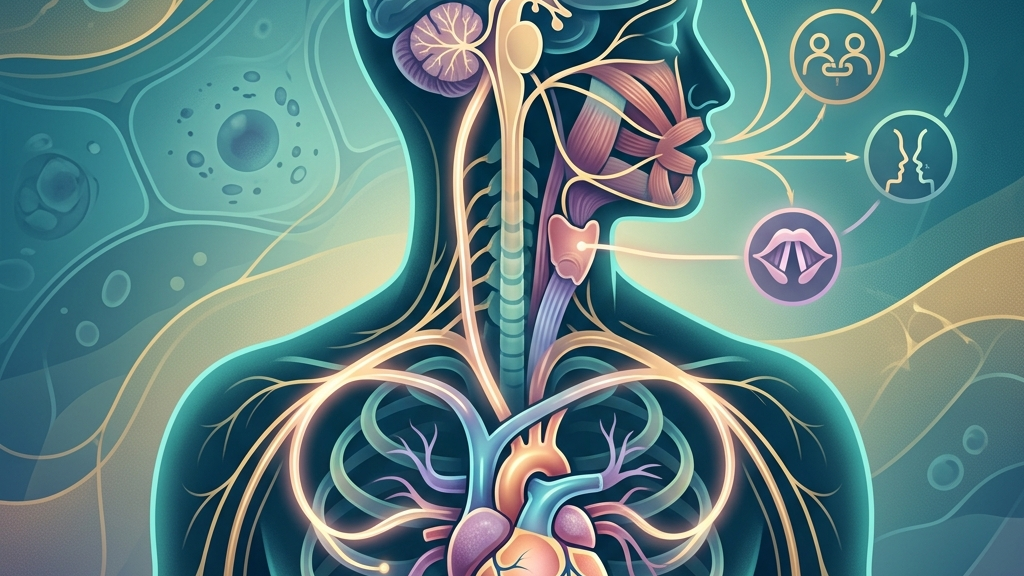
The vagus nerve serves as a primary conduit between the brain and many internal organs, influencing both involuntary bodily rhythms and the capacity for calm social engagement. Its fibers carry a continuous stream of sensory data upward from the viscera while simultaneously conveying motor commands downward to adjust organ function on a moment-to-moment basis. Understanding its contributions to resting heart rate and interpersonal connection offers insight into how the parasympathetic nervous system maintains balance under everyday conditions such as sitting through a meeting, digesting a meal, or settling into conversation after a workday. This article examines the underlying anatomy, physiological mechanisms, and observable patterns associated with these functions, drawing on established research to clarify what is currently known and what remains under investigation.
Readers will encounter detailed explanations of cardiac regulation through vagal pathways, the nerve’s involvement in vocal and facial signaling that facilitates social bonds, and evidence from studies on heart-rate variability. Everyday examples include noticing a slower pulse while reading quietly in the evening or sensing a more resonant voice during a relaxed phone call with a friend. Practical observations that many people report are presented alongside mechanisms, while a later section outlines simple daily approaches that some individuals explore to support vagal activity. The discussion remains educational and does not substitute for professional medical advice.
The Vagus Nerve’s Anatomy and Its Parasympathetic Functions
The vagus nerve, designated as cranial nerve X, originates in the medulla oblongata and extends through the neck into the chest and abdomen, branching extensively to reach the heart, lungs, and digestive tract. Cell bodies reside in the nucleus ambiguus and dorsal motor nucleus, sending myelinated axons that exit the skull via the jugular foramen before descending alongside the carotid arteries. As the principal parasympathetic outflow, it promotes restorative processes such as slowed heart rate, reduced respiratory effort, and enhanced gastrointestinal motility when the body is not under acute threat. Its long course allows it to integrate signals from multiple organ systems, creating a feedback loop that helps maintain physiological stability during rest; for instance, after finishing a large lunch, increased vagal traffic to the stomach promotes peristalsis while simultaneously signaling satiety centers in the brainstem.
Within the gut-brain axis, afferent fibers of the vagus nerve transmit information from the enteric nervous system back to the brainstem, influencing mood-related circuits and autonomic tone. Roughly 80 percent of vagal fibers are sensory, carrying mechanical stretch information from the stomach wall or chemical signals from enteroendocrine cells that have detected nutrients or microbial metabolites. This bidirectional communication supports the idea that digestive states can affect emotional regulation and vice versa. Research on vagal sensory neurons highlights how these pathways carry chemical and mechanical signals from the intestines, contributing to the overall sense of bodily equilibrium; a concrete illustration occurs when bloating after a heavy meal coincides with a subtle drop in motivation or focus, reflecting altered afferent traffic that reaches the nucleus tractus solitarius and then projects to limbic areas.
Heart-rate variability, a marker often linked to vagal activity, reflects the beat-to-beat fluctuations that arise when the vagus nerve exerts a braking influence on the sinoatrial node. Higher variability at rest generally corresponds to greater parasympathetic dominance, whereas lower variability may indicate reduced vagal modulation. This measure provides a window into how effectively the nerve helps the cardiovascular system remain adaptable without constant sympathetic drive. In daily life, someone checking their wearable device after a night of uninterrupted sleep may observe higher nighttime variability compared with a night interrupted by work emails, illustrating the nerve’s role in translating behavioral context into measurable cardiac flexibility.
Resting Heart Rate Regulation Through the Vagal Brake
The vagus nerve supplies the primary inhibitory input that keeps resting heart rate within a lower range during periods of calm. Preganglionic neurons in the nucleus ambiguus release acetylcholine onto postganglionic neurons clustered near the heart; those postganglionic fibers then liberate acetylcholine onto muscarinic receptors on cardiac pacemaker cells, lengthening the interval between beats and dampening the influence of sympathetic accelerators. This tonic restraint, sometimes called the vagal brake, allows heart rate to rise quickly when needed and return promptly once the demand subsides, preserving energy and reducing unnecessary cardiac workload. An everyday example is the rapid deceleration that occurs when a person stops at a red light after cycling to work; the brake re-engages within seconds once forward motion and visual attention demands ease.
Individuals often notice that their resting heart rate is lower on mornings after consistent sleep or following periods of relaxed breathing, patterns consistent with stronger vagal modulation. Conversely, sustained stress or irregular schedules may coincide with a modest elevation in resting rate, reflecting a temporary withdrawal of that parasympathetic influence. These day-to-day shifts are not diagnostic but illustrate how vagal tone participates in ordinary cardiac rhythm. Someone who tracks morning readings over several weeks may observe that days beginning with ten minutes of quiet sitting show readings several beats lower than days that start with immediate screen time and caffeine, highlighting the brake’s sensitivity to preceding behavioral context.
Heart-rate variability measurements further reveal the dynamic nature of this regulation. When vagal outflow is robust, variability tends to increase during slow exhalation and decrease during inhalation, producing the characteristic respiratory sinus arrhythmia. Studies examining cardiac vagal tone document these oscillations and their relationship to overall autonomic flexibility, suggesting that the nerve contributes to both stability and responsiveness at rest. The mechanism involves phasic gating of vagal efferent traffic synchronized with the respiratory cycle via connections through the nucleus tractus solitarius and respiratory centers in the medulla.
Over longer timescales, factors such as aerobic conditioning or chronic psychological load can alter the strength of vagal cardiac control. People sometimes report feeling more “even-keeled” when their resting heart rate remains steady across similar activities, an experience that aligns with preserved vagal braking capacity. Such observations remain subjective yet map onto physiological descriptions of parasympathetic dominance during non-demanding states. For instance, an office worker who begins a lunchtime walking routine may notice that afternoon heart-rate readings stay closer to morning baseline values, consistent with cumulative effects on vagal efferent traffic.
Vagal Tone and Its Role in Social Connection
Beyond cardiac regulation, the vagus nerve innervates muscles of the larynx, pharynx, and middle ear, enabling subtle adjustments in voice pitch and auditory filtering that support social communication. Special visceral efferent fibers travel via the cranial root of the accessory nerve before joining the vagus, terminating on striated muscles that control vocal-fold tension and pharyngeal constriction. These motor pathways are part of the ventral vagal complex, which evolutionary accounts link to the mammalian capacity for safe social engagement. When vagal tone is adequate, the voice tends to carry more prosodic variation, and the middle-ear muscles more readily dampen low-frequency background noise, facilitating attention to human speech. A practical illustration arises during an unhurried conversation with a colleague: the speaker’s voice naturally rises and falls, and the listener finds it easier to discern words against office ventilation hum.
Many people notice that their voice sounds warmer or more modulated after activities that promote relaxation, such as extended exhalation or quiet humming. These changes coincide with increased vagal outflow to the laryngeal muscles and may contribute to smoother conversational exchanges. Conversely, states of heightened alertness can produce a flatter or more strained vocal quality, reflecting a shift away from ventral vagal dominance toward sympathetic or dorsal vagal mobilization. An example occurs when someone answers a work call immediately after an argument; the voice may lose its usual melodic contour until a few minutes of calmer breathing restore ventral vagal influence.
The same vagal circuits influence facial expression through connections with cranial nerves that control eyelid and mouth muscles. This integration allows micro-expressions of calm or interest to emerge more readily when parasympathetic tone predominates. Research on the brain-gut axis and vagal sensory neurons underscores how interoceptive feedback from the body can color the perception of social safety, potentially reinforcing or diminishing the motivation to connect. After a satisfying meal that activates gastric vagal afferents, an individual may feel more inclined to linger in conversation rather than withdraw, illustrating the interplay between visceral state and social signaling.
Over time, repeated experiences of safe social interaction may strengthen the association between ventral vagal activation and interpersonal contexts. Individuals sometimes describe feeling more at ease in groups after periods of improved sleep or reduced daily pressure, observations that parallel findings on vagal contributions to social engagement systems. These patterns illustrate the nerve’s participation in both physiological calm and the subtle signaling required for human connection, such as maintaining eye contact without strain or producing spontaneous smiles during light banter.
What the Research Shows
Investigations into heart-rate variability have established that respiratory-linked fluctuations largely reflect vagal modulation of the heart, providing a measurable index of parasympathetic activity under resting conditions. Heart Rate Variability and Cardiac Vagal Tone reviews the physiological basis of these oscillations and their sensitivity to behavioral states. Complementary anatomical work confirms that vagal efferents directly innervate the cardiac conduction system, supporting the brake-like function described earlier. The same efferent traffic also modulates atrioventricular-node conduction time, adding another layer of beat-to-beat control visible in longer electrocardiographic recordings.
Studies examining vagus nerve stimulation during sleep document improvements in sleep architecture and reductions in disordered breathing events, suggesting that enhanced vagal signaling can influence nighttime autonomic balance. Vagus Nerve Stimulation, Sleep-Disordered Breathing & Sleep Quality summarizes findings from clinical and preclinical models that link vagal pathways to respiratory control during rest. These data align with observations that consistent sleep schedules often coincide with steadier resting heart-rate patterns. In one illustrative scenario, participants following a fixed bedtime routine showed progressive evening declines in heart rate that tracked with increased high-frequency heart-rate variability, consistent with mounting vagal dominance as sleep approached.
Research on the gut-brain axis emphasizes the vagus nerve’s role as a major conduit for sensory information traveling from the intestines to brainstem nuclei that regulate both autonomic output and affective processing. Vagus Nerve as Modulator of the Brain–Gut Axis and Vagal Sensory Neurons and Gut–Brain Signaling detail how vagal afferents convey microbial and nutrient signals that can modulate descending parasympathetic tone. Such mechanisms provide a plausible route through which digestive comfort may support the calm required for social interaction. For example, fermentation products from dietary fiber can activate vagal chemosensors, leading to downstream changes in brainstem activity that influence both heart-rate variability and perceived social ease.
Broader anatomical reviews, including those from Cleveland Clinic and NIH StatPearls, synthesize the nerve’s extensive distribution and its integration of cardiac, respiratory, and gastrointestinal functions. Together these sources indicate that while direct causal links in everyday settings require further study, the vagus nerve participates in multiple systems relevant to resting heart rate and social signaling. Ongoing work continues to map how individual differences in vagal fiber density or receptor expression may account for varied responses to the same daily routines.
Practical Ways to Support Your Vagus Nerve
- Slow, extended exhales performed for several minutes can increase the duration of vagal cardiac inhibition, often producing a measurable rise in heart-rate variability during the practice itself.
- Humming or gentle gargling activates vagal motor fibers to the larynx and pharynx, creating rhythmic stimulation that some individuals associate with a calmer voice and reduced throat tension afterward.
- Brief, tolerable cold exposure such as cool water on the face or a short cool shower may trigger the mammalian dive reflex, which augments vagal outflow to the heart and can lower heart rate transiently.
- Paced breathing at roughly six breaths per minute aligns with the natural resonance frequency of the cardiovascular system, amplifying respiratory sinus arrhythmia and thereby engaging vagal pathways more fully.
- Light movement such as walking at a conversational pace combines rhythmic locomotion with steady breathing, offering a low-demand context in which vagal tone can reassert itself after periods of sitting.
- Consistent morning light exposure followed by a regular sleep schedule helps stabilize circadian rhythms that in turn influence autonomic balance, including the strength of vagal modulation during rest.
When to Talk to a Professional
Sudden or persistent changes in resting heart rate, especially when accompanied by dizziness, chest discomfort, or shortness of breath, warrant prompt medical evaluation to rule out cardiac or other systemic issues. Similarly, significant alterations in voice, swallowing, or persistent digestive distress that interfere with daily function should be assessed by a qualified clinician. These recommendations reflect standard clinical caution rather than any implication that vagal function itself is the sole explanatory factor.
While many people explore lifestyle practices to support general well-being, any new symptom cluster that feels intense or rapidly worsening deserves professional attention rather than self-interpretation. Healthcare providers can determine whether further testing or targeted interventions are appropriate for the individual situation, integrating multiple physiological data streams that extend beyond vagal pathways alone.
Common Questions
How quickly can vagal tone change?
Vagal outflow can shift within seconds in response to breathing patterns or environmental cues, yet longer-term adaptations in baseline tone typically unfold over days to weeks with consistent behavioral patterns. Individual responses vary according to age, fitness, and health status. For instance, a single session of slow breathing may raise high-frequency heart-rate variability for the ensuing hour, whereas establishing a weeks-long routine of morning light and consistent bedtimes tends to produce more stable resting values across successive mornings.
Does everyone experience social connection through the same vagal pathways?
The ventral vagal complex contributes to social engagement across populations, but the degree of influence differs among individuals due to genetics, prior experience, and current physiological state. Research continues to explore these sources of variability. One person may notice pronounced voice softening after a breathing exercise, while another experiences the same exercise primarily as reduced shoulder tension, illustrating how the same neural substrate can manifest differently depending on personal context.
Can devices that measure heart-rate variability replace medical assessment?
Consumer devices provide trend information but lack the precision and clinical context required for diagnosis. Any concerning readings should be discussed with a healthcare professional who can interpret them alongside other data. The algorithms used in wrist-worn sensors, for example, may smooth short-term fluctuations that a clinical electrocardiogram would capture in full detail.
Is there a single best practice for supporting vagal function?
No single activity has been shown to optimize vagal tone universally; different approaches such as breathing, vocalization, or movement may suit different people and circumstances. Experimentation under safe conditions helps identify personally tolerable options. Someone with a sedentary job might find paced breathing easiest to insert between meetings, whereas a person who already walks daily may discover that extending those walks slightly produces comparable shifts in evening heart-rate readings.
The vagus nerve integrates cardiac regulation with the subtle physiology of social signaling, illustrating how one cranial nerve participates in both internal stability and outward connection. Continued attention to sleep, breathing, and daily rhythms offers a grounded way for many people to explore these relationships while remaining attentive to professional guidance when symptoms arise.
Have a question?
Have a question about something specific? Send us a message.
Visit VagusSkool.com/contact — we'll try to get back to you within 24 hours.