The Vagus Nerve and the Physiology of Stress Recovery
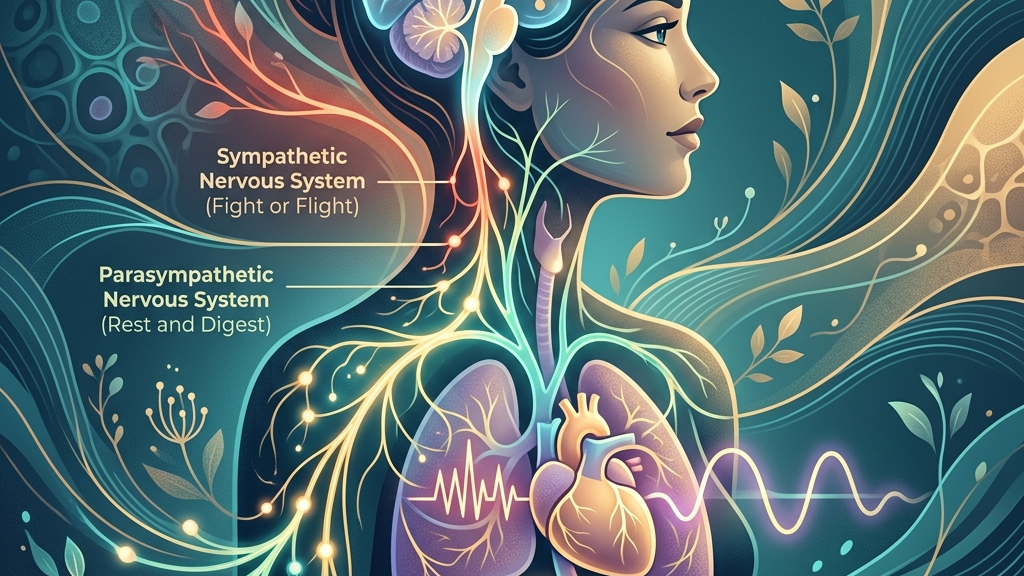
Stress places sustained demands on the body’s regulatory systems, and the speed and completeness of recovery depend in part on how effectively the nervous system can shift out of defensive states. The vagus nerve, the primary parasympathetic conduit, participates in this shift by conveying sensory information from organs to the brain and by modulating heart rate, respiration, digestion, and inflammation. Understanding its contributions offers a framework for recognizing why some individuals rebound more readily after pressure while others remain in prolonged activation. Everyday examples illustrate this variability: a person who finishes a high-pressure workday and notices their breathing settle within minutes likely experiences efficient vagal re-engagement, whereas someone whose shoulders remain tight hours later may have reduced afferent feedback from thoracic and abdominal organs that normally signals safety to brainstem centers. These differences arise because vagal pathways integrate multiple organ systems simultaneously, allowing small shifts in one domain, such as a change in respiratory pattern during an evening commute, to influence cardiac and gastrointestinal tone in parallel.
Readers will encounter the anatomical layout and signaling routes of the vagus nerve, followed by focused examinations of how sleep, cardiac rhythm, and vocal structures intersect with vagal function during recovery. Subsequent sections review published observations, outline accessible daily practices, identify situations that merit professional assessment, and address recurring questions. The discussion remains descriptive and draws only on established physiological relationships rather than individualized recommendations. Within each domain the same principle applies: vagal traffic operates continuously rather than in isolated bursts, so modest, repeated inputs such as adjusting posture while seated at a desk or noticing the texture of food during a meal can accumulate into measurable changes in overall autonomic balance over successive days.
How the Vagus Nerve Works
The vagus nerve originates in the medulla oblongata and extends bilaterally through the neck, thorax, and abdomen, forming the longest cranial nerve. Its efferent fibers release acetylcholine at target organs, slowing heart rate, promoting gastrointestinal motility, and supporting glandular secretion. Afferent fibers, which constitute the majority of the nerve’s axons, relay mechanical, chemical, and inflammatory signals from the viscera back to brainstem nuclei, allowing continuous updating of internal state. This arrangement means that even subtle everyday events, such as the stomach stretching after a balanced lunch or the lungs expanding during a relaxed walk, generate afferent volleys that update central autonomic programs without conscious awareness. When these signals arrive steadily, the brainstem maintains a higher threshold for sympathetic mobilization; when they diminish, as occurs during prolonged sitting with shallow breathing, the threshold lowers and defensive patterns persist longer into the evening.
Within the parasympathetic division the vagus supplies the principal brake on sympathetic outflow. When vagal tone is robust, heart-rate variability increases because the sinoatrial node receives rhythmic inhibitory input synchronized with respiration. This beat-to-beat fluctuation reflects the nerve’s capacity to adjust cardiac output rapidly, a feature quantified in research on heart-rate variability and cardiac vagal tone. In practical terms, someone who pauses between meetings to lengthen their exhale may observe a brief dip in pulse followed by greater steadiness, illustrating how respiratory timing directly gates vagal outflow to the heart. The same mechanism operates across contexts: during a tense conversation the brake can disengage quickly to support alertness, then re-engage once the exchange ends, provided afferent traffic from the viscera remains intact.
The same afferent traffic participates in the gut-brain axis. Vagal sensory neurons detect microbial metabolites, nutrient levels, and mechanical stretch within the intestinal wall, transmitting these data to the nucleus tractus solitarius. From there, projections reach hypothalamic and limbic structures that coordinate appetite, mood, and stress responsivity, illustrating the bidirectional nature of the pathway described in work on the vagus nerve as modulator of the brain–gut axis. A concrete illustration occurs after a meal containing both protein and fiber: distension and metabolite signals travel upward, contributing to a postprandial sense of calm that supports focused work rather than restlessness. Conversely, irregular eating patterns that reduce predictable afferent traffic can leave the system more reactive to subsequent cognitive demands, extending the time needed to settle afterward.
Sleep and Vagal Tone
During non-rapid-eye-movement sleep the parasympathetic nervous system predominates, and vagal outflow to the heart and viscera rises. This nocturnal increase supports restorative processes such as growth-hormone release, tissue repair, and clearance of metabolic by-products. When sleep is fragmented or curtailed, the expected rise in vagal activity is blunted, leaving residual sympathetic tone that carries into waking hours and can prolong the time required for daytime stress recovery. Consider an individual who wakes multiple times to check a phone: each arousal interrupts the progressive deepening of parasympathetic dominance, so that morning heart-rate variability remains lower than it would after uninterrupted slow-wave periods, making the transition into work demands feel more effortful.
Heart-rate-variability recordings obtained across sleep cycles show that high-frequency power, a marker of vagal modulation, peaks during slow-wave stages. Individuals whose vagal rebound is attenuated often report lingering physical tension upon waking, even after apparently adequate sleep duration. Such observations align with findings linking vagus-nerve stimulation parameters to improvements in sleep-disordered breathing and overall sleep quality. Nuance arises because the relationship is bidirectional: poor daytime regulation can itself fragment nighttime architecture, creating a cycle in which each day’s incomplete recovery slightly reduces the amplitude of the next night’s vagal surge. Tracking simple indicators, such as how quickly breathing settles after lying down, can reveal whether nocturnal vagal support is building or plateauing.
From the perspective of the gut-brain axis, vagal afferents continue to sample intestinal milieu throughout the night. Reduced vagal tone may therefore coincide with altered motility and visceral sensitivity, contributing to the sense of incomplete restoration that some people experience after stressful periods. Over successive nights these micro-disruptions can accumulate, extending the window needed for full physiological recalibration. An example is the difference between finishing dinner three hours before bed versus eating close to bedtime: the former allows vagal afferents to convey stable nutrient signals that support deeper slow-wave activity, while the latter may generate conflicting mechanical and chemical traffic that competes with cardiac slowing.
Resting Heart Rate and the Vagal Brake
The vagus nerve exerts tonic inhibition on the sinoatrial node, an effect sometimes termed the vagal brake. At rest this inhibition keeps heart rate below the intrinsic pacemaker rate and permits rapid acceleration or deceleration when environmental demands change. After an acute stressor, efficient re-engagement of the brake lowers heart rate and restores variability, shortening the recovery interval. In daily life this appears when someone moves from a focused task to a brief stretch break: the heart rate that rose during concentration descends smoothly rather than remaining elevated, because myelinated vagal fibers can override sympathetic tone within one or two respiratory cycles.
Measurements of resting heart-rate variability reveal that higher baseline vagal tone correlates with faster return of cardiovascular parameters to pre-stress levels. Conversely, low variability is associated with slower dissipation of sympathetic activation, so that blood pressure and muscle tension remain elevated longer. These patterns emerge consistently in studies examining heart-rate variability and cardiac vagal tone across healthy and clinical populations. A helpful distinction is between absolute resting heart rate and its variability: two people may share the same average pulse yet differ markedly in how quickly that pulse fluctuates with breathing, reflecting different degrees of vagal cardiac influence and therefore different recovery speeds after routine challenges such as traffic delays or deadline pressure.
Because vagal cardiac fibers are myelinated and conduct rapidly, they can override sympathetic drive within a single respiratory cycle. This speed allows the system to toggle between mobilization and restoration without requiring prolonged hormonal clearance. When the brake is underactive, the transition remains sluggish, and everyday stressors may produce cumulative wear that further erodes vagal capacity. Over weeks this can manifest as a gradual rise in the effort required to initiate simple self-regulatory behaviors, such as pausing before responding to an unexpected request, underscoring why consistent low-intensity inputs to the system often prove more sustainable than occasional intense efforts.
Voice, Throat, and the Vagus Nerve
Branchial motor fibers of the vagus innervate the intrinsic muscles of the larynx and pharynx, coordinating the fine adjustments required for phonation, swallowing, and airway protection. These same muscles receive sensory feedback via vagal afferents, creating a loop in which vocal-fold tension and laryngeal position influence brainstem autonomic centers. Activities that recruit these muscles can therefore increase vagal afferent traffic and, in turn, support parasympathetic outflow. Everyday examples include speaking at a comfortable volume during a phone call or swallowing slowly while drinking water; both actions engage the same motor-sensory loop that can gently elevate vagal tone without requiring dedicated practice time.
During states of heightened stress the laryngeal muscles often increase baseline tension, narrowing the airway slightly and altering resonance. People commonly notice a tighter throat, a higher-pitched or thinner voice, or the need to clear the throat more frequently. These sensations reflect both direct motor output and the sensory consequences of reduced vagal tone, which removes the gentle inhibitory influence that normally keeps laryngeal tone balanced. The resulting change in resonance can itself feed back into social interactions, as a thinner voice may prompt others to lean closer or repeat questions, inadvertently sustaining the very tension that initiated the pattern.
Because the nucleus ambiguus integrates laryngeal motor control with cardiac vagal neurons, deliberate activation of the throat region can send ascending signals that promote cardiac slowing. Observations in neuroanatomy texts note that stimulation of vagal laryngeal branches modulates heart-rate responses, illustrating an anatomical substrate for the calming effect many individuals report after vocal or oropharyngeal maneuvers. Nuance lies in dosage: brief, low-effort activations such as soft humming while preparing a meal tend to produce steadier shifts than forceful or prolonged efforts that might inadvertently recruit accessory muscles and increase overall tension.
What the Research Shows
Neuroanatomical tracing studies confirm that the vagus nerve constitutes the principal highway of the gut-brain axis, with vagal sensory neurons conveying microbial and nutrient signals that shape central stress circuitry. Work published in Vagus Nerve as Modulator of the Brain–Gut Axis details how these afferents reach the nucleus tractus solitarius and influence hypothalamic-pituitary-adrenal tone, providing a mechanistic basis for the prolonged recovery sometimes observed when intestinal signaling is disrupted.
Cardiac-focused investigations demonstrate that respiratory sinus arrhythmia, an index of vagal modulation, predicts the rate at which heart rate returns to baseline after laboratory stressors. The review Heart Rate Variability and Cardiac Vagal Tone synthesizes evidence that higher resting high-frequency heart-rate variability corresponds to shorter cardiovascular recovery times, independent of aerobic fitness.
Clinical exploration of vagus-nerve stimulation during sleep has shown improvements in sleep architecture and reductions in apnea-related arousals. Data summarized in Vagus Nerve Stimulation, Sleep-Disordered Breathing & Sleep Quality indicate that enhanced vagal signaling can stabilize respiratory control and thereby support the nocturnal parasympathetic dominance required for next-day stress buffering.
Additional anatomical detail appears in Neuroanatomy, Cranial Nerve 10 (Vagus Nerve), which maps the bilateral projections and mixed sensory-motor composition that enable the nerve’s dual role in visceral monitoring and effector control. Complementary findings on vagal sensory neuron subtypes and their gut-brain signaling functions are presented in Vagal Sensory Neurons and Gut–Brain Signaling.
Practical Ways to Support Your Vagus Nerve
- Slow, extended exhales that lengthen the out-breath relative to the in-breath can increase respiratory sinus arrhythmia and thereby recruit vagal cardiac fibers within a few cycles. The mechanism involves pulmonary stretch receptors that inhibit sympathetic outflow while enhancing vagal modulation at the sinoatrial node; an everyday application is exhaling for six seconds during the pause between email replies, allowing the heart-rate oscillation to become visible on a simple pulse-oximeter reading within one minute.
- Gentle humming or gargling vibrates laryngeal and pharyngeal tissues, sending afferent volleys through vagal branches that converge on brainstem nuclei involved in parasympathetic regulation. Because the same nucleus ambiguus coordinates both laryngeal motor output and cardiac inhibition, even thirty seconds of soft humming while waiting for a kettle to boil can produce a measurable drop in resting heart rate once the sound stops.
- Brief, tolerable cold exposure such as cool water on the face or a cool shower stimulates vagal afferents in the skin and mucosa, often followed by a measurable slowing of heart rate once the stimulus ends. The dive reflex triggered by cold water on the forehead and cheeks engages trigeminal afferents that converge with vagal pathways, providing a rapid, non-habituation-prone input that complements slower respiratory techniques.
- Paced breathing at approximately six breaths per minute aligns with the natural frequency of baroreflex oscillations, amplifying vagal modulation of heart rate without requiring intense effort. This resonance frequency varies slightly between individuals yet clusters near six cycles per minute for most adults; practicing while seated with one hand on the abdomen allows the user to notice the gentle wave-like expansion that accompanies each extended exhale.
- Light movement such as walking or rocking engages proprioceptive and vestibular input that travels partly via vagal pathways, supporting gradual autonomic rebalancing after periods of immobility or tension. A short walk after a long meeting, for instance, combines rhythmic limb motion with subtle head movements that stimulate vagal afferents from the inner ear, often resulting in clearer mental focus within ten minutes of returning to a desk.
- Consistent morning light exposure combined with a stable sleep schedule helps entrain circadian rhythms that in turn organize nocturnal surges in vagal tone necessary for daily recovery. The timing of light relative to wake time matters more than intensity; standing near a window within thirty minutes of rising provides the retinal signals that anchor the subsequent nighttime increase in slow-wave sleep and its associated parasympathetic dominance.
When to Talk to a Professional
Persistent chest pain, unexplained fainting, or sudden changes in heart rhythm warrant prompt medical evaluation regardless of any vagal considerations. Likewise, severe sleep-disordered breathing, chronic swallowing difficulty, or rapidly worsening digestive symptoms should be assessed by a qualified clinician to exclude structural or inflammatory conditions. These presentations may share surface features with altered vagal signaling yet require separate diagnostic pathways to determine appropriate next steps.
When stress recovery remains incomplete despite consistent attention to sleep, movement, and breathing patterns, a healthcare provider can determine whether additional physiological factors require investigation. Early consultation helps differentiate normal variability from situations that benefit from targeted medical management. The goal of such evaluation is to map the full set of contributing systems rather than to isolate vagal function in isolation.
Common Questions
How long does it typically take for vagal tone to improve after stress?
Recovery timelines vary with the duration and intensity of prior stress, baseline fitness, and sleep quality. Some individuals notice shifts in resting heart-rate variability within days of adopting supportive practices, while others require weeks of consistent patterns before measurable changes appear. The determining factor is often the regularity of low-intensity inputs rather than their intensity on any single occasion.
Can breathing exercises be performed anywhere?
Simple extended-exhale breathing can be practiced discreetly in most settings and requires no equipment. The physiological effect stems from mechanical stretch of pulmonary afferents and resultant vagal activation rather than from any special environment. Because the mechanism is mechanical and neural rather than cognitive, the same sequence produces comparable directional changes whether performed in a quiet room or during a brief pause in a busy corridor.
Is there a connection between digestion and stress recovery speed?
Vagal afferents continuously sample gastrointestinal state and relay that information to brainstem and forebrain centers that regulate autonomic balance. When digestion is unsettled, the resulting afferent traffic can sustain low-grade sympathetic tone, extending the interval needed for full return to baseline. Stable meal timing and composition therefore function as indirect regulators of daytime vagal capacity by shaping the quality of nighttime afferent signaling.
Do age or fitness level influence vagal responsiveness?
Both factors affect the magnitude of heart-rate variability, yet the underlying vagal anatomy remains available across the lifespan. Older adults and those with lower aerobic capacity often show lower absolute variability, but the same directional responses to breathing or posture changes can still be observed. The practical implication is that the same categories of input remain relevant; only the expected size of the shift adjusts with individual starting points.
The vagus nerve supplies a bidirectional channel through which visceral state and central autonomic programs converse. By tracing its contributions to cardiac braking, sleep-related restoration, and laryngeal feedback, one gains a clearer map of the physiological routes that support return to equilibrium after stress. Continued observation of these routes, grounded in the anatomical and functional evidence summarized above, provides a stable reference point for anyone exploring nervous-system regulation.
Have a question?
Have a question about something specific? Send us a message.
Visit VagusSkool.com/contact — we'll try to get back to you within 24 hours.