The Vagus Nerve and the Physiology of Returning to Calm After Stress
How the vagus nerve works
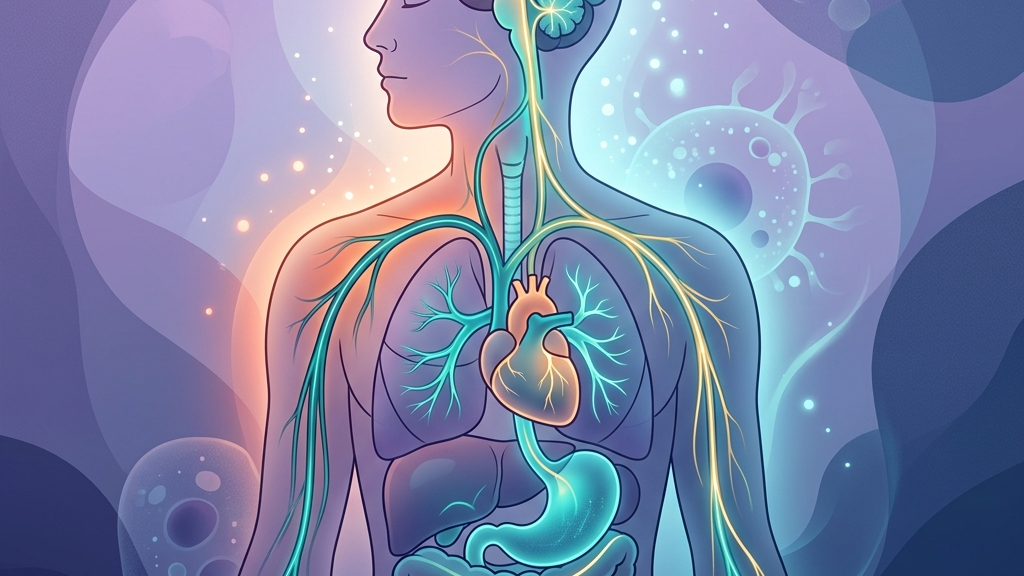
The vagus nerve is the longest cranial nerve, extending from the brainstem through the neck and into the chest and abdomen. It forms a major component of the parasympathetic branch of the autonomic nervous system, which generally opposes the sympathetic fight-or-flight response by slowing heart rate, supporting digestion, and facilitating restorative processes once a threat has passed. Sensory fibers within the nerve transmit data from organs back to the brainstem, creating a continuous feedback loop that helps the brain monitor and adjust bodily states. In daily life this shows up when someone feels a sudden knot in the stomach during stress; that sensation travels via vagal afferents, prompting the brain to recalibrate autonomic output and potentially ease muscle tension in the gut wall. This bidirectional communication extends to the gut-brain axis, where vagal afferents relay signals from the gastrointestinal tract that influence mood, inflammation, and stress reactivity. Microbial metabolites produced after a fiber-rich meal, for instance, can activate enteroendocrine cells that in turn stimulate vagal endings, sending information that may reduce systemic inflammatory tone over the following hours. The nerve’s extensive reach allows it to integrate information from multiple systems, so that changes in one area, such as intestinal activity or cardiac rhythm, can affect overall nervous-system tone. Research on heart-rate variability highlights how vagal activity contributes to moment-to-moment adjustments in heart rhythm, providing a measurable window into parasympathetic engagement. When a person transitions from standing to sitting, small oscillations in the interval between heartbeats reflect the vagus nerve fine-tuning its inhibitory influence to match the new postural demand. When vagal pathways function smoothly, the body can more efficiently down-regulate arousal after stress exposure. Reduced vagal tone, by contrast, may leave the system in a prolonged state of vigilance, making recovery slower and more effortful. The nerve’s anatomy therefore positions it as a key regulator that translates internal organ states into neural commands for calm. Branching patterns in the neck and thorax allow it to influence laryngeal muscles, bronchial tone, and even splenic immune cells, creating multiple parallel routes through which a single peripheral adjustment can propagate central effects.Sleep and Vagal Tone
During sleep the vagus nerve supports the transition into deeper restorative stages by modulating heart rate and respiratory patterns. Parasympathetic dominance at night allows for lowered metabolic demand and the consolidation of processes that replenish energy and regulate inflammatory markers. When vagal signaling remains active through the night, sleep architecture tends to include longer periods of slow-wave and REM stages that contribute to emotional processing and physical recovery. A person who maintains steady vagal engagement might experience fewer micro-arousals when a partner shifts position in bed, allowing growth-hormone release and tissue repair to proceed uninterrupted. People often notice that nights of fragmented sleep leave them more reactive to minor stressors the following day. This pattern can reflect reduced vagal flexibility, where the nerve’s capacity to maintain parasympathetic tone is temporarily diminished. Over successive nights the cumulative effect may appear as elevated baseline tension or difficulty settling into calm even when external demands are low. Someone who stays up late scrolling may find the next morning’s commute feels disproportionately irritating because overnight vagal recovery was incomplete, leaving sympathetic tone slightly elevated. The relationship is bidirectional: adequate vagal tone appears to promote sleep continuity, while poor sleep can further dampen vagal activity. Mechanisms involve both direct brainstem regulation of autonomic output and indirect effects through hormonal signals that influence inflammation and glucose metabolism. Individuals frequently describe a sense of “wired but tired” when this cycle persists, reflecting an incomplete shift out of sympathetic dominance. Evening routines that avoid bright light after sunset can help preserve the natural rise in vagal influence that normally accompanies the transition to darkness.Resting Heart Rate and the Vagal Brake
The vagus nerve exerts a tonic inhibitory influence on the heart known as the vagal brake, which keeps resting heart rate lower than the intrinsic pacemaker rate would otherwise produce. This braking action allows rapid withdrawal of inhibition when sympathetic activation is needed, followed by swift reapplication once the demand subsides. Effective braking supports quick recovery of heart-rate variability after stressful events. Consider a cyclist who sprints to catch a green light; once safely across, a well-functioning vagal brake quickly lowers heart rate back toward the mid-60s rather than leaving it elevated for many minutes. Many people observe that their heart continues to race or remains elevated long after a stressful encounter has ended. Such lingering elevation can indicate reduced vagal braking capacity, leaving the cardiovascular system slower to return to baseline. Over time this may contribute to a subjective feeling of ongoing alertness even in safe environments. The brake operates through acetylcholine release at cardiac synapses and interacts with baroreflex mechanisms that sense blood-pressure changes. When vagal tone is robust, small fluctuations in heart rhythm reflect healthy adaptability rather than instability. Lower variability at rest, by contrast, often correlates with slower physiological unwinding after stress and a narrower window of tolerance for daily demands.Voice, Throat, and the Vagus Nerve
Branches of the vagus nerve innervate the muscles of the larynx and pharynx, linking vocalization and swallowing directly to autonomic regulation. Activation of these pathways during humming, singing, or gargling can stimulate vagal afferents and efferents, potentially increasing parasympathetic outflow. This anatomical connection explains why vocal practices sometimes produce an immediate sense of settling in the chest and abdomen. A teacher who hums softly between classes may notice shoulder tension easing because the vibration travels along vagal fibers that also modulate bronchial smooth muscle and heart-rate variability. Individuals commonly report that speaking in a lower, slower register or engaging in rhythmic vocalization helps interrupt cycles of rising tension. The effect may arise from both mechanical stimulation of vagal fibers in the throat and the respiratory adjustments that accompany controlled exhalation during sound production. When stress recovery feels elusive, these throat-centered routes offer an accessible entry point because they engage the nerve at a peripheral site that feeds back to brainstem nuclei. The same pathways participate in the gag reflex and in coordinated breathing-swallowing patterns that occur naturally during rest. Repeated gentle activation through daily vocal or throat-based activities may therefore support overall vagal responsiveness without requiring intense effort. People often notice improved ease in returning to calm when such practices become consistent, particularly if they pair vocalization with extended exhales.What the research shows
Studies examining heart-rate variability consistently link higher vagal tone with faster cardiovascular recovery after laboratory stressors. Heart Rate Variability and Cardiac Vagal Tone reviews evidence that vagal modulation of the sinoatrial node underlies much of the variability observed at rest and during recovery periods. Complementary work on the gut-brain axis demonstrates that vagal sensory neurons convey microbial and inflammatory signals capable of altering central stress circuits. Vagus Nerve as Modulator of the Brain–Gut Axis outlines these ascending pathways and their influence on hypothalamic-pituitary-adrenal activity. Additional findings connect vagal stimulation to changes in sleep architecture. Vagus Nerve Stimulation, Sleep-Disordered Breathing & Sleep Quality discusses how enhanced vagal signaling may improve sleep continuity and reduce nocturnal arousals. Anatomical descriptions confirm that the vagus nerve’s extensive distribution allows it to integrate visceral feedback with brainstem control centers that govern both arousal and restoration. Neuroanatomy, Cranial Nerve 10 (Vagus Nerve) provides detailed mapping of these connections. Further research on vagal sensory neurons highlights their role in transmitting gut-derived signals that modulate emotional reactivity and inflammatory tone. Vagal Sensory Neurons and Gut–Brain Signaling emphasizes how these neurons participate in bidirectional communication relevant to stress recovery. Clinical summaries from major medical centers reinforce that the nerve’s parasympathetic functions support organ regulation and may influence the speed at which the body exits heightened states. Vagus Nerve: Function, Location & Conditions summarizes these regulatory roles without claiming direct therapeutic outcomes.Practical ways to support your vagus nerve
- Slow extended exhales, performed by lengthening the out-breath to roughly twice the length of the in-breath for several minutes, can increase parasympathetic signaling through respiratory vagal pathways.
- Humming or gentle gargling stimulates vagal branches in the throat and may produce a noticeable settling sensation in the chest and abdomen within a few minutes.
- Gentle cold exposure, such as splashing cool water on the face or ending a shower with a brief cool rinse, engages vagal reflexes that help shift autonomic balance toward rest.
- Paced breathing at approximately six breaths per minute aligns with natural vagal resonance frequencies and can be practiced while seated or lying down for five to ten minutes.
- Light movement such as walking or gentle stretching, especially when paired with relaxed breathing, supports circulation and may enhance vagal tone through rhythmic mechanical input to visceral afferents.
- Morning light exposure combined with consistent sleep timing helps regulate circadian signals that interact with vagal control of heart rate and digestion throughout the day.
When to talk to a professional
Persistent difficulty recovering from everyday stress, especially when accompanied by chest pain, severe shortness of breath, fainting episodes, or sudden changes in heart rhythm, warrants prompt medical evaluation. Individuals who experience ongoing digestive distress, unexplained fatigue, or mood changes that interfere with daily functioning should also consult a qualified clinician. These symptoms can stem from multiple causes, and professional assessment is required to determine appropriate next steps.Common questions
How long does it take to notice changes in stress recovery when supporting vagal pathways?
Individual responses vary widely; some people report subtle shifts in calmness within days of consistent practice, while others observe gradual improvements over several weeks as sleep quality and daily reactivity change.
Can vagal tone be measured at home?
Heart-rate variability can be tracked with certain consumer devices, yet these readings provide only an indirect estimate and should not replace clinical evaluation when symptoms are present.
Are there risks to stimulating the vagus nerve?
Most gentle daily practices carry low risk for healthy adults, but anyone with a history of heart-rhythm disorders, epilepsy, or recent neck surgery should seek medical guidance before beginning new routines.
Does age affect vagal function and stress recovery?
Vagal tone tends to decline gradually with advancing age, yet many older adults maintain good recovery capacity through consistent lifestyle factors that support autonomic flexibility.
The vagus nerve offers one physiological route through which the body can return to equilibrium after stress, yet recovery always involves the interplay of multiple systems and individual circumstances. Paying attention to sleep, cardiac rhythms, and throat-based signaling can illuminate patterns that either support or hinder that return. Over time, modest daily practices may help sustain the nerve’s regulatory capacity, allowing the system to move more readily between activation and rest.Have a question?
Have a question about something specific? Send us a message.
Visit VagusSkool.com/contact — we'll try to get back to you within 24 hours.